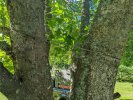
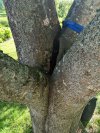
Perhaps there are arguments for and against.
The cable is a system that looks to have no slack in it, and also does not stretch like the synthetic polymers do. Replacing it with a synthetic polymer will change the nature of the additional support, and - comparing the metal and synthetic polymer materials directly to each other - that change will likely be by providing *less* additional support during initial tree movement than the tree had with the metal cable. The Cobra system likely provides more additional support after it stops flexing than it provides initially, and I'll leave that to you to characterize since you've got the specification for it and I do not. If the tree fails, it may be difficult to exclude the cabling system from the reason for failure since the additional support was changed in a way that may have been lessened during initial tree movement.
The argument against this point is that the metal cable installation is so low that the additional support up at the Cobra installation is essentially as or even more static than the metal cable down below due to the nature of the leverage forces. It is, however, difficult to show that that is the case without some manufacturer installation specification, scientific study, or ANSI section in support.
To me, the safe course is to install ehs cable to provide more *static* additional support that is materially the same and as strong as that which was installed prior, and avoid the more dynamic installation just to nip the drama in the butt ahead of time.
You're clearly improving the tree's circumstance greatly and I appreciate and respect your work.