moss
Been here much more than a while
- Location
- Carlisle, Massachusetts, U.S.
By the way excellent OG post on the prusik/bowline, we have digressed ;-)
Follow along with the video below to see how to install our site as a web app on your home screen.
Note: This feature may not be available in some browsers.

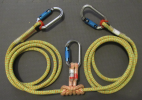
Yup, you just have a hook on your lanyard. (Some other thought below)That's interesting, so you're just flipping the Hook line around the trunk or limb then attaching the Hook with a biner through the 15mm racking opening to create a DdRT lanyard? That's cool.
-AJ
I see your point, although I'm guessing since the "hook" itself is an open, non double locking piece of hardware is why it isn't rated as such and there is nothing re: the "racking eye" being used like this. I'm not endorsing it but as each end of your lanyard sees roughly 1/2 the load as used and is generally used for positioning and passing limbs using as a lanyard, I'm confident it is well within reasonable use. I sent an email to DMM regarding use in this manner and haven't got response yet. Will for sure update on findings.Heads up maybe - even the newer Captains, although now rated at 25 kN or something, are still not PPE/ life support in the fine print . . . just sayin.
DMM Wales Captain product page
Same on Wesspur's website currently
Take care out there.
Maybe this is off but I've had cases a couple of times with spruces with downsloping branches where I've thrown the hook/ line over a droopy branch say just on the left side of the main stem, then let the hook down and twisted and turned it till it got caught on another lower downsloping branch, by the stem, but on the other side. Pulled the thing upwards till it hooked on the lower branch (on the right side of the stem). Then I've climbed up, sticking more to the right side of the stem. Kinda stem wraps the rope a bit making it less likely to pop off? Or seemed so at the time. With a downsloping branch it's maybe more securely positioned if the hook pulls up on a lower branch, by the stem - it usually isn't going anywhere much.An issue with using the hook even momentarily to move up in cedars and some other trees is if the limbs slope down and the hook when loaded suddenly slides sideways out away from the main trunk of the tree. When directly below the limb, it is not always obvious at how great an angle the limb slopes. It happened to me on a traverse too. I think this problem with the hook being able to slide is really one of its worst faults.

I had a good laugh with this one. I really ought to go and get it one of these days. It's about 80' in this damn pine tree.Where’s the tree with the Hook in it? Asking for a friend…
Good lord. You are a true procrastinator. Ha ha.I had a good laugh with this one. I really ought to go and get it one of these days. It's about 80' in this damn pine tree.
I even have a ronin power acender to get up there. No excuse!

Thank you!It's the Rope Slider from Shizll, a company from The Netherlands.
I think just an extra do-dad to pull on to release the hitch. Keeps your gloves from getting caught in it or from burning your gloves or hand if you wanted to bail quickly.What is the black ring at the top for?