Using used-climbing-ropes as bull lines? And Q on force in a controlled-speedline setup :)

No! But the RP-292 one is at the top of my list!
Right behind it is the CMI Holdway.

Just waiting for a farmer to pick his damn beans so I can get into the field and whack some trees down.
Hahahaha.. pick the damn beans mr farmer!

I'd like to see some hard load numbers for the TS version to compare to the ISC's. The ISC "looks" more robust, but I'm left wondering which of the two is actually stronger given the rather low WLL of the ISC.
 
Holy fuck bro. First you search treebuzz archives. Then Google. Then post here. Then proof read over and over untill your post are short and direct to the point with ONLY the info needed. I know you don't listen to anything I have to say but if you have a brain you know better than to use that junk from harbor freight for the application's you are.
 
So there is nothing inherently wrong with using an old climbing line as a rigging line, but you do have to make sure that it gets moved permanently to the rigging category. I'll use the tail of my climbing line to lower stuff that i could control by hand (without a dynamic load) and nothing bigger, but some folks would look cross-eyed at even that.

You many not imagine using/needing more than one climbing line now, but i would be perpetually irritated w/ just one. Some of it depends on where you are, what kinds of trees you have, and how tall/wide they are. I'm in Philadelphia, and I could climb a 14' snowbell, a 25' kousa, a 40' Japanese maple, a 60' pignut, a 75' beech, a 90' red oak, and a 115' tulip poplar, maybe (hopefully not, but maybe) all in the same day. The tulip might have the same spread as the kousa, but the oak and beech might be wider than they are tall, and I could be out twinkle-toeing in the tips, or i could be ripping them down, maybe with a crane on the larger ones. They all call for different styles of climbing, and different styles of climbing call for different types of ropes. I have:

-an 11mm 200' kernmantle (workpro) that is my big tree pruning rope, and is used almost exclusively SRT. Love using an easily adjustable base anchor to control the lenght of my tail when i pull this out. (not really an appropriate rope for DdRT, might do a quick tail-tie double crotch for positioning, but that's it)

-an 11.7mm ~180' double braid (Yale 11.7, same as blue moon) that I use for crane work (requires DdRT) and not a whole lot more these days, honestly. Kind of wish it was spliced.

-an 11mm (wish it was 11.7) ~90' double braid (velocity, gonna replace it w/ voyager when it wears out, bit still love velocity) with a splice that is probably used more than anything else on the truck. It's an 85' canopy anchor line if I use a pull-down line, It's a medium-tree Ddrt line, and most frequently, it's a second system used in conjunction with my long ropes, almost always DdRT. A long, central SRT line and a shortish DdRT line is awesome in big spready trees. I also occasionally have call to use it as a lanyard, usually on truly large crane removals, as my daily driver lanyards are 22' and 16' double-ended jobs, so when the wood starts to get to big for my 660, it's getting to big for my lanyard. I want to replace it with something a little thicker because it mostly gets used DdRT, and I climb bare-handed. I love how small and light velocity is and how well it works in hardware/ascenders, but it's a little hard on the paws and isn't really compatible with my zigzag.

-an 12.7mm (half inch) 16 strand about 35' or 40' long. Small tree/ladder backup rope, nice and fat for hauling on Ddrt/muscling around. I don't find 16 strand's stretchiness to bother me when it's this short. Wish this one had a splice, too. Also gets used as a second system sometimes.

Having ropes of different lengths makes tail management much easier. If i had to use even a 150' rope in a 20' tree (or even a 35'er), I'd probably murder someone. Double crotching, however you do it, is an extremely powerful technique. Someone is probably going to chime in and say it's a crutch, but I'm a regular person not a NFL cornerback, I'm heavier than most climbers, and I'm middle-aged, so I prefer to think in terms of longevity and comfort.

Ropes get called a lot of things when they're getting sold. Just because something is labeled a climbing line, an rigging line, a prussik, etc, doesn't mean that's all it's good for. It's better to think in terms of rope construction and behavior rather than what category they're under at Treestuff or Wesspur. In general:

- double braids are strong for their diameter, handle natural crotch at human-size loads OK (the Yale 11.7s wear like iron as climbing lines) but do very poorly at heavier loads, then they really want hardware to run through. They also milk.

- 3 strands rotate under load (PITA), hockle (giant PITA), don't really work at all with ascenders and new-school climbing techniques, they're pretty stretchy, and they hockle. However, they are light, cheap, easy to splice, and are the natural crotch champions of the world. Also, they hockle.

-16 strands are strong, wear really well, handle natural crotch pretty well, medium bouncy (like your hair with Pantene), medium expensive, just kind of the all-around average rope.

-12 strands are bouncy/stretchy, hand natural crotch really well, are strong at 1/2" but their strength doesn't scale up as well as double braids, tend to have good hand, can't be hand-spliced, and are, erm, nubby.

-kernmantle ropes are kind of a mixed bag, but tend to be less stretchy or bouncy, wear pretty well because they usually have tight high-count jackets, but frequently aren't appropriate for Ddrt or rigging.

It's important to understand that breaking strength isn't the ultimate measure of a rope. How elastic/stretchy/bouncy a rope is is really important, too. I don't want a bouncy climbing line, and I'd prefer something on the more static side when I'm lifting something, say with the GRCS or a 5 to 1, but if I'm blocking something and there's no room to run it, I'd love stretch in the rope. So in the above examples, I might choose to climb with xstatic or KM3 max, lift with sta-set or stable braid, and block onto polydyne.

After all that rope-nerd blather, let's address your real issue: having the right gear at right time to continue expanding your skill set. Just as with climbing, start with the basic, tried-and-true, old-school methods. Learn to natural crotch first. Learn to use multiple crotches and switch ends to make your rigging system more useful, flexible, and efficient. That's why people are steering you to 12 and 16 strand ropes. They'll hold up better. I'd take it a step farther and suggest your first rope be a 200' soft-lay 3 strand like pro master. (never buy a rigging rope shorter than 200'. It'll be shorter soon enough, I promise. Just grab a bag for it and don't look back. By the reel is best.) It'll only set you back $90, it's great for natural crotch, and plenty strong for what you'll be doing. When you get to bigger stuff, true blue, buzz, or ogre are 12 strands that are a little stronger (and more expensive), still good for natural crotch, but will play nice with port-a-wraps and pulleys (3 strand will work in them, but again, the hockling). I wouldn't worry about big bull ropes an huge rigging gear until you actually need it. You can remove most small and medium trees with half inch rope, and you can always double block if trunk wood starts getting too big.

Don't buy your whole rigging kit at once, and don't automatically go for the big stuff right away. A couple half inch lines (i recommend bagging all ropes), a medium or large port-a-wrap, an a couple of the half inch green blocks will get used way more than other rigging gear, are cheaper, and are closer to your skill level. Buy stuff a piece or two at a time, and do your best to try someone else's before you buy.

Oh, and of course don't get rid of the safebloc, but for God's sake, get it spliced into a real sling, even if you have to send it out to do so. Also remember when you rig bigger stuff, you'll need bigger more expensive saws, a bigger truck, a mini/swing loader/lots of peons, i.e. Bigger rigging=bigger headaches. Dont be in a hurry to spend money, use what you've got or just a little more to MAKE money, and bootstrap from there. Make tree work pay for itself.


Sent from my E6910 using Tapatalk

 
Last edited:
Also, the best money (and preferably the first money) you will spend is on education. Buy all of Jeff Jepsen's books:
The Tree Climbers Companion
To Fell A Tree
Knots At Work
Maybe $45

The Working Climber series by Jerry Beranek $215

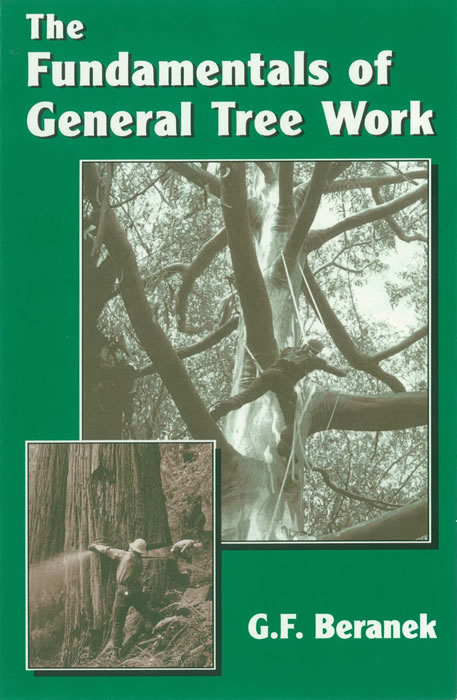
Ebook of The General Fundamentals Of Tree Work by Beranek
$20

That's less than the $300 you were going to spend. For that you could add An Illustrated Guide To Pruning by Gilman or the certified arborist study guide.

You have to be careful with youtube if you don't have someone to call bullshit for you, but here's some good ones:


https://youtu.be/akklgozH4tg

https://youtu.be/PzLfPQCFPpU

https://youtu.be/99ZuS5p3CMg

https://youtu.be/AmKmLw6urvk

https://youtu.be/UaEHZ7ENye8

https://youtu.be/f4kvdOLhSNI

And anything on the channels of: Climbing Arborist, Educated Climber, Reg Coates, Reon Rounds, Lawrence Schultz, August Hanukie, Blair Glenn, Brick Reilly, Travor Ahern, Sherbrooke Tree, TreeStuff, Wesspur (Nice Guy Dave), Arborpod/ISA, JB Holdway, Kevin Bingham, Tom Hoffman, Taylor Hamel, Richard Mumford, or ask for other suggestions here on Treebuzz.

Sent from my E6910 using Tapatalk

 
Last edited:
No! But the RP-292 one is at the top of my list!
Right behind it is the CMI Holdway.

Just waiting for a farmer to pick his damn beans so I can get into the field and whack some trees down.

Flash sale going on at TS man, get it for 169$ and can use coupon codes with it :)

The RP290 is 159$ too. Seems a no brainer though, a lot better rating for that 10$ difference.
 
Three things to add:

Use a rignwrench instead of the safebloc on 1/2" line.

Remember that speedlines are a bit of an unknown in terms of rigging forces. On one hand, they disperse force evenly over time. On the other hand, they pull on your tree until they depart from horizontal (infinite force) to 120° (where, correct me if I'm wrong, they are more 1:1) below the horizon. That can be a lot of side pull, so make sure your tree can handle it.

I'm of the mind that retired ropes are only good for tag lines that are bearing a fraction of their original rating, and for pulling things that are already on the ground. If you retire it because you don't trust your life with it, that is a statement involving both odds and consequences. You feel like the odds have slipped from negligible to more than negligible. You feel like the consequences are really high (your life). In the case of retiring it from a life support line to a rigging line, the odds are the same but the consequences have changed from being really high to being, well, really high (might hit the ground crew with a piece, which is the recurring leading cause of mortality in the industry) or at least really high minus one (do you really have 10k around to fix that roof or will it send you out of business?). Retired climbing lines are not rigging lines in my company.
 
To me, downgrading climbing line to rigging line is a natural progression.
i guess that depends partially on how long, how hard you dog a climbing line out into the ground before swapping it out tho! And what loads you pitch on what. i try to save more specialized lines to more specialized loads for economy and utility of freshness in those lines. Even, making eye to eye 10' lines for utility purposes, dragging etc. just to likewise keep wear off other lines until needed. Fact is i try not to waste nothing and not dropped any. Same if end up with an 80' climbing line, use it when can to keep wear off more expensive to buy (and sometimes deploy time if not feeding out of bag etc.) than longer line. Less weight to carry if just a quickie run.
.
If 150# carcass using line and especially no hard impacts, to me only pounds out a certain range of the more delicate elasticity of the line. Range that hard rigging probably not going to use much anyway perhaps(any more than soft loading could kill hardest elasticities) except to immediately vanquish. It also gives the climber/rigger some familiarity with future rig line, as rides it themselves as both load and control. After light loading and light handling of only self, especially in double support DdRT etc. of less loading per leg of line.
.
i also always preferred different colored ropes with different color contrasting from the rope color tape on each end. So could call for red end of blue if needed etc. Also in climbing more awareness of switching ends, what end wearing more etc. differentiation and climbing /rig lines look different always. For lighter stuff, on softer supports the lower tensile of 1/2" can provide more elastic shock buffer/dampner than 3/4" of same manuf. i even kept elastic 8mm rescue line of springy shock absorber for getting medium, stuff rigged out on much smaller by lowering shock with baby rubber band line and let run to perhaps slow down some sliding off lower branches keeping as much force off elastic rope system as input to it. Elastic response bases partially on how much of the line strength potential is invaded by load. So much so that putting load in 2:1 pulley gives more shock cuz now load doesn't invade the now doubled line strength as much so gets less dampening , elastic response back. If drop eye pulley /to one support, this raised shock could change game to failure of support on a bad day! Separate supports gets into how far apart, as the angle of support is harshest/less inline at start and gets better as lowers. But also starts with less line in the system; less line, less rubber band at whatever elasticity. i don't think that 150# carcass with no hits on doubled line will dent the strength component of a 7k line much. i think of this as more macho part of line that stays longer than feminine elastic line properties that you can tick off easier and leave faster.
.
Rigging straight down a line gives full rope strength against load, less than pure inline angle of support against load:
>>makes line less efficient (as in all things)
>>and induces side forces (as in all things)
At angle rope (and connection points)must work at lower efficiency AND sustain against side forces simultaneously (as in all things)
.
For speedline divide loading force by 2 (for 2 support anchors of line against load)
>>then divide that by cosine of the angle from straight down for rope column support efficiency = line tension needed at that reduced efficiency to carry that load on 2 supports.

So for 100# on simplest sister model: pulley pure inline support would be 100# / 2 legs of support then divided by 1(cosine of 0 deflection) = 50# each leg as we know/pruf of concept.
Math continues as you rate the downward force direction against the line angle that has 2 support spread anchors.
Side force is sine x tension found or sometimes simpler tangent x load force per leg.
>>side force JUMPS hard against rope and rest of connection chain at first few degrees of deflection and when in motion immediately for very probable IMMENSE impacts in ratio.
.
This is same math as for a builder, just used for force instead of length.
Just as a 4' stool leg installed @30 degrees can only reach 86.6%(.866 cos of 30) of it's potential 4' length at that angle; it likewise can only exert 86.6% support of what it could if straight leg. The visualized force column of support value inside of the leg is ruled same as the more visible physical column of support leg reach value. The top of the stool leg will be a surprisingly 2' spread from bottom cuz the sine multiplier of potential length of 4' (if layed down sideways could only reach 4' as a potential) is .5(sin @30); so top of leg and bottom are 2' apart(across). So side force will be likewise half the compression loading as well, just as half the length is the spread @30 , half the force is 'expressed' sideways. With 3 stool legs we would divide the load by 3 supports not 2 like did in speedline. 300# /3 legs of support =100# support needed per support leg. If really only worried about voracious side force can shortcut to multiply 100# X .5773(tangent of 30) for sideforce per leg. But normal path is : 100# needed per leg/.866cos = 115.47 per leg. 115.47 force x .866 cos efficiency gives the 100# again force per leg upwards against downward load. Same 115.47 x .5sine = 57.73 side force = 100# X .5773 tangent side force shown previously. Each leg will bear 115.47# force , 57.73# expressed sideways, 100#expressed upwards in support. Same angles and load on a leg of line would give same math, only in tension/not compression directions.
.
i keep it all straight by thinking of cosine as co(lumn)sine to my cos(cause), sin(e) is ('useless') baggage carried at the angle that gives no support while also distracting from target to another angle to manage as well. In 3dimensional speak : Co(lumn)sine is single dimension that squarely meets and confronts against (benchmark)force column of linear load have to deal with. Sine is anything else related/ the other 2 dimensions from that unique line axis, that are not set against load. Co(lumn)sine is support/reach percentage of whole force or length. Sin(e) is the non of cosine/anything else related but not part of pure reach or force to target axis that also must be managed. Many things at angle don't fail from the lack of support, but rather the overload of sideforces and new direction carried.
.
Tension of rope/compression of wooden leg math the same >> only direction of force is different
>>yin/yang of Equal / Opposites pull towards each other in tension, push away from each other in compression.
>>and so rope side forces work to pull together in tension to correct to more inline efficiency as felt in pulling self up with hand cam from lean back w/o chest harness.
BUT compression side forces push apart exerting to draw system to greater angle of less efficiency AND greater sideforces as felt in start from lean back and use foot cam w/o chest harness.
 
Last edited:
It's been years since I actually retired a climbline because I didn't think it was all that safe to climb on, anymore. Those usually get used for taglines or re-purposed for tying trailer loads down, and cut up for many of the purposes @*useless info* mentioned... drag lines, etc.

I think of "retired" lines as the ones I've gotten bored with climbing on, as well, so that might be a bit misleading. They're usually perfectly good ropes that I've decided to use for something else. Sometimes they're new lines that I bought for a specific reason, but didn't work out for that purpose.

I do buy climblines for rigging purposes because some of them have properties I'm interested in... usually low cost, amount of friction going through a device, etc. or a distinctive color scheme that will really set it apart. Many of these ropes were originally developed for climbing or light rigging and just moved into one category or the other from common usage, leading to common perception of them being one or the other.

12-strand solid braid ropes fell out of favor as climb lines, so we think of them as rigging lines. The 16-strand ropes that came into favor as climb lines, are now heading the same direction. The properties of the rope that make it suitable for the work are what matters in the end.
 
The 'nubbier', less round 12's less friendly thru friction hitches and other devices I think
>>But nubbier grip seems to give better grip/feel in lowering.
But anyway ya go Samson True Blue has always been long wearing friend seems.
.
In rigging as expendable device , cheap, generic standard/ initial arbo rope plain white ArboPlex well planted utility standard.
.
Tree rope is tuff stuff for work use like few other.
 
Last edited:
At the end of 2015 I caught a sale on Yale XTC 16 and bought two 150' hanks in the Fire color scheme, and a 200' hank in the Eclipse color scheme. All for rigging. I tend to use the 12-strand ropes the most, with the notion that I'll wear out the cheapest ropes, first. So, I still have one of the 150' Fire hanks and the 200' hank of Eclipse that have only been used a couple of times.

I've got a job coming up soon that will require them, so I've been pretty much getting the stuff I'll need ready... and testing the setups on my own trees. I like the added friction these ropes give me in the Rig 'N Wrench, and they're stronger. I think I paid about 80 cents/foot for these ropes with a discount. All of them have sewn tight eyes on both ends.

I do a lot of solo work, so I really love this setup:

View attachment 62950
What is the hook on the spliced end of the line for? Are you terminating your rigging line with that instead of a running bowline or carabiner?
 
...the hook on the spliced end of the line...

Yes. I like knotless rigging. Those particular hooks I use on 12-strand and 16-strand ropes that are spliced on both ends (no milking issues) because I can use loop runners on the cut pieces and lower them myself (Rig 'N Wrench, AFB) and just shake the loop runners off and bring the line back up. I work solo quite a bit. I use a different setup on the other end of the ropes, for when I have help.
 
Yes. I like knotless rigging. Those particular hooks I use on 12-strand and 16-strand ropes that are spliced on both ends (no milking issues) because I can use loop runners on the cut pieces and lower them myself (Rig 'N Wrench, AFB) and just shake the loop runners off and bring the line back up. I work solo quite a bit. I use a different setup on the other end of the ropes, for when I have help.
That’s kind of what I was picturing since you mentioned that you do a lot of solo work. Cool idea man.
 

New threads New posts

Kask Stihl NORTHEASTERN Arborists Wesspur TreeStuff.com Teufelberger Westminster X-Rigging Teufelberger
Back
Top Bottom