Using Native Plants

Glenn to stay with the look you have ( which is very pleasing ) try a variety of coreopsis, most are native to north america with some research you can find a more local cultivar..

 
Steve, thanks for the recommendation. A local nursery carries C. verticillata and C. rosea. I think I'll give them a try.

goodaking, according to Kimberley Shropshire and her plant literature search, Vaccinum spp. support at least 288 Lepidoptera species. So along with Quercus, Salix, Prunus, Betula, Populus, and Malus spp. blueberries are a great choice for the Mid-Atlantic region. I've read that over 37 species of birds will eat the fruit of lowbush blueberry.
 
This is a great thread but I'd like to speak up for the enjoyment that comes from collecting woody plants, shrubs, perennials, bulbs and trees. With a collection that numbers over 500 cultivars there is no way I'd consider sticking to just natives in my landscape. To me it would make no more sense than sticking to natives in my vegetable garden. At one point in my hosta collecting days I had 650 cultivars of just Hosta. It's down to only 300 or so these days though. I've probably got 150 cultivars of daffodils.

Natives are good but don't cut yourself short. No way are the end all of enjoying plants and the landscape!
 
[ QUOTE ]
there is no way I'd consider sticking to just natives in my landscape.

[/ QUOTE ]

That's fine TreeCo, I'm not saying there is no place for aliens in our landscape. What I am saying is that for every ray of sunshine an alien plant intercepts—in lieu of a native plant—there will be less, perhaps zero, benefit for our native insects, birds, bats, etc...

When birds nest, they need high amounts of protein to feed their young. Whereas many adult birds can live on fruits and seeds, their young cannot. Less native plants = less insects = less birds and bats = less biodiversity.

Plant all the non-invasive alien plants you like, enjoy their beauty. But realize that it comes at a cost to our local flora and fauna. The human population explosion and our dominance of the landscape exacerbates what was once a minor problem. Our wildlife populations have suffered enough decline and disturbance due to habitat fragmentation. It's time to invite our native wildlife into our own yards.

Realizing this fact should not preclude anyone from using an occasional alien plant. But good judgment and moderation in using aliens is critical.
 
my comment was directed at what guy said about the cats, i was being a little sarcastic, i think everyone is trying to be scientific about this and i am not sure what killing/ or whatever the dissappearance of the cats meant? i agree and support native plantings as much as possible, also trying to keep nature in balance, anyway i apologize i normally am not sarcastic but the cat thing was rude. you make great points glenn and i think as professionals we all need to be aware of eco-systems, and eliminating invasives when we can. i think everyone is getting off point, i do not think it is wrong to use acer griseum lets say but first of course i would try something native, or more natives than not.
 
[ QUOTE ]
[ QUOTE ]
there is no way I'd consider sticking to just natives in my landscape.

[/ QUOTE ]

That's fine TreeCo, I'm not saying there is no place for aliens in our landscape. What I am saying is that for every ray of sunshine an alien plant intercepts—in lieu of a native plant—there will be less, perhaps zero, benefit for our native insects, birds, bats, etc...

When birds nest, they need high amounts of protein to feed their young. Whereas many adult birds can live on fruits and seeds, their young cannot. Less native plants = less insects = less birds and bats = less biodiversity.

Plant all the non-invasive alien plants you like, enjoy their beauty. But realize that it comes at a cost to our local flora and fauna. The human population explosion and our dominance of the landscape exacerbates what was once a minor problem. Our wildlife populations have suffered enough decline and disturbance due to habitat fragmentation. It's time to invite our native wildlife into our own yards.

Realizing this fact should not preclude anyone from using an occasional alien plant. But good judgment and moderation in using aliens is critical.

[/ QUOTE ]

Glen I live on 21 acres of wooded land. I agree with you that the sickness that we call urban areas is bad for native birds and insects....but it pales in significance when compared to what it does to the human spirt!
 
[ QUOTE ]
[ QUOTE ]
there is no way I'd consider sticking to just natives in my landscape.

[/ QUOTE ]

That's fine TreeCo, I'm not saying there is no place for aliens in our landscape. What I am saying is that for every ray of sunshine an alien plant intercepts—in lieu of a native plant—there will be less, perhaps zero, benefit for our native insects, birds, bats, etc...

[/ QUOTE ]

Its probably safe to place a bit of emphasis on "perhaps".

One fascinating thing about many if not all native plants, is that where they grow now, is not where they used to grow. The ranges have shifted over the centuries.

Sometimes, when we introduce non-natives, we mimic what that species possibly could have done on its own.
 
[ QUOTE ]
Sometimes, when we introduce non-natives, we mimic what that species possibly could have done on its own.

[/ QUOTE ]
I'm not sure what you mean here. Are you referring to the ability of some non-natives to naturalize?

Sometimes when we introduce non-natives a fungus tags along and an ecological disaster ensues. Castanea crenata is the classic example. How much of our biodiversity did we lose along with the functional loss of the American chestnut? The sad fact is no one knows how many insect specialists we lost. We do know that we lost one our most productive forest trees. Hopefully the American chestnut won't disappear forever; the outcome remains uncertain.

Since we seem to have great difficulty predicting which plants will cause trouble, maybe we should learn from our past mistakes and abandon our intense use of alien plants.
 
Mario was talking about natural introduction and shifts in species ranges. moving a zone 8 plant to zone 7 is a response to global warming.

Chestnut blight--kills back C dentata, never heard of C. crenata-- I think came over on wood...but anyway, the worst recent pests came over on packing material. So going after global trade in plants may be missing the mark.

"Exotic" is more neutral while "alien' definitely sounds pejorative. But I've got one foot squarely on your soapbox--I'm going out to divide and propagate some ferns and kill some microstegium.
 
Castanea crenata is the Japanese chestnut. Homeowners desiring the larger chestnuts for their landscapes had nurseries ship this blight resistant alien tree across the country. Apparently some of these trees were hosting the fungus, which helped to accelerate the demise of our native chestnuts. Since we were discussing alien plants, I was referencing the alien culprit. I should have written that more clearly.

I think the American chestnut has something to teach us about the rapid decline of our planet's biodiversity. The lessons are there. I would suggest reading American Chestnut to any arborist interested in these issues.

Besides, you can learn cool stuff. Kastanea probably refers to a geographical region in present day Turkey, where Bronze Age humans are believed to have first cultivated chestnut trees. p. 14.
 
Still the hardest part of advocating for biodiversity is educating the public at large. For whatever reason some people turn their nose up when i mention such things as "organic" soil food web" or "sustainable". I try to cater to all client types while practicing what I call sustainable arboriculture. Per instance I had a client who wanted her woods thinned out for aesthetic reasons. We were able to achieve her goals combined with my own goals by removing the invasive plant material which included Norway Maples japanese honey suckle and such. The end result is a healthy looking forest plot which we are now actively restoring with native understory over a five year period. When the customer first came to me she had little in mind beyond just an aesthetic forest thinning. Now she is an active participant in restoring her corner of the planet. I still have problems convincing people to forego their manicured lawns. To some people taking away their lawns is akin to taking ammendment rights!
 
[ QUOTE ]
I had a client who wanted her woods thinned out for aesthetic reasons. We were able to achieve her goals combined with my own goals by removing the invasive plant material which included Norway Maples japanese honey suckle and such. The end result is a healthy looking forest plot which we are now actively restoring with native understory over a five year period.

[/ QUOTE ]

These are my favorite kind of jobs--bordering trails with tree trunks, clients coevolving with their land, great stuff!

cool.gif
 
More non natives.
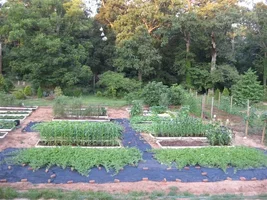
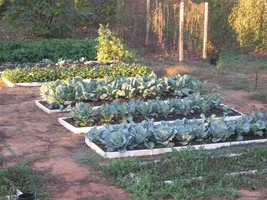
My point is........grow stuff!

250913-Colecropsquad6.JPG
 

Attachments

  • 250913-Colecropsquad6.webp
    250913-Colecropsquad6.webp
    125.7 KB · Views: 24
Haha TreeCo, you have some natives in that veggie garden.

After all we're invasive exotics and we have to have our "old world" crops, with a few natives mixed in: corn, beans, squash, tomatoes, etc.

I gather the original post was encouraging tree and landscape professionals to try and use more natives for landscape plantings instead of simply accepting the idea that homeowners should have the majority of their plantings be introduced or out of range species. Nursery's have always sought to market novelty to boost sales, it's like everything else in retail, offer something new and different, or claim it's "improved" and get the customer to bite.

If nurseries think that natives are the next big thing in mainstream landscaping, they'll start offering more than they already do.
-Andrew
 
[ QUOTE ]
I gather the original post was encouraging tree and landscape professionals to try and use more natives for landscape plantings instead of simply accepting the idea that homeowners should have the majority of their plantings be introduced or out of range species.

[/ QUOTE ]
Exactly.

If anyone is interested, here's a relevant paper in Conservation Biology

And another study:
Burghardt, K.T., C. R. Philips, D.W. Tallamy and K.J. Shropshire. 2010. Non-native plants reduce abundance, richness, and host specialization in Lepidoptera communities. Ecosphere. In press.

They only have the Lepidoptera data so far for 2009. They found no caterpillars on Cornus kousa that year (three collection dates) and 0.271 species per 100 grams of leaves searched on Cornus alternifolia. Similar results for caterpillar abundance: no caterpillars on C. kousa and 0.396 caterpillars per 100 grams of leaves searched on C. alternifolia.
 
bump.

Wulkowicz, where are you on this conversation?

A question that I hope isn't hijacking the thread:

On the campus where I work, we have a decent sized multi-trunked Albizia julibrissin growing on a corner of our campus, in front of a student apartment building, on the edge of national forest property. (I am in SE Tennessee).

I have gone back and forth about whether I should seek approval to remove this tree on grounds that it is invasive.

Budget priorities are somewhat restrictive for re-planting a new nursery stock tree in this particular location, because the are is of low priority to the overrall campus appearance. (I know appearance is not the only consideration for budgeting, but remember that I'm working in the confines of a campus bureaucracy much bigger than myself that often sees appearance as the only issue in the landscape.)

Advice?
 

New threads New posts

Back
Top Bottom