- Location
- Chattanooga
[ QUOTE ]
In an honest review of my Uni. I really like it a lot. However, in 5 months time I already need a re-build.
I started climbing with Posion Ivy then it started to slip. I then went back to my retired XTC 1/2" rope so it would grab again. It is okay, but not fun foot locking single line to then feel it slipping when you sit into it.
I'll say this again: The grab plates, friction points, or what ever they are called need to be made of hard metal. It needs to be stainless steel or carbide steel. Not many advanced climbers would put up with re-building a Uni every 6 months or so.
[/ QUOTE ]
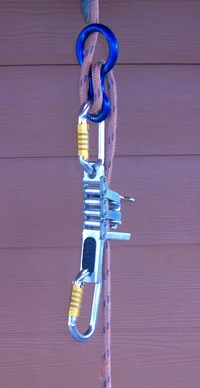
I'll be talking about that if I can ever get to the discussion video. I haven't had my Uni long enough to wear it out, but I have over a dozen climbs on it and I can see the wear signs; just de-colorization at the wear points.
I'm suspicious that if one didn't do a lot of long rappels, the Uni would last a lot longer. I.e. use it for ascending and work positioning and something else for long rappels.
My thinking here is that the long rappels run the rope across the contact points under load causing accelerated wear, a grinding-like effect. Ascending is basically a clamping action and doesn't have nearly as much rope 'run' as rappelling. So maybe a rule of thumb would be to use the Uni for ascent and work positioning (that includes 'work descending') and something else for rappelling out of the tree.
Not only would many advanced climbers not put up with rebuilds every 6 months, the cost might be prohibitive too.
Again, I'm gonna talk about this in my discussion video if I can quit climbing and editing those vids long enough to shoot it. When you look at the Uni contact points compared to other descending devices, you find very small, i.e. about 1/8" thick, aluminum contact points on the Uni and very large areas of steel contact on other devices, e.g. Grigri. Even on a Petzl Stop that has aluminum bollards there is lots and lots of contact area to help with wear.
In an honest review of my Uni. I really like it a lot. However, in 5 months time I already need a re-build.
I started climbing with Posion Ivy then it started to slip. I then went back to my retired XTC 1/2" rope so it would grab again. It is okay, but not fun foot locking single line to then feel it slipping when you sit into it.
I'll say this again: The grab plates, friction points, or what ever they are called need to be made of hard metal. It needs to be stainless steel or carbide steel. Not many advanced climbers would put up with re-building a Uni every 6 months or so.
[/ QUOTE ]
I'll be talking about that if I can ever get to the discussion video. I haven't had my Uni long enough to wear it out, but I have over a dozen climbs on it and I can see the wear signs; just de-colorization at the wear points.
I'm suspicious that if one didn't do a lot of long rappels, the Uni would last a lot longer. I.e. use it for ascending and work positioning and something else for long rappels.
My thinking here is that the long rappels run the rope across the contact points under load causing accelerated wear, a grinding-like effect. Ascending is basically a clamping action and doesn't have nearly as much rope 'run' as rappelling. So maybe a rule of thumb would be to use the Uni for ascent and work positioning (that includes 'work descending') and something else for rappelling out of the tree.
Not only would many advanced climbers not put up with rebuilds every 6 months, the cost might be prohibitive too.
Again, I'm gonna talk about this in my discussion video if I can quit climbing and editing those vids long enough to shoot it. When you look at the Uni contact points compared to other descending devices, you find very small, i.e. about 1/8" thick, aluminum contact points on the Uni and very large areas of steel contact on other devices, e.g. Grigri. Even on a Petzl Stop that has aluminum bollards there is lots and lots of contact area to help with wear.