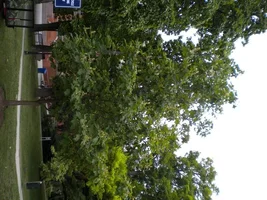
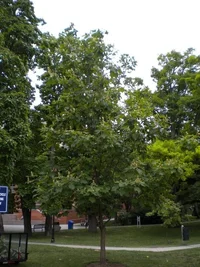
Trees from a distance

  • Thread starter Thread starter TC
  • Start date Start date
Good geusses all.
Here are some facts about this tree to maybe help.
This tree is the only plant in the Genus. It had gone out of cultivation, but was reintroduced from China. Hardy in zones 6 & 7. It is somewhat available in the nursery trade, however it has been cultivated in Europe far longer than the US.
It produces many small white to yellowish blooms on current years growth. It is typically a large shrub, but could grow into a tree of 50' with age.
There are a couple well recognized Arboreteum that have them in the collection. From what I have seen of this tree it could become a very good street tree option or small ornamental option. No pest or disease issues yet, does not appear to be invasive so far.
 
I don't want to stall this thread too long. I was trying to make sure that everyone who wanted a guess got one. Looks like that's it. unless anyone objects.... I will post the answer in an hour or two.
 
Well I was going to say chinese buckeye but for a street tree hmmmmm well a Zelcova last guesse
smirk.gif
 
[ QUOTE ]
I don't want to stall this thread too long..... I will post the answer in an hour or two.

[/ QUOTE ]

Well, I went looking through China's trees etc. and everything ended up in Chinese so that was no help.
Checked out a few arboretums but didn't see anything.
It's not Xanthoceras sorbifolium, is it??
Or Euodia gongshanensis??
The names just get longer and longer (haha).

Let us know what this tree is, TNT!
smile.gif


Thanks, - Diane-
 
Cool! Im glad you did a little looking, and that it is new to everyone.

Poliothyrsis sinensis, I think it actually does have a common name now of Chinese Pearlbloom.

It's always great when we learn something.
It may not turn out to be a great tree in twenty years, but this one is about ten and seems to be doing well.
Arnold Arboretum is responsible for its reintroduction in the US.
 
[ QUOTE ]
It's always great when we learn something.

[/ QUOTE ]

Agree, agree.

I'm spreading the word now as I have a landscape designer friend who is always looking for rare and different plants/trees.
The information about them says they tolerate drought areas as well.

Thanks for posting this tree, TNT.

I guess you can go again or open the floor to anyone.

-Diane-
 
No, and sorry about the sideways photo. I realized i forgot to rotate it when I checked the post. I'll try to fix it in a while, or 6:00 am tomorrow morning for those of you who can't.
 
I just learned something. I always thought there were only two (speciosa, bignonoides), but thanks to the internet, I now know there is another...

ovata!

Is that it?
 
Alas...not ovata. You did make me recheck my facts on this one though.
This is a non native Catalpa. It is in the Bignoniacea family, Catalpa Genus, but what is the species?
 

New threads New posts

Back
Top Bottom