Tree stability

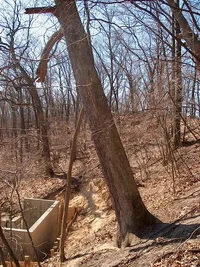
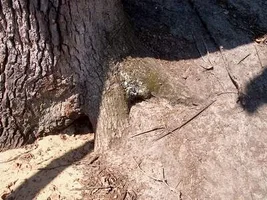
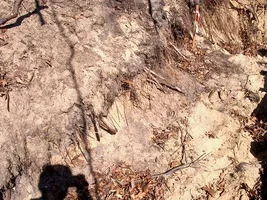
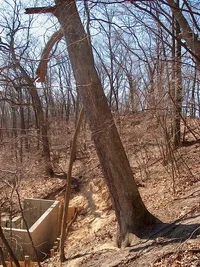
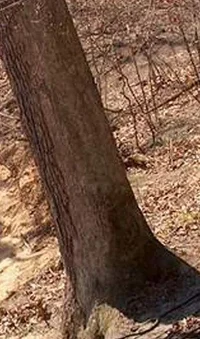
What is everyone's opinion of the stability of these trees. I don't think any structural roots were compromised by the excavation. Also the way that I have seen roots grow in sand dunes is deeper than on flat ground and back into the hill. So my thoughts are that it is allright to leave these trees.
 

Attachments

  • 23358-IM001417.webp
    23358-IM001417.webp
    131 KB · Views: 118
How far back from the cut in the last picture is the trunk?

What's the target?

Are they going to build a retaining wall or leave the soil loose? If no wall is going in I'd be a bit concerned that the soil wouldn't wash away and destablilize the tree.

Can you add some back guys from the crown of the tree to a nearby tree? A perfect place for dynamic cables. If you can, try to anchor the backguys high enough so that you don't have tripping or head-cutting issues.

A job I did one time was to pull a spruce back upright and then guy it. I anchored the spruce about 12' up and then went over to another spruce in the row. Since I was anchoring I needed to use a through bolt. I used an eye on each end of the bolt. On the "other" side I ran a cable down to a large earth anchor that I was able to screw in inside the branch skirt so that I didn't have a tripping hazard.
 
If the backfill around that concrete fixture is placed at no more than about 8" lifts and compacted to a good 90% each time I don't see there being too much of a problem; so long as it's done in a timely manner.

Glen
 
Treemann,

Is there a Naked Triangle on the back of the tree?? (a place where the bark is falling off (not all the way down to the cambium) becours of extreme growth underneath) At this place the tree is compensating for either a crown that is catching extra wind, but more likely, the tree is compensating for decay in the stem.

If the tree was ok, I don't think the digging and rootdamage would be a problem.
It's done one the slopeside so there are no roots damaged that pull the tree straight and the supportroots that carry the weight on the downside are still there.
If the digging has been done to deep there is a possibility of caving in under the pressure of the trees weight, so the pit has to be filled a.s.a.p.

BUT, if the photpgraph isn't fooling me and there is such a Naked Triangle coused by decay in the stem..... Don't bother keeping the tree.

Wolter

 
The cut is about 12 feet from the trunk. The target is going to be a house. The concrete that you see in the picture is the foundation. It is the largest tree in the area so I don't feel comfortable anchoring it to another tree. Also the closelt tree that might be able to be used is about 75+ feet away.
 
Wolter that must be a shadow because nothing is visibly wrong with the tree that I can see. Also the tree is quite a bit below the top of the dune and in a wooded environment so it is well protected from the wind.
 
When a tree tips over, the roots break on the side it tips to. If roots are cut on one side of a tree it is likely to tip that way. Thus, in this case you have to determine how many of the supporting roots are left on the house side of the tree. Since it is leaning that direction already, I would want more roots than if the tree was totally upright.
 
I'm not sure I totaly understand the statement you made. Are you saying that the tree will tip towards cut roots? It has always been my understanding and experience that roots hold the tree upright with tension, not compression. Therefore a tree will fall away from damaged roots.

Right?

Dave
 
That tree needs to be removed. It is a hazard. It's missing roots on the side where the damage triangle is located. It also has a bad lean and it did not grow into this leaning postion. It grew straight and then was wind blown in the past. The damage triangle could be from the roots being damaged when it was wind blown.

Of course that is just my opinion.

Dan
 
Consider a tree to be like a stemmed wine glass and the root system is like the base of the stem. If you cut off half the base flush with the stem, which way will it be easier to tip the glass? It is going to want to tip toward the direction of the cut off area. Another example would be a tripod - break one of the legs - which way is it going to tip?
 
[ QUOTE ]
Consider a tree to be like a stemmed wine glass and the root system is like the base of the stem. If you cut off half the base flush with the stem, which way will it be easier to tip the glass? It is going to want to tip toward the direction of the cut off area. Another example would be a tripod - break one of the legs - which way is it going to tip?

[/ QUOTE ]


I have found this to be true only on trees with large amounts of aerial roots, such as banyans. I believe most other trees to be anchored in the way that Tom and Dave described.

To see this in action go find a small sapling you don't mind killing. Use a sharp spade to cut all the roots on one side of the tree. Then pull the tree in both directions and see which way it is easier to push it over. You will find that it will easily fall away from the side with the cut roots, but not so in the other direction.
 
I have witnessed several trees that have fallen afer their roots have been damaged and they have always fallen away from the area where the roots have been damaged.
 
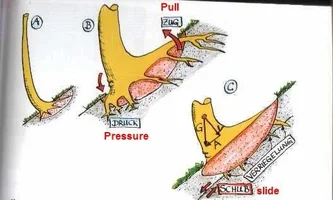
Here a drawning from a book (C. Mattheck) about forces in roots on trees on a slope. He scribes that for most bigger trees will not stabilise ground on a slope but just put more pressure and weight in so a slope sliding may happen faster then with only small trees on a slope.
 

Attachments

  • 23630-helling-matheck.webp
    23630-helling-matheck.webp
    26 KB · Views: 48

New threads New posts

Back
Top Bottom