
The banana fish is a weak argument. : ). Better to consider why such a wide array of delicious and nourishing fruit exist at all. I have not read "from fish to Gish" (isn't that written by another author about Gish?), however back in 1984 I attended a Creation debate with Gish, and cannot really imagine him holding to that view about the fossil record, in fact, as I recall, he used the fossil record as part of his defense in support of the flood record.

Navigation
Install the app
How to install the app on iOS
Follow along with the video below to see how to install our site as a web app on your home screen.
Note: This feature may not be available in some browsers.
More options
You are using an out of date browser. It may not display this or other websites correctly.
You should upgrade or use an alternative browser.
You should upgrade or use an alternative browser.
Tree Devotionals (Contain Bible Verses, so enter at your own risk)
- Thread starter CaPowell
- Start date

TreeCo
Carpal tunnel level member
The banana fish is a weak argument. : ). Better to consider why such a wide array of delicious and nourishing fruit exist at all. I have not read "from fish to Gish" (isn't that written by another author about Gish?), however back in 1984 I attended a Creation debate with Gish, and cannot really imagine him holding to that view about the fossil record, in fact, as I recall, he used the fossil record as part of his defense in support of the flood record.
I believe you are right that it is written by another, but I believe the words are Gish's. It's been 30 years ago. At any rate it is the absurdness of a creationist claim that I'm making reference to.

CaPowell
Participating member
- Location
- Stillwater, OK
Yeah, I'm not saying he didn't say that, but I would like to see the context. I have one Gish book, which I don't think I ever read the whole thing, but the title is 'Evolution: The Fossils Still Say No!". So, just going from the title, I doubt he holds the view from the quote in question.I believe you are right that it is written by another, but I believe the words are Gish's. It's been 30 years ago. At any rate it is the absurdness of a creationist claim that I'm making reference to.
CaPowell
Participating member
- Location
- Stillwater, OK
#10
It’s been a busy week and I’m a little late on this one. Spring is my favorite time of the year and I have been enjoying working in the yard and flowerbeds. With Spring comes rain, and I had a couple of rain days earlier in the week and used that time to do my taxes. I usually start on taxes a lot sooner than this, but 2022 seems to be flying by. Taxes always get me a little anxious about money. Anyway, enough about me.
I said before that I have been studying 1 Kings. A verse in chapter 18 stood out to me the other day. After three and a half years of drought, the prophet Elijah is about to have a showdown with 450 prophets of Baal on Mt. Carmel. All of Israel has been commanded to gather on the mountain. 1 Kings 18:21 says, “Elijah came to all the people and said, ‘How long will you hesitate between two opinions? If the Lord is God, follow Him; but if Baal, follow him.’ But the people did not answer him a word.” We all know how the confrontation ended. Baal, the god of crops and fertility, the god who was supposedly in charge of the weather and was often depicted with a lightning bolt in his hand was shown to be impotent. God Almighty was shown to be alive and powerful and poured forth fire from heaven and soon brought rain upon the land.
But, back to verse 21. Obviously, no one today is worshiping Baal. So, how does this verse apply to us? Does it? What is competing with God in your life? What could you swap out the word “Baal” for?
The Israelites were trying to serve both God and Baal. Does serving two masters remind you of anything?
Jesus said in Matthew 6:19-21;24, “Do not store up for yourselves treasures on earth, where moth and rust destroy, and where thieves break in and steal. But store up for yourselves treasures in heaven, where neither moth nor rust destroys, and where thieves do not break in or steal; for where your treasure is, there your heart will be also… No one can serve two masters; for either he will hate the one and love the other, or he will be devoted to one and despise the other. You cannot serve both God and wealth.”
Elsewhere, in Revelation 3, Jesus similarly said to the church of Laodicea, “I know your deeds, that you are neither cold or hot. So because you are lukewarm, and neither hot nor cold, I will spit you out of My mouth. Because you say, ‘I am rich, and have become wealthy, and have need of nothing,’ and you do not know that you are wretched and miserable and poor and blind and naked, I advise you to buy from Me gold refined by fire so that you may clothe yourself, and that the shame of your nakedness will not be revealed; and eye salve to anoint your eyes so that you may see.”
Why does Jesus say the church of Laodicea is lukewarm? Why are they “between” hot and cold? Once again, the answer is “money”. They have become wealthy.
I’ve always thought this was kind of a scary passage and would ask myself, “Am I lukewarm? Will Jesus spit me out of His mouth?” But now, I see it as a grace-filled passage. Look at verse 18 again. “I advise you to buy from Me gold refined by fire so that you may become rich…” Wait a minute- Jesus just said they were poor and now He is telling them to buy gold. With what money? With faith. Faith is the currency of Heaven. You buy with faith and He sells at a discount. A veritable steal really—free. “For the wages of sin is death, but the free gift of God is eternal life through Christ Jesus our Lord.”
I don’t know if any of that made sense or not, but maybe it might help somebody like me who is worrying about money during tax season. Money is a good tool, but a bad master. We’ve all been hesitating between two opinions for too long and it is time to go all in for Christ. “Seek first His kingdom and His righteousness, and all these things will be added to you.”
It’s been a busy week and I’m a little late on this one. Spring is my favorite time of the year and I have been enjoying working in the yard and flowerbeds. With Spring comes rain, and I had a couple of rain days earlier in the week and used that time to do my taxes. I usually start on taxes a lot sooner than this, but 2022 seems to be flying by. Taxes always get me a little anxious about money. Anyway, enough about me.
I said before that I have been studying 1 Kings. A verse in chapter 18 stood out to me the other day. After three and a half years of drought, the prophet Elijah is about to have a showdown with 450 prophets of Baal on Mt. Carmel. All of Israel has been commanded to gather on the mountain. 1 Kings 18:21 says, “Elijah came to all the people and said, ‘How long will you hesitate between two opinions? If the Lord is God, follow Him; but if Baal, follow him.’ But the people did not answer him a word.” We all know how the confrontation ended. Baal, the god of crops and fertility, the god who was supposedly in charge of the weather and was often depicted with a lightning bolt in his hand was shown to be impotent. God Almighty was shown to be alive and powerful and poured forth fire from heaven and soon brought rain upon the land.
But, back to verse 21. Obviously, no one today is worshiping Baal. So, how does this verse apply to us? Does it? What is competing with God in your life? What could you swap out the word “Baal” for?
The Israelites were trying to serve both God and Baal. Does serving two masters remind you of anything?
Jesus said in Matthew 6:19-21;24, “Do not store up for yourselves treasures on earth, where moth and rust destroy, and where thieves break in and steal. But store up for yourselves treasures in heaven, where neither moth nor rust destroys, and where thieves do not break in or steal; for where your treasure is, there your heart will be also… No one can serve two masters; for either he will hate the one and love the other, or he will be devoted to one and despise the other. You cannot serve both God and wealth.”
Elsewhere, in Revelation 3, Jesus similarly said to the church of Laodicea, “I know your deeds, that you are neither cold or hot. So because you are lukewarm, and neither hot nor cold, I will spit you out of My mouth. Because you say, ‘I am rich, and have become wealthy, and have need of nothing,’ and you do not know that you are wretched and miserable and poor and blind and naked, I advise you to buy from Me gold refined by fire so that you may clothe yourself, and that the shame of your nakedness will not be revealed; and eye salve to anoint your eyes so that you may see.”
Why does Jesus say the church of Laodicea is lukewarm? Why are they “between” hot and cold? Once again, the answer is “money”. They have become wealthy.
I’ve always thought this was kind of a scary passage and would ask myself, “Am I lukewarm? Will Jesus spit me out of His mouth?” But now, I see it as a grace-filled passage. Look at verse 18 again. “I advise you to buy from Me gold refined by fire so that you may become rich…” Wait a minute- Jesus just said they were poor and now He is telling them to buy gold. With what money? With faith. Faith is the currency of Heaven. You buy with faith and He sells at a discount. A veritable steal really—free. “For the wages of sin is death, but the free gift of God is eternal life through Christ Jesus our Lord.”
I don’t know if any of that made sense or not, but maybe it might help somebody like me who is worrying about money during tax season. Money is a good tool, but a bad master. We’ve all been hesitating between two opinions for too long and it is time to go all in for Christ. “Seek first His kingdom and His righteousness, and all these things will be added to you.”
CaPowell
Participating member
- Location
- Stillwater, OK
#11
Happy Friday, guys! Here’s another one from the book Inspired Evidence by Bruce Malone. I think this is pretty cool:
Have you considered the timber beetle larva? This thumb-sized insect eats trees by slicing through wood fiber with its mandibles, or jaws. That’s what Oregon logger Joseph Buford Cox (1905-2002) realized when he was taking a rest break from chopping wood. He noticed that the mandibles were C-shaped and moved sideways, like scissors cutting. Earlier in the twentieth century, chainsaws had teeth that were pointed like those on a hand saw. The original chainsaws were just copies of hand saws. Cox decided to copy the beetle’s curved C-shaped mandibles and see what would happen. The result was astonishing; his newly designed chainsaw chain cut quickly and cleanly through wood much more efficiently than earlier designs. Cox went on to establish the Oregon Chain Saw Company. The fact that God is behind the design of nature is truth and reality. It is our privilege to search out the Creator’s secrets and apply them to our daily lives.
Happy Friday, guys! Here’s another one from the book Inspired Evidence by Bruce Malone. I think this is pretty cool:
Have you considered the timber beetle larva? This thumb-sized insect eats trees by slicing through wood fiber with its mandibles, or jaws. That’s what Oregon logger Joseph Buford Cox (1905-2002) realized when he was taking a rest break from chopping wood. He noticed that the mandibles were C-shaped and moved sideways, like scissors cutting. Earlier in the twentieth century, chainsaws had teeth that were pointed like those on a hand saw. The original chainsaws were just copies of hand saws. Cox decided to copy the beetle’s curved C-shaped mandibles and see what would happen. The result was astonishing; his newly designed chainsaw chain cut quickly and cleanly through wood much more efficiently than earlier designs. Cox went on to establish the Oregon Chain Saw Company. The fact that God is behind the design of nature is truth and reality. It is our privilege to search out the Creator’s secrets and apply them to our daily lives.

- Location
- Retired in Minneapolis
Great example of the evolution of an idea that solves the same problem better.

Reach
Been here much more than a while
- Location
- Atglen, PA
I never knew that, that’s fascinating! It is amazing to me to see how many different ways we have copied creation in our mechanical devices. Thank you for sharing that factoid!#11
Happy Friday, guys! Here’s another one from the book Inspired Evidence by Bruce Malone. I think this is pretty cool:
Have you considered the timber beetle larva? This thumb-sized insect eats trees by slicing through wood fiber with its mandibles, or jaws. That’s what Oregon logger Joseph Buford Cox (1905-2002) realized when he was taking a rest break from chopping wood. He noticed that the mandibles were C-shaped and moved sideways, like scissors cutting. Earlier in the twentieth century, chainsaws had teeth that were pointed like those on a hand saw. The original chainsaws were just copies of hand saws. Cox decided to copy the beetle’s curved C-shaped mandibles and see what would happen. The result was astonishing; his newly designed chainsaw chain cut quickly and cleanly through wood much more efficiently than earlier designs. Cox went on to establish the Oregon Chain Saw Company. The fact that God is behind the design of nature is truth and reality. It is our privilege to search out the Creator’s secrets and apply them to our daily lives.
- Location
- Retired in Minneapolis
Time to tell the Velcro or Post It Note story.
Flying squirrel wing suit?
Ripley's 'Alien' exoskeleton?
Nice examples of evolutionary ideas.
Flying squirrel wing suit?
Ripley's 'Alien' exoskeleton?
Nice examples of evolutionary ideas.
Last edited:
- Location
- Retired in Minneapolis
@CaPowell
I read a few passages from Bruce Malone's book.
He writes about penguins having solid bones which are adapted for swimming but not flying. Flying birds have lighter, hollow bones, apparently.
This video from BBC, made in 2008, shows flying penguins. Something neither Bruce nor I knew about.
This bone topic caught my interest so I did some reading. Lots to learn about adaptations. This research paper was a challenge to read but with a dictionary I got through it. Penguins are an interesting species that 'fly' underwater in the same conceptual way that submarines do.
I read a few passages from Bruce Malone's book.
He writes about penguins having solid bones which are adapted for swimming but not flying. Flying birds have lighter, hollow bones, apparently.
This video from BBC, made in 2008, shows flying penguins. Something neither Bruce nor I knew about.
This bone topic caught my interest so I did some reading. Lots to learn about adaptations. This research paper was a challenge to read but with a dictionary I got through it. Penguins are an interesting species that 'fly' underwater in the same conceptual way that submarines do.
CaPowell
Participating member
- Location
- Stillwater, OK
I'll have to read the paper when I have a chance. That video is great! It is an April Fool's day prank they put out in 2008. At first, I was like "what?!" Those wings look way too small to carry their weight, but they did a good job making it look real.@CaPowell
I read a few passages from Bruce Malone's book.
He writes about penguins having solid bones which are adapted for swimming but not flying. Flying birds have lighter, hollow bones, apparently.
This video from BBC, made in 2008, shows flying penguins. Something neither Bruce nor I knew about.
This bone topic caught my interest so I did some reading. Lots to learn about adaptations. This research paper was a challenge to read but with a dictionary I got through it. Penguins are an interesting species that 'fly' underwater in the same conceptual way that submarines do.
- Location
- Retired in Minneapolis
CaPowell
Participating member
- Location
- Stillwater, OK
I know. It had me for a minute.What?!?! NOOOO! LOL
- Location
- Retired in Minneapolis
I'm thinking maybe I need to add the tag line "videos are not research".
: )
After reading Malone's comments about penguins I spent about an hour reading a bunch of articles related to flying, non-flying and swimming birds. Like so many evolutionary issues the timelines for birds has some gaps. In so many cases those gaps get filled in as time and research move along. That's when I found the flying penguin video LOL
Believing young Earth ideas makes no sense to me. With so little science the ideas are disproved. And, no, I'm not going to go and post links to disproving YE. Anyone who wants to can do your own reading.
CaPowell
Participating member
- Location
- Stillwater, OK
I love you, Tom. For several reasons: 1. Your tree knowledge is enviable and I have learned a lot from you from "lurking" on here over the years. Heck, I've been trying to save up to get my chipper painted, but you have me half inspired to tackle the job myself now from your comments in another thread. 2. You love learning and seeking out the truth.After reading Malone's comments about penguins I spent about an hour reading a bunch of articles related to flying, non-flying and swimming birds. Like so many evolutionary issues the timelines for birds has some gaps. In so many cases those gaps get filled in as time and research move along. That's when I found the flying penguin video LOL
Believing young Earth ideas makes no sense to me. With so little science the ideas are disproved. And, no, I'm not going to go and post links to disproving YE. Anyone who wants to can do your own reading.
With that being said, I have to respectfully disagree with this. There is a lot of circular reasoning going on to date the rocks at hundreds of millions of years (the fossils are used to date the rocks, the rocks are used to date the fossils...). Most methods point to a young earth. I think I may have an extra copy of a book called "The Young Earth" by John Morris. He does a good job of showing how the ages of rocks are typically calculated and the assumptions that are involved. If you are even slightly interested, I'd be happy to mail you a copy.
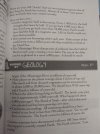
I hate to just parrot other people, but this is all I have time for tonight. Here is a page from that same book by Bruce Malone, "Inspired Evidence."
Last edited:
- Location
- Retired in Minneapolis
You can believe in YE...I don't. No use trying to change my mind.
Each point in the scanned page are easy to refute by pointing out conveniently ignored points. So much of the YE ramblings are built on the belief that what is above the water now is what the world has looked like for global history. Continental drift is totally ignored. Upheavals are totally ignored.
Anyway...take some time and read what the non-YE thinkers say about YE.
Each point in the scanned page are easy to refute by pointing out conveniently ignored points. So much of the YE ramblings are built on the belief that what is above the water now is what the world has looked like for global history. Continental drift is totally ignored. Upheavals are totally ignored.
Anyway...take some time and read what the non-YE thinkers say about YE.
CaPowell
Participating member
- Location
- Stillwater, OK
This bone topic caught my interest so I did some reading. Lots to learn about adaptations. This research paper was a challenge to read but with a dictionary I got through it. Penguins are an interesting species that 'fly' underwater in the same conceptual way that submarines do.
I finally had a minute to take a look at this. You are right, the technical jargon was way above my head and I'm sure the author's IQ is about 50 points higher than mine.
I think this paragraph from the introduction sums up the standard evolutionary position pretty well:
"George Gaylord Simpson proposed a three-stage theory of penguin evolution: an initial volant stage; a stage during which small-bodied early penguins were capable of both aerial flight and wing-propelled diving; and a final flightless wing-propelled diving stage (Simpson, 1946). Placing the acquisition of key morphological adaptations within the context of this three-stage model is key to understanding broad-scale patterns in the evolutionary history of penguins. Unfortunately, no fossil ‘proto-penguins’ from the first two stages have been recognized. Nonetheless, penguins have an extensive fossil record from the final flightless stage that, together with comparisons to extant penguins and outgroup taxa, can provide insight into the pattern of acquisition of the many derived features that these birds employ in underwater wing-propelled diving."
Basically, because of preconceived notions, they "know" there must have been three stages to penguin evolution. Unfortunately, the first two stages are not supported (yet) by the fossil record. So, let the fanciful conjecture ensue by looking at outgroup taxa that are not penguins or related to penguins. This is 100% speculative.
With such a vast and diverse assortment of fossils, folks can line up animals with similar traits in various forms of complexity to make the record say whatever they want it to, but the fact remains that this doesn't mean one came from the other. I could line up a unicycle, a bicycle, a motorcycle, a motor trike, a compact car, a midsize truck, a nice medium-duty chipper truck, and finally, a forestry bucket truck with a 60' boom and try to tell you that this is the evolutionary history of a bucket truck. Look at the gradual increase in the number and size of the wheels. Look at the gradual increase in engine size over the years. And, look at that amazing boom that arose over the eons from natural selection! No one would buy that, would they?! The fact is, each vehicle was designed for a specific reason and serves a specific purpose. Each vehicle is fully formed. No where is there a motor trike dragging a half-developed fourth wheel behind it. The wheel would have to be fully formed from the start to increase the vehicle's ability to survive. A gimp wheel (or wing, or leg, or eye, or reproductive organ for that matter) would weed the specimen out. How many mutations would have to occur at the same time to form an arm or leg? Hundreds? Thousands? I don't know, but I do know the number is beyond astronomical, especially considering there are no known beneficial mutations. Mutations are a loss of information. We are devolving if anything. This is the second law of thermodynamics (the law of increased entropy) at play. Systems move from orderly to disorderly if left on their own. Mutations are building up in the human genome. We see this readily with an increase in genetic disorders and disabilities.
- Location
- Retired in Minneapolis
Mutations are building up in the human genome. We see this readily with an increase in genetic disorders and disabilities.
I don't believe that there are more. Scientists are finding better tools and tests to find out what has always been there.
I'd really like to understand how YE believers explain continental drift as well as Gondwana (and Pangaea).
the inconsistency of incorporating speculation when it suits but not all of the time makes me roll my eyes.
CaPowell
Participating member
- Location
- Stillwater, OK
I'm not familiar with Gondwana right off hand. I believe Pangaea is usually attributed to the global flood. The old world was completely destroyed. "The floodgates of heaven were opened and the fountains of the deep burst forth." This would probably include tectonic shifting, earthquakes, and massive volcanic activity. I believe a common view is that the ice age came after the flood, which would have locked up a lot of the ocean water, causing lower ocean levels (which can be documented by ancient cities hundreds of feet underwater), and more land bridges (likely how aborigines made it to Australia). Anyway, don't quote me on any of that.I don't believe that there are more. Scientists are finding better tools and tests to find out what has always been there.
I'd really like to understand how YE believers explain continental drift as well as Gondwana (and Pangaea).
the inconsistency of incorporating speculation when it suits but not all of the time makes me roll my eyes.
CaPowell
Participating member
- Location
- Stillwater, OK
Basically, the Flood is the answer to most of the questions and interpreting the geologic record.I don't believe that there are more. Scientists are finding better tools and tests to find out what has always been there.
I'd really like to understand how YE believers explain continental drift as well as Gondwana (and Pangaea).
the inconsistency of incorporating speculation when it suits but not all of the time makes me roll my eyes.
New threads New posts
-
test
-

-

-
Renesters -- how do wildlife rescue orgs work with you?
- Started by BurOakTom
- Replies: 0
-
-

-

