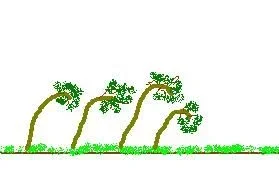
Topping a small leaner

Ocassionaly I have a small tall leaner about 8-10"dbh that I need to remove and can usually cut it from the ground.
My question on these springy little gads is dropping the top while on gaffs.
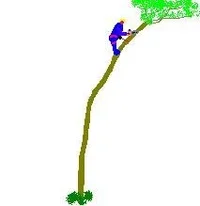
It`s necessary to stay on the high side so in your opinion would the cut of choice be a rather quick slice cut from the high side all the way through?
 

Attachments

  • 3493-leaningpoplar.webp
    3493-leaningpoplar.webp
    3.3 KB · Views: 133
Depending on how much it is leaning, I typically use either a jump cut or a narrow notch with the back cut higher than the face cut. The idea is to jump the butt out away from me and the trunk so it doesn't come back at me. The only downside is that it usually makes a fairly large divot when the butt buries in the ground. If I have room, I'll make the notch larger so it lands flatter. On skinny pines like you describe I will make sure I'm tied in well with a full wrap around the trunk using my lanyard and my lifeline over a fork. Even if it shakes I'm not going anywhere and the top cannot hit me so I just ride it out.
 
Brian;
The problem I see with the jump cut is getting in on the bottom side of the lean to make the bottom cut without falling off the side of the tree.
There are no branches to tie into here so perhaps a sling or friction saver around the main spar to tie into then drop off the side of the tree and make the bottom cut?
The only thing I don`t care for here is being tied into the top that I`m carving on.
These are small poplars with lots of bounce.
 
I stay on the top side and reach around the trunk with my saw. I use the top of the bar and judge where my cut is by eyeballing from the side. I'm no good at hanging off the bottom side of a leaner. You don't need to be facing the bottom side to make your kerf or notch.
 
I like the illustration, people putting that sort of effort into their posts really make this site a valuable resource! However, I don't see why you would use a slice cut on a tree like that. Are you in a situation In which you won't get raked by the canopy coming straight down? If I was in that same tree I would put a small but fairly deep face on the downhill side. That way the top is coming out in a two part motion: 1) the top falls away from me 2) the sharp angle of the face cut gives the butt a nice little "pop" as the hinge closes. This "pop" tends to get the whole peice pretty far away from me. The other option would be to use a larger downward opening face so that the hinge doesn't quite close before the holding wood breaks. This is always nice in that it seems to put less pressure on the pole as it's departing.(this pressure is described in excellent detail in Mr. Beraneks book) Hope I've been of some help. Keep up the good posts!
 
I agree with both of you on the methods, a jump or open face would be my first choice if the face was easy access.
The tops have a good lean and should fall straight to the ground without any interference.
I can try executing these face cuts from the back side, thanks for the advice.
 
i'm guessing what you are talking about is a single cut from the up side of a leaner (the back side) straight through to the front side(the face) without making a front side cut. i also know this as a rip cut. i would not do a ripcut while Gaffed into a leaner because the bark may tear down into you lanyard(and/ or flipline) if this happen you might be pulled into the tree. i supose one cut from the back might work if your chainsaw was very fast, but why risk it. make a jump cut and then kill the tree at ground level if possible. use some rigging line on the canopy if necessary to reduce any chace of hurting the client's landsacape and/or lawnscape. there are fast ways to do things and then there are safe ways to do things.
 
The other thing to consider here is the fact that these aren't happy trees.
They were subjected to considerable stress and without a proper face cut there may be an added risk involved.
These trees are along the highway, out in the open and would only be considered for removal for utility line interference.
Most can be taken from the ground without any risk involved but I may come across one that requires climbing, not probable but possible.
 
Thanks for the clarification. But would you actually want to be on a tree cutting it, as you've been discussing, if it was leaning following such an event.

If a trees normal attitude had changed from upright to 45 degrees then, I feel, removing it by climbing (without a secondary line in a sound tree) would have to be ruled out.

or have I missed something here?
 
No, you haven't missed anything, you've pretty much nailed it.
They might be dangerous to work on, I don`t know for sure.
I just wanted to get a few opinions.
 
If a tree has a natural lean as we've discussing then I would take a normal cautionary approach to climbing and cutting it as discussed - taking into account tension / compression etc and the effect of cutting all the dampening branches off.

But with a tree that has recently changed in attitude to such a degree, I would not climb it and cut is as discussed with out a back up line in a sound tree or with out considering other removal options.

hey isn't this forum great that a guy in New Zealand can swap notes with someone in Ontario...
 
I always look for "the sweet spot". The higher you climb in a tree like that the less the top weighs, but the higher you climb the smaller the diam. Somewhere in the middle is the "sweet spot". Considering that you are talking about a popular tree it will be lower than normal because of the tendancy for them to pop.
 

New threads New posts

Back
Top Bottom