Toad

Mark Chisholm

Administrator
Administrator
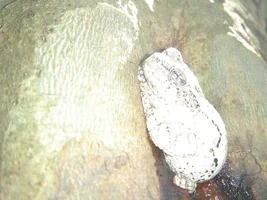
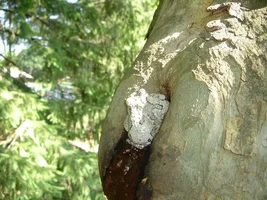
I ran across this lil creature in my backyard this summer. He was getting out of the heat in a old wound in my Plane tree. Anyone every see a white toad like this?
 

Attachments

  • 34141-whitey.webp
    34141-whitey.webp
    70.2 KB · Views: 162
Mark... hmmm, it sure looks like a species of tree frog. It's hard to tell because he's so over exposed in the photo though, unless the frog was actually white. Then I have no clue. Did he look something more along the lines of this:

27279088-M.jpg


If so, he's a Grey Tree Frog, Hyla versicolor.. there's a bit whiter version of it, I think that's also called the Grey Tree Frog but a different species H. chrysoscelis. But there are huge variations as with most species. Nice find though, they are a lot of fun to catch, and they are the only frogs where I am in the northeast with sticky feet. And they're adorable to boot.

mateo
 
I have a customer who has a pool. They are constantly getting white frogs; the frogs get stuck in the pool, and are consequently bleached white.
 
I've only encountered one tree frog, he was a little green fella hanging out in the foiliage of a white pine. It's amazing how various creatures have evolved to live in habitats that are so different from the more conventional habitats (tree frogs vs. pond frogs).
 
It is amazing. But I think even more amazing is the continued survival of the gene for albinism in vertebrates. If frogs and reptiles have the gene, then you know the gene's been around for millions of years. Yet the gene continues to manifest itself right into reptile and amphibian successors, mammals, and even among one of the most highly evolved species known: man.

You'd think anything that'd make an organism stand out so to prey would be selected against in the survival game after millions of years, but albinos are still around. It's uncanny! I often think similarly of the gene for homosexuality (if there is one). It must confer some advantage adaptationally, or you'd think it'd been selected against many, many generations ago. Weerd.
 
Mateo is correct in the ID, Gray Treefrog. As he mentioned there are two species that are externally similar, can only be ID'd by call or in the lab. The white coloration is within the range of color for the two species. They're normally gray but can be green, brown and nearly white as in Marks' photo. They can change color similar to a chameleon, takes about an hour for them to shift their color to a new background color. They can also handle really low temperatures, they make glycerol (antifreeze) in their blood. A cool little critter! Thanks for posting it Mark.
-moss
 
Hey NotaHacker, check out the photo again and you'll see that it has some dark markings and it's eyes have pigmentation. Albino animals are pure white with pink /red eyes (no pigment anywhere).

In my neighborhood we had two albino squirrels apparently from the same litter (gray squirrels). Don't know if they're still around but the redtailed hawks have an easier time spotting them. There are also a couple of black squirrels around, that is a known gray squirrel color variation. They seem to survive into old squirrel age.
-moss
 
I'd have to agree with mateo's and Moss's observations. I thought it was due to albinism, but I didn't realize frogs could take on colours like lizards. Sycamores are rather light-coloured, after all.
 

New threads New posts

Back
Top Bottom