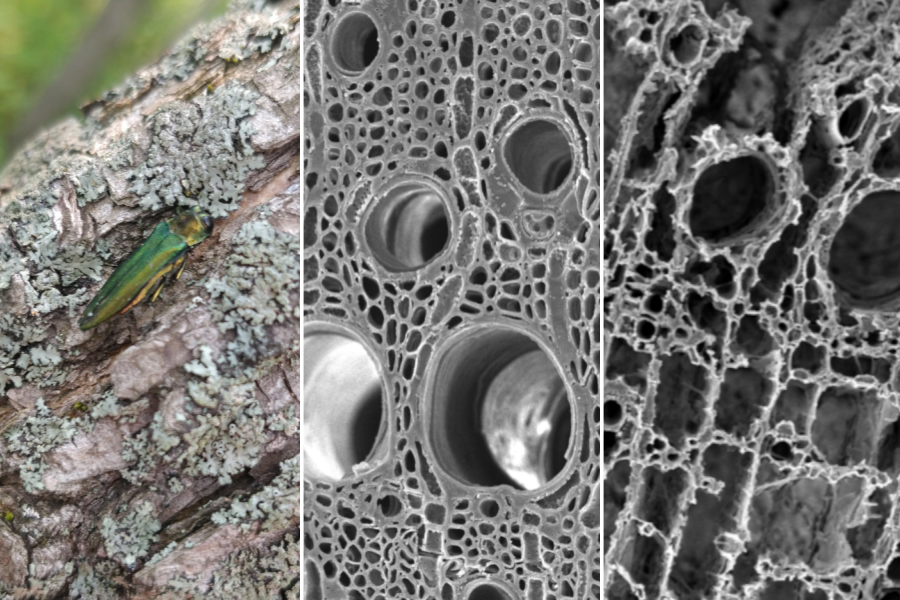
Strength loss in EAB infested trees

Maybe if we learn how to treat the fungus will we be able to better control this problem. Anything will help.
It is getting too close to my turf now, and I have thousands of black ash trees. I foresee cutting them all down soon for firewood before the EAB hits the area. But one hates to cut them down if there is hope on the horizon. I fear it will come too late for me.
 
It’s interesting to read this, as it is something we have been experiencing since EAB first moved in to the area. Those trees really get hazardous and fall apart fast! I’ve long been certain that something related to the EAB caused it, it’s nice to have science to now explain more about it.
 
It’s interesting to read this, as it is something we have been experiencing since EAB first moved in to the area. Those trees really get hazardous and fall apart fast! I’ve long been certain that something related to the EAB caused it, it’s nice to have science to now explain more about it.

This is the science to go with the art.
 
With respect to the "fall apart fast" angle, here is my take: (1) Ash wood does not resist decay by fungi and (2) Infestation by EAB and decay infection often occurs undiagnosed for several years. Consequently, there is loss of structural integrity while no one is looking. Seems to progress quickly, which is true, but much of the progression occurs before the alarm is raised.
 
With respect to the "fall apart fast" angle, here is my take: (1) Ash wood does not resist decay by fungi and (2) Infestation by EAB and decay infection often occurs undiagnosed for several years. Consequently, there is loss of structural integrity while no one is looking. Seems to progress quickly, which is true, but much of the progression occurs before the alarm is raised.
This is true, usually by the time we are called the trees have been dead or dying for several years.


Still though, they seem to decay more rapidly than they might otherwise. They certainly are one of the fastest decaying trees around here, they seem to decay in some cases faster even then Ailanthus.
 
I have to chime in on this one.
I have thousands of Black Ash trees on my property. About ten years ago now, the beavers built a dam on a small spring feed creek that runs through my ash swale. Something in the neighborhood of 15 acres of black ash went under water as the area flooded. Not that deep, only about a foot over the top of their root system, but it was enough to kill the entire lot that flooded. I'm talking about hundreds of trees. They have remained in that condition (dead and sitting in that water) for ten years. The bark has fallen off of them and the crappy limbs have fallen, but if I wade out there and cut one down, they are still solid as a rock.
We do not yet have the EAB, and thus, apparently not the fungus that goes along with it. Could be that standing in water has some bearing on their condition. Maybe it is a mote protecting them from decaying critters. I don't know.
I do not have any control dead black ash on dry land to compare them with as I have always harvested a dying tree for firewood. But as I do not have a place to burn firewood except for my outdoor fire pit, I am going to leave the next dying one alone to see how long it holds up compared to the ones sitting in that flooded zone.
 
It is getting too close to my turf now, and I have thousands of black ash trees. I foresee cutting them all down soon for firewood before the EAB hits the area.
I have an unfounded theory I’d like you to test for me. Every single medium or large ash tree in my neck of the woods is completely dead, aside from one tree that got topped for the power lines 6 years ago, which was just a year or two before EAB started creeping in. The young shoots that sprouted out are still alive. It’s an ugly tree, but it’s the only ash standing that isn’t a sapling or hasn’t been juiced up.

Would ya top the shit out of some ash for us, for science?

I’ll buy you a beer.
 
I have an unfounded theory I’d like you to test for me. Every single medium or large ash tree in my neck of the woods is completely dead, aside from one tree that got topped for the power lines 6 years ago, which was just a year or two before EAB started creeping in. The young shoots that sprouted out are still alive. It’s an ugly tree, but it’s the only ash standing that isn’t a sapling or hasn’t been juiced up.

Would ya top the shit out of some ash for us, for science?

I’ll buy you a beer.
Yes. I am going to be doing several experiments with the ash trees. I will make sure to give this one a go as well.
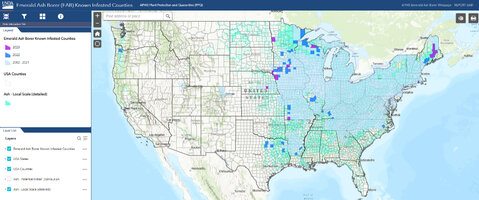
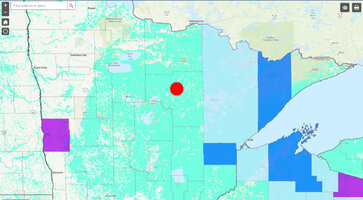
The EAB is still about 75 miles from here, but that is damn close for the rate it is traveling. This year or the next for sure.
Top, as in top, or top as in prune the hell out of it?
Don't drink, but you can buy me a cigar.
 
Last edited:
Yes. I am going to be doing several experiments with the ash trees. I will make sure to give this one a go as well.
The EAB is still about 75 miles from here, but that is damn close for the rate it is traveling. This year or the next for sure.
Top, as in top, or top as in prune the hell out of it?
Don't drink, but you can buy me a cigar.
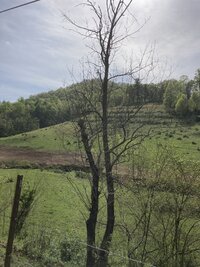
Here is my case study. They pretty much cut the entire canopy out of this lead- and we haven’t quite leafed out yet but looks like the topped lead is mostly alive, while the other stem crapped out sometime last year, finally.

Where does one even find cigars??
 

Attachments

  • 58C1F523-02AC-4C11-8B81-2968774A23B1.jpeg
    58C1F523-02AC-4C11-8B81-2968774A23B1.jpeg
    825.4 KB · Views: 6
Here is my case study. They pretty much cut the entire canopy out of this lead- and we haven’t quite leafed out yet but looks like the topped lead is mostly alive, while the other stem crapped out sometime last year, finally.

Where does one even find cigars??
Okay, got it. I will do my best to duplicate what you have there, and we shall see what happens.
Carolina Cigar Company
45 Broadway Street
Asheville, NC
 
Okay, got it. I will do my best to duplicate what you have there, and we shall see what happens.
Carolina Cigar Company
45 Broadway Street
Asheville, NC
Also your local Cigar, Cigars branch, they seem to be pretty well distributed around. Or order online at Cigars International.
 
Also your local Cigar, Cigars branch, they seem to be pretty well distributed around. Or order online at Cigars International.
Cigar International is where I get mine.
When I travel, I go by where the cigar store are located, not by where the restaurants are located.
Expensive habit. Way more expensive than drugs.
 
Last edited:
Maybe if we learn how to treat the fungus will we be able to better control this problem. Anything will help.
It is getting too close to my turf now, and I have thousands of black ash trees. I foresee cutting them all down soon for firewood before the EAB hits the area. But one hates to cut them down if there is hope on the horizon. I fear it will come too late for me.

I wonder if the fungus acts the same on black and green ash. the distribution of black ash inthe midwest US and into Canada is huge. In many areas it is the total forest, maybe the climax tree for the area. No hope of containing EAB once it gets to the black ash woods. Since most of those woods are far enough north to continue having sub zero temps to kill the larva the hope is that it won'd kill off black ash like pines out west.
 
I wonder if the fungus acts the same on black and green ash. the distribution of black ash inthe midwest US and into Canada is huge. In many areas it is the total forest, maybe the climax tree for the area. No hope of containing EAB once it gets to the black ash woods. Since most of those woods are far enough north to continue having sub zero temps to kill the larva the hope is that it won'd kill off black ash like pines out west.
There doesn't seem to be any green ash in my neighborhood. One of my friends planted some about five years ago, but it all died the first year. May have been his doing and not the local, I don't know. But I understand that Duluth area is losing trees from the EAB, and that gets down into the 20 below range, even with the lake warmth. It would be grand if the 35-40 below kills it. But we have an abondance of Bronze wood bore here that kills the paper birches. Even the 60 below doesn't do anything to kill it off. This area use to be covered with 18 inch diameter birch. Now if you can get one past 4 inches before the BWB kill it you are doing well. It sort of hibernates in the tree until the tree is stressed by drought, then it goes to work. So every few years it wipes them out again, and again, and again. The Forest Circus came out with a birch that was supposed to be BWB resistant. I bought a couple hundred and planted them. The BWB killed them off the first drought. Made it about three years.
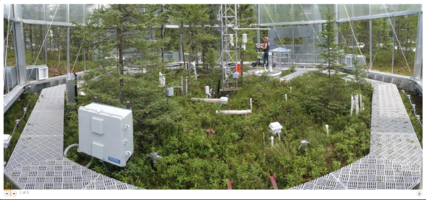
We will have to wait and see I guess. The DOE in conjunction with the Forest Circus has an experimental forest set up near here. Quite the operation. Currently it is monitoring global warming effects introduced artificially on spruce and peat bogs. It would be nice to see them tackle the EAB problem, but it doesn't appear they are interested in that at this location. However it is an interesting place to visit.
Screenshot 2023-04-21 072047.png
Screenshot 2023-04-21 072004.png
 
Last edited:
It would be nice to see them tackle the EAB problem, but it doesn't appear they are interested in that at this location. However it is an interesting place to visit.
That's true, the peat bog / carbon cycling project at the Marcell Experimental Forest studies...peat bogs. True, some ash like wet feet perhaps, but this is more black spruce / alder habitat. EAB as well as Chestnut Blight and Dutch Elm disease are studied by my coworkers particularly in Delaware, OH (near Columbus). They continue to develop a better fundamental understanding of the creatures as well as work with state and tribal folks on EAB management. Me? I don't do much with bugs.
 
That's true, the peat bog / carbon cycling project at the Marcell Experimental Forest studies...peat bogs. True, some ash like wet feet perhaps, but this is more black spruce / alder habitat. EAB as well as Chestnut Blight and Dutch Elm disease are studied by my coworkers particularly in Delaware, OH (near Columbus). They continue to develop a better fundamental understanding of the creatures as well as work with state and tribal folks on EAB management. Me? I don't do much with bugs.
Most of my black ash have wet feet. They seem to thrive with wet feet. When the beaver built the dam and flooded about 15 acres of my ash swale, I thought they would be okay as the water only came up about a foot around their already 3-4 inches of water around their bases. I was wrong. All of those died. A bit too much water.
I live very near the Marcell Experimental Forest. An interesting place to visit, and the people there are more than willing to take as much time as you want to have them explain what they are doing. Good group of people.
 
Peat bogs and black spruce we've got lots of around here. Couldn't have picked a better place to study them.
For those interested, Marcell is not a town. Marcell is an area within the Chippawa National Forest. We do have a post office though, where you have to go to get your mail. I try and limit myself to two trips there a week. Mail is not important enough to go there more than that. Usually when I go to the dump. We don't have garbage pickup either. None of the city stuff around here. Get a house fire and the Forest Circus trucks show up... sometime. Actually, they wait until every available person on duty gets together and then they come so everybody can get hazard pay for the day. In the meantime, your foundation is cooling down. Hence, fire insurance here is very high.
 

New threads New posts

Back
Top Bottom