*Solo rigging* Whatcha using? Swivel Bail Shackle and similar methods/?

Pitch may be an issue...

Otherwise, I'd start with NC speedline over the next whorl up, potentially tightened with a foot ascender or foot wrap on the tail,

coming down to a stub/limb on the current whorl being pruned , used for friction/ tie-off.


If pitch is an issue, the most basic would be to redirect through a SL sling/ biner at the whorl above,

And use a sling and hms/ munter hitch compatible biner.

The long limbs can be sling in the middle, it double slung at the butt, and far out the limb, giving a bit more clearance.
 
I’d keep the tensioning system very simple. A foot ascender and a hitch should really be all you need. If you need a 2:1 or more I’d develop a different plan

If you want to make it way complicated you can use the self release lowing system earlier in this thread on a trolly for a controlled retrievable speedline
 
Pitch may be an issue...

Otherwise, I'd start with NC speedline over the next whorl up, potentially tightened with a foot ascender or foot wrap on the tail,

coming down to a stub/limb on the current whorl being pruned , used for friction/ tie-off.


If pitch is an issue, the most basic would be to redirect through a SL sling/ biner at the whorl above,

And use a sling and hms/ munter hitch compatible biner.

The long limbs can be sling in the middle, it double slung at the butt, and far out the limb, giving a bit more clearance.

Thanks for the guidance, man. A couple of questions...

I honestly think totally going natural crotch is likely to work on this tree due to the low weights of most of it...but I'm still trying to work out how to natural crotch on a speedline.

Is the most important point to make sure that there is more weight between the line/crotch and the tip of the limb than between the butt and line/crotch?

Do you run the line through all the desired crotches before redirecting it above and tensioning?

NC would def be the preferred choice. I just gotta get out and do it.
 
All that MA crap will be a serious pain to climb with. A single point of tension adjustment would be enough for basic speed line, as a ground man can usually run a speed line with a single redirect, or even by hand depending on line angle/height.
One picture had a prussik and pulley for tension and that would be the most junk I would want to deal with. The limitation being you would have to keep it close to your cut position, but redirects could get the line higher if necessary.
 
All that MA crap will be a serious pain to climb with. A single point of tension adjustment would be enough for basic speed line, as a ground man can usually run a speed line with a single redirect, or even by hand depending on line angle/height.
One picture had a prussik and pulley for tension and that would be the most junk I would want to deal with. The limitation being you would have to keep it close to your cut position, but redirects could get the line higher if necessary.

No kidding on all the junk - it kind of left the realm of what I wouldn't mind doing after it required another sling below the redirect.

I'm starting to believe, from what the more experienced here are saying, that I might be okay with just tensioning with bodyweight or foot ascender. The main sling/pulley/prusik redirect was so that I didn't have to cut one handed or do something goofy/sketch to try and apply tension after the cut.

I need a big limb in the yard to practice with xD
 
Last edited:
Used it today. Pine tree removal. Progress capture with footie for tensioning. JUST kept the pieces small and didn't negative rig any tops into it. Worked incredibly well. Homeowner was there to help, so I even controlled several of the pieces with the tail of the speedline on the way down (wrapped around stub for friction), and he unhooked them and sent back up slings
 
Nice. That's a cool idea for a controlled speed line. A midline anchor to adjust tension and the tail end to brake. Climber has to do all the back hauling and friction work, but this seems very not bad for a solo climber with a "helper."
 
Nice. That's a cool idea for a controlled speed line. A midline anchor to adjust tension and the tail end to brake. Climber has to do all the back hauling and friction work, but this seems very not bad for a solo climber with a "helper."

Doing it totally solo, it would have been nice to have had allot more slings (was working with 6 of random sizes, some wayyyyy too big - two ten footers), but as things were, it was fine. Learned some lessons, such as 'the first piece doesn't need much tension applied, as it just runs down and slams into the anchor (truck hitch); no damage (it's a hitch!) but still...next time.
 
Get yourself a 25 or 50 yard (maybe meter) of Sterling 1” tubular webbing and use beer knots on them. Great for speedline work and ridiculously inexpensive compared to factory sewn loop runners.

Awesome tip! Thanks, man. Edit: @Jonny - oh man, I'm looking at this webbing and lusting over how lightweight it'll be compared to those ultra heavy-duty yellow CMI nylon slings. aaaaaahh! Any good references on where to get the long rolls you're referring to?

Another edit: found them on wesspur. ordering 50yds. it looks like that'll make about 16 x 4' slings or 21 x 3' slings, or so.

I also tried hitching multiple limbs to one sling a couple of times, on the ten footers. That worked okay for the obstacles I had to clear this time, but I would've liked them to have been closer to the speedline itself. How do y'all 'bouquet' rig with speed line slings?
 
Last edited:


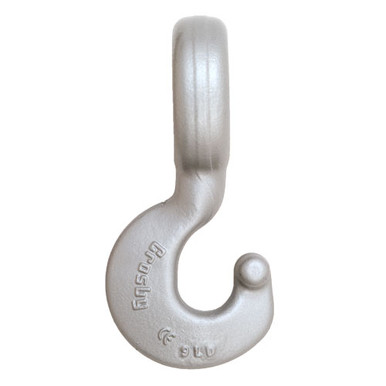
Took forever to find it, but I'm pretty sure that's the hardware from the old Treestuff product.
 
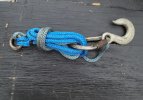
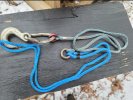
Here is a pic of that rigging pictured above setup and ready for the cut. Once you lower it just shake the rope to release the sling and pull it back up for the next piece. View attachment 56161

I am marveling at this set up. gotta find a hook like that to complete it. marine consignment here i come. ( i did part trade on small tree job and have credit at the store of used boat pieces! )
 
I also use a few components put together to allow a more traditional lowering without leaving slings on the ground and without all the rope mixed up in the brush like the last technique. This technique works really well on static rigging and then I switch to something else when it gets more dynamic.View attachment 55570
girth the webbing sling around your limb and through the steel ring and then hook it with the open hook. tension your rope and cut, once lowered you can shake the hook loose, as you pull the rope back up the red sling pulls the webbing loop free of the limb and brings it all back up to you.

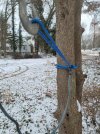
I recreated this setup and used the other day, it worked perfectly. I spliced a hook on some 3/8" stable braid and used my "first try" friction saver, ( splices good, but not life-support confidence) with a girthed sling.

Looking forward to giving it some more action. I can see how it's a bit treacherous that the hook could let go under action, but in terms of positive rigging with things tight and set well ahead of the cut, a great set-up for small to mid-size pieces.
Ran the rope thru an omni 1.1 an arms length above, wrapped the tail 3 or 4 times around a nearby stub and it caught the piece for me.

Easy simple quick rigging takes the heat off.. I was just close enough to a shed to take precaution. Later that day I was above an old chiminea.. so cracked and decrepit I wouldn't move it for fear of disintegration, whole top already gone.. and sure enough I tapped it with a "small" piece in a totally stupid way (tips allowed it to pivot in an unexpected length and direction). Not a big deal but a potent reminder that an ounce of prevention is worth directing even 30 pounds of falling wood.
 
I recreated this setup and used the other day, it worked perfectly. I spliced a hook on some 3/8" stable braid and used my "first try" friction saver, ( splices good, but not life-support confidence) with a girthed sling.

Looking forward to giving it some more action. I can see how it's a bit treacherous that the hook could let go under action, but in terms of positive rigging with things tight and set well ahead of the cut, a great set-up for small to mid-size pieces.
Ran the rope thru an omni 1.1 an arms length above, wrapped the tail 3 or 4 times around a nearby stub and it caught the piece for me.

Easy simple quick rigging takes the heat off.. I was just close enough to a shed to take precaution. Later that day I was above an old chiminea.. so cracked and decrepit I wouldn't move it for fear of disintegration, whole top already gone.. and sure enough I tapped it with a "small" piece in a totally stupid way (tips allowed it to pivot in an unexpected length and direction). Not a big deal but a potent reminder that an ounce of prevention is worth directing even 30 pounds of falling wood.
I'm glad it's worked for you, this is the first I've heard of any feedback from anyone trying it.

It's a great tool for the right time and place, I've never had any issues with it by being selective of when to use it.

These days I have a much lighter version that I purpose built, than what was shown in the quoted text. Works exactly the same but frees up ring and ring that's used above for rigging points.
 
I'm glad it's worked for you, this is the first I've heard of any feedback from anyone trying it.

It's a great tool for the right time and place, I've never had any issues with it by being selective of when to use it.

These days I have a much lighter version that I purpose built, than what was shown in the quoted text. Works exactly the same but frees up ring and ring that's used above for rigging points.
Thanks for sharing it. twas a lightbulb when I saw the release action.
I stuffed the whole rig with 95' of small rope in a lil camera messenger bag i found free. just letting out the rope I need and feeding it back in.

making the whole set up quick and simple is a big deal. I can't be hitting stuff, even that derelict chiminea. yet it feels excessive to set rigging on a small piece in a backyard.

Guy asked to lower the price based on no ground guy, no clean up. that's what set me to not be impeccable. Doesn't feel right, lowering the bar.
of course I did the cleanup anyway because of work ethic! haha he totally got me, a new yorker negotiating with a mountain boy. I allowed it, we reached a fair price, I have worked for him before. ;)

looking again I would mention the chiminea up front, yet it seems the moral for me is to just rig the small stuff with the sweet fresh setup!
 
I recreated this setup and used the other day, it worked perfectly. I spliced a hook on some 3/8" stable braid and used my "first try" friction saver, ( splices good, but not life-support confidence) with a girthed sling.

Looking forward to giving it some more action. I can see how it's a bit treacherous that the hook could let go under action, but in terms of positive rigging with things tight and set well ahead of the cut, a great set-up for small to mid-size pieces.
Ran the rope thru an omni 1.1 an arms length above, wrapped the tail 3 or 4 times around a nearby stub and it caught the piece for me.

Easy simple quick rigging takes the heat off.. I was just close enough to a shed to take precaution. Later that day I was above an old chiminea.. so cracked and decrepit I wouldn't move it for fear of disintegration, whole top already gone.. and sure enough I tapped it with a "small" piece in a totally stupid way (tips allowed it to pivot in an unexpected length and direction). Not a big deal but a potent reminder that an ounce of prevention is worth directing even 30 pounds of falling wood.
Make some foto your combination
 

New threads New posts

Kask Stihl NORTHEASTERN Arborists Wesspur TreeStuff.com Teufelberger Westminster X-Rigging Teufelberger
Back
Top Bottom