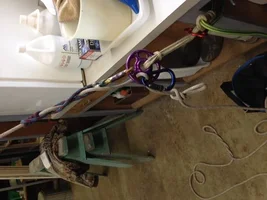
Simple but effective.

Your way of thinking is that the block takes the place of the friction saver? Or did you mean you have to choke a friction saver and climb line along with your lanyard on your way up, and the block is functioning as a secondary work line?
Also, what made it so easy? The lack of friction, ease of setup, both?
 
Anchoring the line to the port a wrap is a no no. Tie an appropriate base anchor and you should be good.
They also might not let you mix your rigging with life support. The block may need to be replaced with a rated pulley like a pinto.
 
They won't let you cut on a basil anchor out here buddy, that is the only issue I see with your system. Use it as a ascent system and climb up to the point you will top the tree at and set your AFS. Come back down and start limbing.

Sent from my SAMSUNG-SM-G891A using Tapatalk
 
Anchoring the line to the port a wrap is a no no. Tie an appropriate base anchor and you should be good.
They also might not let you mix your rigging with life support. The block may need to be replaced with a rated pulley like a pinto.

THIS IMO. Also you noted that you are also rigging these trees. Keeping the rigging and climbing gear separated is good practice for many reasons, but one big one is a continuous reminder of what the gear is used for. What if a tired or distracted groundie goes to release the wrong "rigging" porty with the rope that is running through the wrong "rigging" block?

I even make sure my ropes are one color for rigging and others for climbing for the same reasons. We would like to believe we are on top of our game at all times, but I for one no I am not at all times. I am human like everybody and sometimes the little things are not little things when we are a bit off.
 
I personally don't like working a tree with a basal anchor. I use this system for ascending on spurs to get to my top tie in point. It is the easiest, quickest, and safest method for getting to the top on a big conifer I have used besides a wraptor powered ascender (which I cannot afford). I live in the redwoods of northern california and most of my removals are in the 150' to 200' range and I can usually reach my tie in point in a few minutes once my climbing system is set. I am 55 years old and have been doing this for over 35 years and this system has added years to my climbing life!

Is that not like saying you can't afford a big chainsaw when you work big trees?
 
Hey all, just want to be very clear here. The NATS site safety team is not a bunch of "overseers" nor do they dictate which systems/ techniques are allowed on the projects they work on. On all the projects we speak of there are no "NATS" approved anything.

Those decisions are made by the contractor hiring the climbing crews, Not NATS as an organization.

The NATS site safety team is tasked with ensuring compliance through reporting, coaching and at times skills development.

It irks me a bit to hear them refered to in the negative. I know that professionally, as a team, they may not agree with some of the standards they are tasked to ensure. Furthermore, they too would like to see many tools and techniques currently not apporved for use on the projects incorporated. In fact they actively work to do just that. However, they do their jobs well, consistently and in the vein of service, support and sharing.

On another note beastmaster, as an "aging" climber myself, I have found that, staying fit, keeping hydrated, eating well and taking care of my body after a long day through proper recovery (not just slamin' beers (I speak of me not you)) will go much further for productivity, and longevity than any piece of equipment/technique. Theses are things you probably know, but I thought I would mention them.

I wish I would have know this sooner as I am sure you can relate

Tony
 
Working for a large corporation and having a highly trained group of safety people on site to assist in my job is very new to me.
I have contract climbed or worked for top company's more many years. I'm use to coming on site and being paid for my skill and experience to do the job. I'm not one of those old dudes stuck in outdated methods living in the old days.
I could of long ago gone to management but I love what I do.
It's hard sometimes on this project feeling my hands are tied, but it is what it is.
Like any group or organization you have many different type of personality NATS is no different. I Believe some of the most knowledgeable climbers I've ever had a chance to meet work for NATS. Others I wouldn't have on my jobsite. Just my humble observation.
With so many people in these projects there is not always the level of competence we would like. It good and smart to have expert help and advice available. But it does go to some of their heads.
Lots of us do see them as overseers or tree police, but I never mean that as disrespect to the service they provide.

I agree. Well said. If there ever is a serious problem ( other than personality conflicts, I don't care about, nor do drama) with any of the NATS personnel on site, please feel free to contact me. I make no promises, save confidentiality and I will do my best to see the issue is checked into.

I am not actively involved day to day, but do occasionally get involved and I keep up to date. The NATS reputation means much to me as I have helped build it for the last 9 years. I will see that the core values of serve, support, share are up held with the highest standards.

Thanks for your time and reply,

Tony
 
Treebuzz articles section has the best basal tie-off option ,http://portal.treebuzz.com/simple-lowerable-base-anchors-719 presented by Mac Swan. Graeme McMahon similar method on a video without the hardware, I believe. All the hardware totals about $10 or less (screw-link, IIRC).

Personally, I use a carabiner or tie the end of the tail, instead of the screw link.
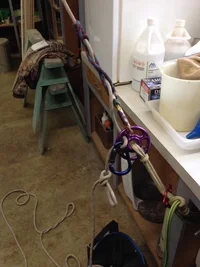
Thanks for pointing out the article by Mac Swan. I had not seen it before. Here is another version of his basal anchor system using a Hub as the Sticht plate. This system also works well with a Petzl Reverso instead of the Hub. There are lots of ways to skin this cat depending on which gear you have!

IMG_0919.webp
 

Attachments

  • IMG_0919.webp
    IMG_0919.webp
    35.6 KB · Views: 23
Last edited:
Thanks for pointing out the article by Mac Swan. I had not seen it before. Here is another version of his basal anchor system using a Hub as the Sticht plate. This system also works well with a Petzl Reverso instead of the Hub. There are lots of ways to skin this cat depending on which gear you have!

View attachment 43056
Indeed many ways to skin the cat. This one is a the same concept but a bit cleaner and my favorite.
View media item 671View media item 670
 
Arlo, I really like your using one of the slots of the Hub for a stitch plate. Tony's is good, but a figure eight could have been used in place of the Hub. But as you stated, "use what you got."
 
An 8 will work, but the hub adds lots of options for MA, switching anchors, multiple anchors, etc.

I agree 100% ,run with what you got. Although work to refine your system. When you got it down and are doing it everyday, get a piece of equipment that is designed to do exactly what you are doing.

Tony
 

New threads New posts

Kask Stihl NORTHEASTERN Arborists Wesspur TreeStuff.com Teufelberger Westminster X-Rigging Teufelberger
Back
Top Bottom