Simple but effective.

Don't want to throw a wet blanket on the party and all that shiny new gear looks good and there might be some production climbers that actually use it, but none that I know. As far as base ties being illegal, I can't imagine. There are some trees where you could spend more time trying to isolate a limb than doing the work. What would you isolate in a palm tree? I use a canopy tie every time it's feasible but sometimes it just ain't. Just being real.
 
I assume you are referring to the "which I cannot afford" statement. A wraptor ($2700) is nice, but not essential for ascending a large tree. A large saw ($800-$1500) is essential for removing a large tree.
Ya, Eric, sorry I wasn't more clear.

Your average trees are taller than mine.

With no vested interest, Wraptors are made for your sized trees, and smaller, and make people money, in my opinion.

I haven't used mine in a month or more, but it's been money well invested. It's ready as soon as I get some bigger trees on the schedule.

It's fantastic if you have an injury, or feel one coming on, and even better to save the wear and tear on a body, leaving more gas in the tank for the evening.

I don't know if Paul Cox (pctree/ Wraptor inventor) is running a demo unit currently. Might be worth considering.
 
I think I'll give it a try with a friction saver and a figure 8. A portawrap was kind of over kill and the possibility of confustion possible.
I'm still not sure our prime will allow the whole anchored pulley thing anyway. All our lines must be Factory spliced but using a steel link to connect two lines (as stated in the article)to get the length is going to be a gray area too.
I don't want to ask anyone. I'll use it as needed tell told other wise.
I've seen a rig or gree gree used for base anchor. Is this an option or is there an issue. No mechanical devices on this job though.


Two parts to this:
As for not asking permission and begging for forgiveness on the California projects, I would follow the guidelines verbatim. There is a zero tolerance for not following the established guidelines. We can debate the guidelines, but to no avail. It is not our call. To put it plainly, with no offense intended and full respect for you experience and abilities, if you are not going to play by the contractor's rules, then just stop doing their work. If you are brought to task for an unauthorized method or tool you will be out forever. These projects will continue for some time and there is quite a bit of $$ to be made. Seems silly to try and paint the house red when the contractor is asking you to paint it blue, giving you the paint and the time.

The second part refers to your question in general about mechanical base anchors only. Not work on the project you are currently involved in. The rig is fine as is the ID. Petzl does not recommend the grigi be used as a base anchor. Simply put it was not constructed to be attached to a rigid structure and act as a belay as per the manufacturer. I my experience the only real advantage of a mechanical over the other methods discussed is midline "attach ability." If you can tolerate/afford/have space for a dedicated line then I perfer the non-mechanical, adjustable systems outlined in the thread.

Tony
 
Great post! I have to top and drop a 6' diameter- 215' tall redwood this morning which would be a nightmare to set a line in. I am gonna grab my 7/8" manilla wire core flip line and spur my way on up to 120' or so, blow out a 100' top and wedge over the remaining spar. Old-school, simple and extremely effective. Done in under 3 hours. There is a time and place for complicated gear and rigging, but most times the simple solution is the best one.
I agree. All this is tools in the tool box. The end result should be safe efficient tree work. The definition of production is safety accomplished efficiently. How we fulfill those requirements leads to interesting discussion, but sometimes "harder" is smarter.

Tony
 
Brocky, Doesn't that leave the slack in front of the blue thingy? <-That is technical talk for I don't know what the heck it is. :-)

Seems with the need for the slack to go through the slot and around the biner, slack tending would be a challenge unless I have it all wrong...
 
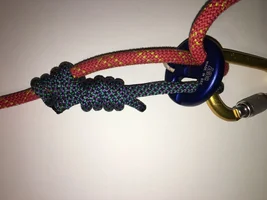
It's a stitch plate used in rock climbing for belaying or rappelling. Pulling down on the climb line causes the plate to slide close to the carabiner increasing friction to the point it locks up. There has to be some space between the plate and carabiner so that you can release it and descend. It has two slots because rock/mountain climbers sometimes use two ropes or double up one to rappel.
Oceans posted a picture in media that uses a ring instead of a plate that probably works similar.
 
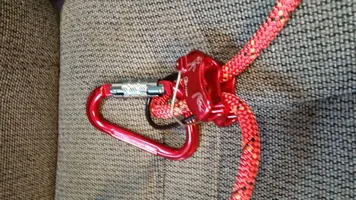
My current basal setup is also borrowing from the rock climbing folks, just using it as a lock and friction device in case lowering is needed.
20170223_153026.webp
The tail gets tied off and locked with another biner and then the rest of my rope stays in the bag below.
 
My current basal setup is also borrowing from the rock climbing folks, just using it as a lock and friction device in case lowering is needed.
View attachment 43112
The tail gets tied off and locked with another biner and then the rest of my rope stays in the bag below.
If that's your current setup, you must be polishing and waxing that after every climb :D
Nice though ... simple, cheap, and effective.
 
If that's your current setup, you must be polishing and waxing that after every climb :D
Nice though ... simple, cheap, and effective.

It's new, only used it 5 times so far, but I like it, cheap simple and someone can save me if I'm hanging upside down by one boot o_O

I am also a fairly new guy to climbing so all my gear in general has that shiny rhinestone cowboy look to it.
 
I am also a fairly new guy to climbing so all my gear in general has that shiny rhinestone cowboy look to it.
You may want to put everythin' on and roll around on the ground for a while. Gets rid of the greenie look.
Just kiddin' .... it really doesn't take long in this trade to break the shine off gear.
I was new to this once. Be safe.
 
You may want to put everythin' on and roll around on the ground for a while. Gets rid of the greenie look.
Just kiddin' .... it really doesn't take long in this trade to break the shine off gear.
I was new to this once. Be safe.

I already sandpapered my blue jeans so the other kids would stop making fun of me. :sick:

I'm staying low and slow for now and learning to trust my gut and my gear.
 
Great post! I have to top and drop a 6' diameter- 215' tall redwood this morning which would be a nightmare to set a line in. I am gonna grab my 7/8" manilla wire core flip line and spur my way on up to 120' or so, blow out a 100' top and wedge over the remaining spar. Old-school, simple and extremely effective. Done in under 3 hours. There is a time and place for complicated gear and rigging, but most times the simple solution is the best one.

Hey, if it works, go for it, especially when doing removals. We often use spurs to put up artificial nest platforms in Douglas-fir because we can do about 10 of them in the time it takes to rig 3-4 trees with ropes. So, I am not going to criticize anybody for working in the most efficient way possible. But I spend much of my time trying to figure out ways to climb trees without leaving a trace and so that rescue from the ground is an easy option. Ropes and basal anchors are an important part of that, especially in big conifers where a canopy tie-off is usually not an option.
 
Geez Arlo, all the other guys are using Prusiks!
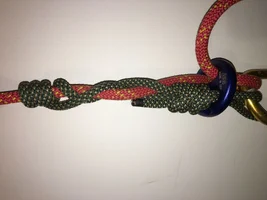
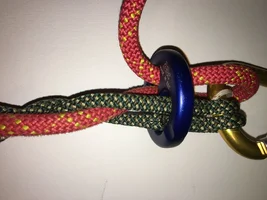
Agree, many better options. I went with the easiest hitch to get a single eye to fit in the slot for the picture. When I do use a basal anchor I usually use a small portawrap, used for climbing only.
First picture is VT with single eye and second has sewn eyes. I tried two tied eyes but it was too crowded.
IMG_1019.webp IMG_1020.webp
 
Geez Arlo, all the other guys are using Prusiks!
Agree, many better options. I went with the easiest hitch to get a single eye to fit in the slot for the picture. When I do use a basal anchor I usually use a small portawrap, used for climbing only.
First picture is VT with single eye and second has sewn eyes. I tried two tied eyes but it was too crowded.
View attachment 43130 View attachment 43131

I do like the looks of the set-up with the VT. That is about as simple and compact as it gets.
 

New threads New posts

Kask Stihl NORTHEASTERN Arborists Wesspur TreeStuff.com Teufelberger Westminster X-Rigging Teufelberger
Back
Top Bottom