Siberian cedar pine dieback

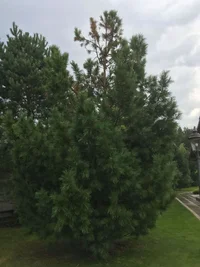
Pinus sibirica was planted about 10 years ago near Moscow (Russia).
This year it showed symptoms of dieback.
When I saw the tree it looked like infected with Cronartium ribicola, but no signs of blisters.
White pine blister rust (WPBR) on cedar pines is rare and looks different than it is on white pine.
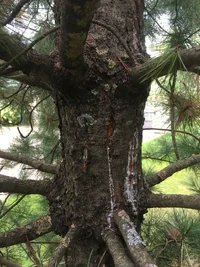
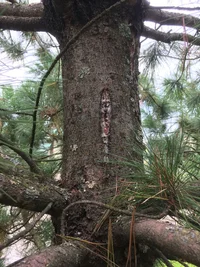
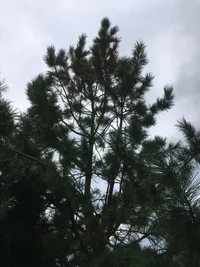
I saw some canker-like spots on the trunk. Some of the branches dried out mainly on the top of the tree.
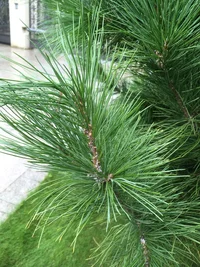
Also the tree had symptoms of tip blight.
And some Adelgidae also was on tips of the branches in the lower part ow the crown.

Do you think it is WPBR?

Here some picks of the tree:
IMG_2321.webpIMG_2322.webpIMG_2324.webpIMG_2326.webpIMG_2325.webp
 
I don't think Cronartium, not a typical boring moth but I don't know your area, eliptical canker of some type. What are the stressors for this species that set up cankering?
 
The form of the tree looks really odd.. Was there any pruning or what changed? Not saying this is it but I have seen elliptical wounds like that from climbing spikes. Any pruning in the upper 1/3rd? What is the spacing of the wounds (regardless of cause)?
 
Could the lesions be made by oviposition, egg-laying?

Or a wasp or something cutting slits for some other reason? Boredom maybe?
Or a bird feeding?

I saw lots of cool trees last summer in St. Petersburg; I hope to see Moscow sometime!
 
It's growing inside the cookie tree; seek and ye shall find.

Hey, if you can pull out the trees-on-houses phantasm, then the bored wasps are in--are they really stoned on neonics? I read yesterday that bees build up a tolerance (addiction) to neonics and seek it out.

A big biz in the future--bee rehab!
 
Thanks JD they are definitely a thing, and there's no reason to doubt they are in Moscow.
Maybe a hornet and not a wasp. It does look more like a wound than a canker (infection).

Boring side note: Last time I looked, "Canker" is officially defined in TRAQ as "a dead area". The part about infection was excised from the definition.
As a result, assessors are NOT trained to look for infections, and (as in this case) do not differentiate between bleeding lesions (cankers) and insect damage.

This tendency to broaden and vaguify definitions might make it easier for more people to pass tests and become a paying credential holder, but what does it do to the standard of practice in the field?
 
I don't think Cronartium, not a typical boring moth but I don't know your area, eliptical canker of some type. What are the stressors for this species that set up cankering?

Only Cronartium and mechanical injury. This tree is not native here.

The form of the tree looks really odd.. Was there any pruning or what changed? Not saying this is it but I have seen elliptical wounds like that from climbing spikes. Any pruning in the upper 1/3rd? What is the spacing of the wounds (regardless of cause)?

The tree is not as high to use spikes. Pruning was only for dry branches.

Yes, the canker-like spots look like mechanical injury. It is not wasp, I think. Sometimes we have wounds from woodpeсkers and elk. But they look different.
 
Last edited:

New threads New posts

Kask Stihl NORTHEASTERN Arborists Wesspur TreeStuff.com Teufelberger Westminster X-Rigging Teufelberger
Back
Top Bottom