Should It Stay Or......

Brocky

Been here much more than a while
Location
Michigan
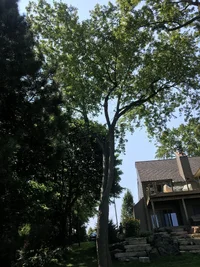
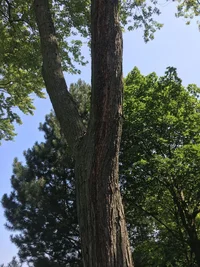
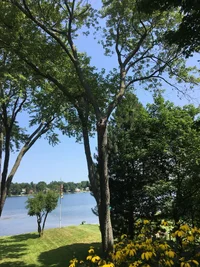
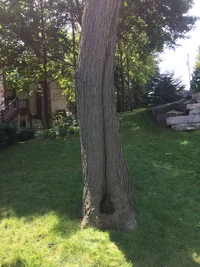
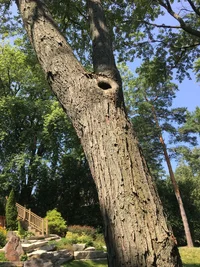
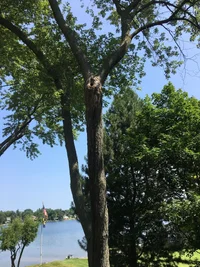
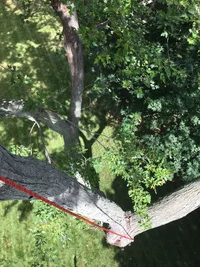
IMG_1248.webp IMG_1258.webp IMG_1263.webp IMG_1269.webp IMG_1326.webp IMG_1327.webp Most of my career has been maiming and murdering trees so I am looking for advice if this tree should be saved. A 24"" maple,probably two or more that have grown together, that has a few holes and a good size crack. It doesn't appear to have enough canopy for reducing if bolting and bracing were done.
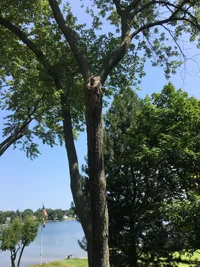
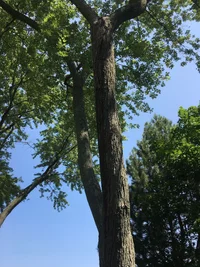
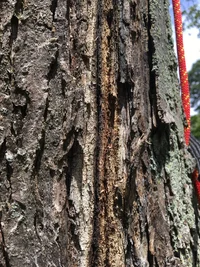
First pic is the tree, second is misshaped trunk, seems to be solid. Third is a hole at union of large section, with large hollow that extends up into the sections. The fourth shows the hole position. Fifth pic is another section that has problems. Last is a close up of crack, which starts just below the hole and travels down about 8-10 feet.
So as someone who has sap lust, I thought I would ask others not afflicted.
 
It certainly has issues, but doesn't look like there are any high-dollar targets under it. From the pics, I'm going to guess the client isn't strapped for cash... any chance of convincing them to plant a replacement tree if you remove it? Personally, I always give that a shot, and offer to help them find an appropriate tree and plant it following the removal... at a very attractive price point. Sure, part of my motivation is to ease my own guilt for taking another tree out... but, sometimes they just need to go.

That's a tough call, on that one. There's no doubt in my mind that down the road, that tree is going to have to be removed before it has a major stem failure. Looks like there are other good trees on the property, no? Good communication with the client about the pros and cons of removal will usually illicit their own feelings about what they expect or really want. Let them decide, and the odds are good they'll be a customer for you, one way or the other. Most of us just want a contractor to be honest about our choices, and not try to hard sell us on options we don't like. Offer them more than one option, and most people will choose the one that they think they can live with.
 
This one is out of my classification to call. The owners are open to either saving or chopping, but would like to keep it, if safe to do so. The largest section could hit the house,deck, and porch, depending on where it fails. You're right, cost wouldn't matter, they were hopeful to save it. Plenty of other trees, some I'm working on now. The owners are friends of friends, so trying to do the best for them, not sure if I would take on removing it if that's the way they go.
Thanks, Jeff!
 
I was hoping to post the pictures so that they would be in a series instead of having each one go to a separate page. The third picture does this but others don't. What am I doing wrong?
 
I was hoping to post the pictures so that they would be in a series...

When the editor's cursor is where you want the pictures, hit Upload a File, locate the folder on your machine where they're located, highlight ALL of the pics, and hit the OPEN buttom in the file browser. Then, choose the INSERT ALL as THUMBNAIL option in the post editor. This will force them to be viewed in the forum software's photo viewer, with BACK and NEXT buttons.
 
Got them to load for me.

Retain as well here. Lose the turf and get some crap off of the flare. Nice place so incorporating the root zone into a new bed wouldn't be a crazy up-sell. Small plants, nothing big, smaller holes equals less chance of any root damage.

May be some opportunity for some reduction cuts up top.
 
Sell a maintenance strategy that makes sense for the tree in your area. Pruning cycle for dead wood and controlling length and wait distribution and camopydensity
If they want to MAINTAIN it. selling t eh idea of keeping it....meh..
 
You have to put the decision fully on the tree manager. Tree failure is unpredictable, and rare, so they have to decide based mainly on consequences. This tree has good response wound wood growth, right? It's probably a hollow pipe inside, which is stable if the walls of the pipe aren't severely compromised. But let's be honest, you can't see inside it to know for sure. It sounds like total tree failure is in range of the house and is thus the driver in decision making. Total tree failure is a root crown and lower trunk issue, so focus on that area to decide whether to remove it. Look for any site changes and think about how variability in your regional wind patterns affects the property, particularly coming unimpeded off the lake. The tension roots on the side opposite the house hopefully have good anchoring material (adjacent tree roots vs. empty yard space) and haven't been mauled by a mower.

The canopy stuff looks fixable with time and money, but it sounds like there is a low target occupancy rate, so you may not want to fix it...

I'm unable to visualize a crown that is too small to be reduced. If you'll pardon me, I feel like you just don't want to be that guy going to the outer canopy, so I'm going to call you out on that. Reduction pruning in 3" or smaller wood will decrease the wind force leverage quite a bit. If the tree is kept, that should be fully within a scope of work regardless of what else was done because it can reduce the likelihood of failure in this tree at every scale - whole tree, or adjacent to the putatively hollow codominant crotch with the good branch union angle.
 
Doing the reduction cuts isn't a problem, that was my initial thought also. But when I climbed it to take pictures and sound for hollow spots, looking up through the canopy it seemed very sparse compared to the other maples around, as well as my collective memory of the denseness of most maples. My reluctance to be the one removing it is I work solo and don't know if the owners would tolerate as much lawn damage that would happen by bombing the big wood. I could rig it myself but really don't want to spend that much time on it. This picture shows the canopy more.
IMG_1262.webp
 
Last edited:
Personally I like GeffGu's suggestion of a removal and then a planting of a new tree. House nearby and landscaped walls underneath.

If you hired a crane you can get it down solo with just a few picks. Or almost anyone can un-choke a pick and put the sling back on the ball.
 
Doing the reduction cuts isn't a problem, that was my initial thought also. But when I climbed it to take pictures and sound for hollow spots, looking up through the canopy it seemed very sparse compared to the other maples around, as well as my collective memory of the denseness of most maples. My reluctance to be the one removing it is I work solo and don't know if the owners would tolerate as much lawn damage that would happen by bombing the big wood. I could rig it myself but really don't want to spend that much time on it. This picture shows the canopy more.
View attachment 46802

All points noted and agreed with. I feel like it is convergent to do a limited reduction in the half of the canopy that is associated with codominance. That sort of addresses the concern of the small canopy.

If you remove it solo, you could speedline the canopy solo with the butts going down onto plywood. You can tie in your climbing line to the other spar. Then, you can take an entire spar with a tip tie and base cut. Then, you may be able to tip the remaining spar onto the logs from the first spar and the speedline pile... In my perfect world, lol.
 
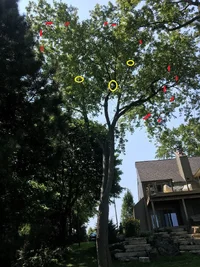
Thanks for showing the whole crown. Looks like the tree has been severely liontailed/giraffe pruned in the past so multiple tie-ins (yellow circles) needed to reach the cuts (red lines). Cuts <1-2", total leaves removed 15-25%. Pole pruner STRONGLY recommended; unless you weigh 80# you will never reach the right cuts without one.
Nicking the bark just above some of the old cuts might encourage sprouting.

Agree with most of above except "...down the road, that tree is going to have to be removed before it has a major stem failure." which seems to ASS U ME that the tree will never be pruned. Total BS and a good way to steer clients toward removal. maple tb 170904 p.webp Stem is probably stronger than a same-sized maple without woundwood aka "defects".

And yes a mulch ring >2' radius needed.
 
My mainconcern is the crack that starts just below the hole that is hollow behind it. The section to left is what could hit the house. Inside the hole is what looks like wet oatmeal, which I'm guessing is the frass from ant activity. The walls of the cylinder are only 2-3" thick at this union.
IMG_1269.webp IMG_1268.webp IMG_1267.webp
 
It's your call on that, man. I really can't see what you're talking about. Pictures... lol.

I just took down a 24" black cherry at my girlfriend's place this weekend. It was hollow and thin-walled in some spots and solid wood in others. My first cut had me thinking I'd embarrassed myself - solid 10" top. My second cut and on down were just different forms of sketch. You never know for sure unless you saw it, drill it, or tomograph it for the entire length.
 
If you and the client decide on retaining the tree, probably with reduction/retrenchment and a support system, consider radial trenching, vertical mulching, or aeration of the whole area within the drip line, incorporating compost, biochar, and perlite or expanded aggregate in addition to a mulch ring. I have seen amazing things happen with aeration and amendment.

Sent from my XT1650 using Tapatalk
 
The homeowner decided they want to keep the tree, but wants to wait until next year to do anything with it. They are having an addition to their garage built and didn't want to spend anymore for tree improvements. The advantages of mulching and aeration were explained, which is much needed for this tree because it is close to the large rocks that had to have compacted the soil during installation.
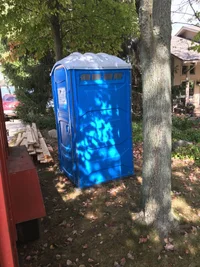
The picture below was a nice bonus on the job. I'd like to think it was for me, but it was there when I looked at the job.
IMG_1375.webp
 
Back
Top Bottom