Shortest Tenex Splice

bonner1040

Branched out member
Location
Boston
Using a straight bury, and the ovelapping taper method what is the shortest length I can achieve (throat>throat) putting two eye splices in 5/8" Tenex Tec?
 
I want to make a 3/4" Tenex sling with an eye on both sides and I want it to be 40" give or take.

After the two tucks for the locked brummel, how long does the bury need to be?
 
the bury needs to be tapered good so there is no sudden thickness change, this is the theory for a vulnerable point that can suffer.

the other thing is to stop the brummel being effected by an unraveling end.

4" to 6" is a guess, i have done very short ones on my own stuff with no issues, 2">3".
 
Tuttle,

Unraveling? Such a redundancy
grin.gif
properly the term is to ravel or untwist!

Just goofin, kinda!
smirk.gif


4" to 6" after a locking brummel has worked well for me, but I have never had it officially break tested, just load tested. The key as Tuttle mentioned is a subtle taper. So many miss that!


Tony
 
Could you not just stick with the locking brummel and one fid for each bury, but just overlap the tails entirely, so you end up with just greater than one fid length plus the eyes themselves? Pretty safe bet if there's any concern.
 
I have a little secret background info and I know that he can't do a locked brum on each side because he is making a RING/ring friction saver, so won't be able to pass the ring through on that second splice.

Nick, you might do a lock on one side with a short tail which will give a lot of room to do a longer bury on the other side.
 
[ QUOTE ]
Thanks guys, I will go with more than 6" and be on the safe side!

[/ QUOTE ]

You can certainly make a short sling with a 6" bury. Do you also want it to be full strength? If so, you should probably test your short sling to see just how strong it is.

I think there is no way such a sling will be full strength. The bury will begin to slip out long before you reach max tension, and when it does, the brummel will tighten into a tiny and very weak knot (about 1/3 the strength of the rope). The bury, now even shorter than before, must carry 2/3 of the load or the rope will break. If the bury is tapered, so much the worse, because its effective length has been reduced.

Essentially you are betting that a 6-inch bury in 3/4 Tenex is enough to give you 2/3 the strength of a full-length bury of over 30 inches. Not a bet I would want to make.

But if you only care to have a 1/3 strength rope, you should be fine.
 
[ QUOTE ]

You can certainly make a short sling with a 6" bury. Do you also want it to be full strength? If so, you should probably test your short sling to see just how strong it is.

I think there is no way such a sling will be full strength. The bury will begin to slip out long before you reach max tension, and when it does, the brummel will tighten into a tiny and very weak knot (about 1/3 the strength of the rope). The bury, now even shorter than before, must carry 2/3 of the load or the rope will break. If the bury is tapered, so much the worse, because its effective length has been reduced.

Essentially you are betting that a 6-inch bury in 3/4 Tenex is enough to give you 2/3 the strength of a full-length bury of over 30 inches. Not a bet I would want to make.

But if you only care to have a 1/3 strength rope, you should be fine.

[/ QUOTE ]

Very interesting info Moray, thanks!
What about the short bury beeing lock stitched, so it cant pull out? How much bury "does it need" to maintain 2/3 of a total one?
 
[ QUOTE ]

Very interesting info Moray, thanks!
What about the short bury beeing lock stitched, so it cant pull out? How much bury "does it need" to maintain 2/3 of a total one?


[/ QUOTE ]

Good question, Tree Access. I have read many comments to the effect that stitching just keeps the splice together when it is not under load, but it does much more than that. I have done a lot of break tests on Tenex splices and the effect of stitching was always one of my interests. Even without heavy equipment anyone can do the following experiment (I am relying on memory--my notes are not accessible):

Using some 5/16-inch Tenex I made a short splice of 6 or 8 inches, but without an eye--this was a case of simply inserting one section of rope into another. Then, Using nothing but a bathroom scale I was able to measure the force needed to pull the splice apart--something like 4 or 5 pounds. Repeat this enough times to have confidence in the baseline measurement--in my case it was quite consistent.

Now use some very weak sewing thread to stitch the throat of the splice. The tensile strength of the thread must be accurately measured--mine was almost exactly 2 pounds. When I put 4 stitches (pass the needle 4 times) in the throat and tied the ends of the thread, it was time to retest the splice. Anyone want to guess the result? The splice strength had jumped from just 4 or 5 pounds to 100 pounds.

This multiplicative effect provided by stitching depends on the length of the bury. Had I used only 4 inches of bury in the experiment above, the stitching might have added only 10 or 20 pounds to the splice strength.

So I can only answer your question in general terms. If you use a lot of strong stitching at the throat of the splice, you can make the bury much shorter than standard. But making the bury shorter reduces the effect of the stitching. You really have to test what you make in order to know how strong it is.
 
I use 100lb thread, and test mine to 300>500lb tests using a 5:1 pulley setup, in a constant and shock pulls.

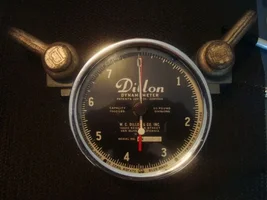
a good thing to buy is a 'dynamometer' mines lovely and shows some good things we can't work out.

I always imagine that a good lock stitch can hold 40lbs, multiplied by the stitches and the thread, most come out at an excellent strength.
 

Attachments

  • 354035-DSC09737.webp
    354035-DSC09737.webp
    37.5 KB · Views: 36

New threads New posts

Back
Top Bottom