easiest way to think about it is through static analysis (im studying civil/structural engineering at UCONN);
Think of the tree as a lever arm, like a wrench or breaker bar , with a string attached to the end of that bar (handle end) when you pull on the string, (as you will to pull over a tree) you are imparting torque in the system (force x distance). If you were to impart too much load in the system, and the bolt you are trying to free doesn't give, you will bend or break your bar. same principal in a tree, if it weren't for a notch/back cut and hinge, you would either pull the tree out roots and all, or snap the spar at the weakest point, (im sure plenty of you can relate to seeing this happen). the idea with torque, is that it only relates to being perpendicular to a system, thats why the more horizontal your pull line is, the easier you can pull the tree over. anything in line (parallel) with the line of action, will impart NO mechanical effect on the system, (neglecting shear forces and moments).
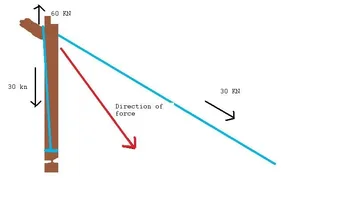
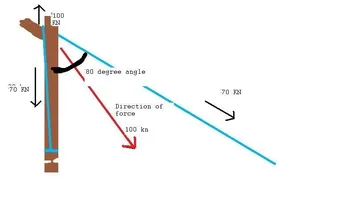
working with this idea that parallel force will add no advantage, and only perpendicular will impart force, we can look at a base tie and tied at the highest secure point:
both will have the line exiting at the top of the tree, and lets use a perfectly perpendicular line angle (you had your greenhorn go on top of a hill and pull from there) so you have the most effecient system to pull, and since a base tie, has the tension in a leg of line parallel to the system it will add or cost nothing to the system.
easiest way to see this:
take a combination wrench. tie a string to the closed end, and pull the string to release a nut. (even use a scale to be precise) next, loop the string around a "tooth" on the open end, feed it back through the closed end, and repeat. this will result in the same force imparted, all because torque comes from a perpendicular force, and anything parallel to the Line Of Action will provide nothing.
might be a little confusing, but this is out is an applied mechanics text