Rope Bridge

So after reading a number of threads I've learned a few things about rope bridge choices:

1. Use polyester. Many other materials will self abrade (Including Warp Speed under high temperatures, I've read)So polyester is the way to go.
2. You need to be able to inspect the rope for signs of wear. This means you should use 16 strand rope (or 12 strand, but that seams like it would be rather bumpy). In double braid rope the core and the cover share the load, and since the core is under the cover, you can't really inspect it. Same with kernmantle.

So that narrows it down to the arbormaster series (blue streak, gold streak, etc.) and the XTC series (phoenix, fire, etc.)

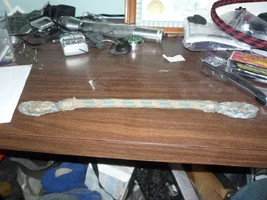
Can these ropes be spliced into a rope bridge? Is it bad to have the ring/carabiner constantly rubbing back and forth over the spice as you climb? Maybe grizzly splice would be the way to go, although it is a little bulkier?

Thanks for the comments.
 
All the new threads about failing bridges has me considering a back-up bridge. Currently on velocity. Anyone here used velocity? How did it wear?
 
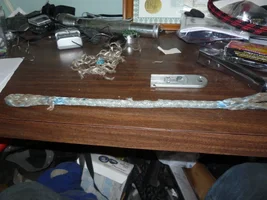
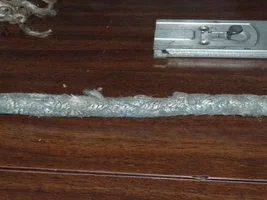
This weekend i took apart warp speed bridges that are 4plus years old. They had bumbs when feeling them . When i took them apart at first it looked like some fraying. After working it was able to pull oit the bury from the slice and that was wht the bumps where. It was in perfect shape. If that helps you.
 
The bridge wear problem is caused by constant bending resulting in material fatigue. In industrial applications they use roller chains or rubber belts to solve that problem. I'm thinking of fan belts and timimg chains for example. I think the rubber belt could be a good solution as bridge material.
 
y'all mind linking me to some of these threads regarding failing bridges? Starting to be concerned about the globe 3000 bridge I use. That and I've seen a lot of folks reconsidering the use of dyneema in general. At the risk of sounding like a dummy, where is this coming from?
 
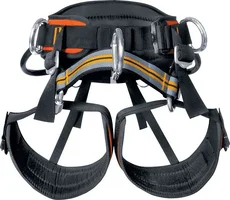
I like the looks of this bridge (see attached). Nice thick webbing. It looks like 2 or three layers and the part that wraps around the link is nice and thick too. All parts can be easily inspected. It also looks like it is easily replacable with the nice heavy duty screw links. However, it isn't adjustable, but I currently have an adjustable bridge and I never adjust it, so that isn't important to me. The D ring is a little large and I would prefer 2 D rings to reduce the bend ratio. Any body know about this saddle? It's called "Timber Arborist Harness".
 

Attachments

  • 311391-timberharness.webp
    311391-timberharness.webp
    56.2 KB · Views: 173
[ QUOTE ]
y'all mind linking me to some of these threads regarding failing bridges? Starting to be concerned about the globe 3000 bridge I use. That and I've seen a lot of folks reconsidering the use of dyneema in general. At the risk of sounding like a dummy, where is this coming from?

[/ QUOTE ]

Dyneema is not the fibers that continue to fail. All the warpspeed bridges that we have been seeing in this thread are dyneema, and still appear to be serviceable. Like Norm said, replace your bridge often, every year.
 
hmmm...no one answered my question. Is it safe to use a spliced piece of blue streak for a bridge? Can a rope like blue streak be spliced on both ends for a total length of about 14"-18" long from eye to eye and still be considered a safe bridge? Would it affect the splice to have your ring/carabiner constantly running back and forth over it as you climb?

Thanks again!
 
The blue streak can be inspected. I am not sure about logistics on the splice of 14 to 18 inches. It would be a safe bridge if it can be spliced retaining the correct tensile strength. As far as the ring running on it, we run blue streak through ring and ring friction savers everyday.
 
That's what I'm wondering. How do you splice both ends with such a short distance between. Can that be done safely?

Also, yes we do run blue streak through ring and ring friction savers everyday, but we're not running it continuously over a splice. It's not the durability of the rope I'm questioning, it's the splice(s).
 
[ QUOTE ]
The bridge issues aren't with the splices. It's with the material that the bridges are being made of.

[/ QUOTE ]

That's not a fair statement. We have to assume that it is a combination of factors, that bridges of these materials are spliced in short lengths. Without hearing that simple tied bridges made of high mod fibers are also breaking we can't simply assume its the rope itself. Splicing inherently changes the nature of a rope by changing it: hand, structure and diameter. Further research would have to be conducted to eliminate the many variables.
 
Joedietz,

I think the concerns you are expressing are valid.

To answer your question directly. A bridge that short with a sixteen strand would defy all manufacturer instructions.

Can it be done? Yes.

Although it would take a fairly talented splicer.

Would I climb on it? No. It's not so much I would be wondering about the strength and the constant rolling of the splices (although that is a serious concern). When you have the finished product it would not be much different than a high quality, stitched then laminated webbing strap. Perhaps a bit stiffer and with less hand.

If you want rope at that length then use knots. If knots are a problem then go with a stitched webbing product or warp speed as others have suggested.

Does that answer your question?

Hope it helps,

Tony
 

New threads New posts

Back
Top Bottom