
Seems like you could save a few steps and simply send up a Running Bowline on your climb line. Neither method is remotely retrievable, so either way you've committed to climbing up to the TIP. Save the time of setting rings from the ground and set them once you reach the TIP...perhaps in a more ideal location than can be achieved with the throw line in certain cases?

Navigation
Install the app
How to install the app on iOS
Follow along with the video below to see how to install our site as a web app on your home screen.
Note: This feature may not be available in some browsers.
More options
You are using an out of date browser. It may not display this or other websites correctly.
You should upgrade or use an alternative browser.
You should upgrade or use an alternative browser.
Ring to ring frictions saver for SRT DdRT combo
- Thread starter Richard Mumford-yoyoman
- Start date

Treezybreez
Been here much more than a while
- Location
- Lancaster, SC
The only Ring and Ring saver that makes sense to me is the secret weapon. A great feature of climbing SRT is not having to retrieve ring savers. Why try and add them back into the system?

- Location
- Pittsburgh, PA
- Location
- Pittsburgh, PA
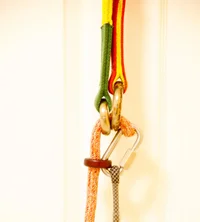
The method described is remotely retrievable. Descend to ground Ddrt,
Release Quick Link, attach retrieval ball then throw line, for normal soft retrieval. If you only want to SRT attach throw line to lanyard prior to raising the choke. This Method eliminates all but one connection to Immediately go to Ddrt at Tip
Release Quick Link, attach retrieval ball then throw line, for normal soft retrieval. If you only want to SRT attach throw line to lanyard prior to raising the choke. This Method eliminates all but one connection to Immediately go to Ddrt at Tip

JontreeHI
Branched out member
- Location
- West Michigan lakeshore
[ QUOTE ]
Why try and add them back into the system?
[/ QUOTE ]
For me the main reason is that there is considerably less friction on the pulldown if you've run your climb line through multiple redirects. Otherwise, if you are cinched, say with a delta link, whatever, the friction can make retrieval pretty tough.
Jon
Why try and add them back into the system?
[/ QUOTE ]
For me the main reason is that there is considerably less friction on the pulldown if you've run your climb line through multiple redirects. Otherwise, if you are cinched, say with a delta link, whatever, the friction can make retrieval pretty tough.
Jon
[ QUOTE ]
The method described is remotely retrievable. Descend to ground Ddrt,
Release Quick Link, attach retrieval ball then throw line, for normal soft retrieval. If you only want to SRT attach throw line to lanyard prior to raising the choke. This Method eliminates all but one connection to Immediately go to Ddrt at Tip
[/ QUOTE ]
It isn't retrievable until you reach the TIP and switch over to DdRT, correct? Or am I missing something here...
The method described is remotely retrievable. Descend to ground Ddrt,
Release Quick Link, attach retrieval ball then throw line, for normal soft retrieval. If you only want to SRT attach throw line to lanyard prior to raising the choke. This Method eliminates all but one connection to Immediately go to Ddrt at Tip
[/ QUOTE ]
It isn't retrievable until you reach the TIP and switch over to DdRT, correct? Or am I missing something here...
- Location
- Pittsburgh, PA
It is if you send up the throw Line attached to the lanyard when setting the choke, retrevial is there.
The main purpose of my initial post was to show an alternate to the butterfly line spike thru the R-R saver.
The main purpose of my initial post was to show an alternate to the butterfly line spike thru the R-R saver.
[ QUOTE ]
It is if you send up the throw Line attached to the lanyard when setting the choke, retrevial is there.
The main purpose of my initial post was to show an alternate to the butterfly line spike thru the R-R saver.
[/ QUOTE ]
Point taken, though it seemed you were switching over to DdRT, in which case it just seems quicker to me to send up a Running Bowline followed by setting the rings upon arrival. It would work either way...6.5 or half a baker's dozen.

I would however keep a close eye on the throat of the eye splice since bending isn't it's favorite thing to do.

It is if you send up the throw Line attached to the lanyard when setting the choke, retrevial is there.
The main purpose of my initial post was to show an alternate to the butterfly line spike thru the R-R saver.
[/ QUOTE ]
Point taken, though it seemed you were switching over to DdRT, in which case it just seems quicker to me to send up a Running Bowline followed by setting the rings upon arrival. It would work either way...6.5 or half a baker's dozen.
I would however keep a close eye on the throat of the eye splice since bending isn't it's favorite thing to do.
Treezybreez
Been here much more than a while
- Location
- Lancaster, SC
[ QUOTE ]
[ QUOTE ]
Why try and add them back into the system?
[/ QUOTE ]
For me the main reason is that there is considerably less friction on the pulldown if you've run your climb line through multiple redirects. Otherwise, if you are cinched, say with a delta link, whatever, the friction can make retrieval pretty tough.
Jon
[/ QUOTE ]
If I plan my climbing rout to avoid tight bends or circling the trunk of the tree then I find the friction is greatly reduced. It also helps to assess the location of the climbing line prior to making a final decent. When the line appears difficult to retrieve back tracking may be the key.
Pear shaped quick links retrieve pretty easily if you decide to cinch your anchor point. I usually use that method for dismantles. The orientation of the quick link will determine how easily it retrieves.
[ QUOTE ]
Why try and add them back into the system?
[/ QUOTE ]
For me the main reason is that there is considerably less friction on the pulldown if you've run your climb line through multiple redirects. Otherwise, if you are cinched, say with a delta link, whatever, the friction can make retrieval pretty tough.
Jon
[/ QUOTE ]
If I plan my climbing rout to avoid tight bends or circling the trunk of the tree then I find the friction is greatly reduced. It also helps to assess the location of the climbing line prior to making a final decent. When the line appears difficult to retrieve back tracking may be the key.
Pear shaped quick links retrieve pretty easily if you decide to cinch your anchor point. I usually use that method for dismantles. The orientation of the quick link will determine how easily it retrieves.

This is a great method, I have used it in many situations. I always liked the fact that I had my perfect TIP and by leaving the tail at just the right length I could switch over at a good position in the tree without going all the way to my TIP.
My setup was a Alpine Butterfly with a biner connecting the bight and the tail.
This general setup is an old school caving setup for a rappel. I think it goes back a long ways in history.
T Dunlap - Watch out with the figure 8 as a stopper knot, although it is bigger it does have the possibility to roll over on itself and become untied, or if you have a biner across to the tail you just get a nasty mess.
My setup was a Alpine Butterfly with a biner connecting the bight and the tail.
This general setup is an old school caving setup for a rappel. I think it goes back a long ways in history.
T Dunlap - Watch out with the figure 8 as a stopper knot, although it is bigger it does have the possibility to roll over on itself and become untied, or if you have a biner across to the tail you just get a nasty mess.

- Location
- Retired in Minneapolis
The only way that a F8oAB will roll and untie is if the tail is too short...like a hamster tail 
Or the F8oAB isn't TDS'd.
I always tie at least a 2' tail to make sure that doesn't happen. Too long a tail can make it hard to snap the stopper through the rings to release the FC though.
Or the F8oAB isn't TDS'd.
I always tie at least a 2' tail to make sure that doesn't happen. Too long a tail can make it hard to snap the stopper through the rings to release the FC though.
I don't think it has anything to do with the length of the tail but rather if the knot is not dressed correctly. Also the figure 8 when loaded in this fashion is a pain to untie. Just to be sure; we are talking about a stopper knot for srt ascent, not a stopper for a RR FS retrieval, correct? I am referring to life support not just collecting gear.
- Location
- Retired in Minneapolis
Ohhh...I'm talking about retrieval.
I wouldn't use a F8 as a stopper for life support. there are many other more secure knots to use. Loop knots with biners in them and that sort of thing.
I wouldn't use a F8 as a stopper for life support. there are many other more secure knots to use. Loop knots with biners in them and that sort of thing.
Glad to hear we are on the same page then.

bonner1040
Branched out member
- Location
- Boston
People die every year on multi pitch rappels when figure 8 knot pulls through an anchor ring.
Most rock climbers will do anything to avoid pulling a biner down with your rope, some even end up taking their rope on the express elevator to the great decelerator.
F8 is a bad stopper knot, it can and will deform and slide through a pretty small ring.
Most rock climbers will do anything to avoid pulling a biner down with your rope, some even end up taking their rope on the express elevator to the great decelerator.
F8 is a bad stopper knot, it can and will deform and slide through a pretty small ring.
thats why I choose to simul-rap stuff. Then you have someone to talk to on the way down as well, although it does present its own dangers too.
- Location
- Retired in Minneapolis
Simul-rap...ahhh...rock jargon!
New threads New posts
-
test
-

-
 Alternatives to standard asphalt around roots
- Started by southsoundtree
- Replies: 12
-
-

-

-
