













Recently I've been pondering the principle of always tying in twice before making any cuts, which I do 98% of the time unless it creates more trouble than it potentially prevents. Along this line, I keep coming back to the fact that if your using two lines of any kind and they're both connected to a single rope bridge, you don't actually have redundancy. If the thing you cut is your bridge, 10 lines won't save you from a fall. Obviously, if you're using your side Ds for one of the connection points, this is not an issue. I'm getting ready to add a second bridge to both my Treemotion S-Light and my New Tribe Onyx. I'm going to use Yale Blaze for the Onyx and Platinum for the Treemo. I'm curious about what you big thinkers out there think about having two separate bridges, each with their own connection point, vs. a redundant bridge like the Evo which shares a single ring between it's two bridges. I'm leaning towards two separate bridges, but also know that there are probably things I'm not thinking of and Teufelberger wouldn't do what they do without a reason. I'd love some feedback.
Navigation
Install the app
How to install the app on iOS
Follow along with the video below to see how to install our site as a web app on your home screen.
Note: This feature may not be available in some browsers.
More options
You are using an out of date browser. It may not display this or other websites correctly.
You should upgrade or use an alternative browser.
You should upgrade or use an alternative browser.
Redundant Bridge vs. Second Bridge
- Thread starter Njdelaney
- Start date
Recently I've been pondering the principle of always tying in twice before making any cuts, which I do 98% of the time unless it creates more trouble than it potentially prevents. Along this line, I keep coming back to the fact that if your using two lines of any kind and they're both connected to a single rope bridge, you don't actually have redundancy. If the thing you cut is your bridge, 10 lines won't save you from a fall. Obviously, if you're using your side Ds for one of the connection points, this is not an issue. I'm getting ready to add a second bridge to both my Treemotion S-Light and my New Tribe Onyx. I'm going to use Yale Blaze for the Onyx and Platinum for the Treemo. I'm curious about what you big thinkers out there think about having two separate bridges, each with their own connection point, vs. a redundant bridge like the Evo which shares a single ring between it's two bridges. I'm leaning towards two separate bridges, but also know that there are probably things I'm not thinking of and Teufelberger wouldn't do what they do without a reason. I'd love some feedback.
To your point a second tie in is only effective if you are using a second connection on the harness itself. With the treemotion this is easy to use the lower D and the bridge in tandem. Now in all matters of technicality, the lower Ds are holding the bridge so if those fail… you’re going to have a bad day.
Sent from my iPhone using Tapatalk

moss
Been here much more than a while
- Location
- Carlisle, Massachusetts, U.S.
My bridge is part of my harness, if I have two life support lines attached to the bridge I'm tied in twice. If I'm hitting my bridge with a saw I have much bigger problems, I'm hitting my body too. I have two separate bridges for the advantage that offers in certain situations. Usually I'm tied in to my "primary" bridge. If you're feeling uncomfortable about possibly cutting your bridge just lanyard in on your side or front D's.
Every time a climber uses a handsaw or chainsaw in a tree they need to be positioning and using the saw so that there is zero chance anything is coming at them. Kick-backs happen from poor technique, they are not mysterious. A bad follow-through that hits your life-support gear or your body is bad positioning and technique, not a mystery.
If a climber is about to make a cut and has doubts about what will happen next they shouldn't be making the cut.
-AJ
Every time a climber uses a handsaw or chainsaw in a tree they need to be positioning and using the saw so that there is zero chance anything is coming at them. Kick-backs happen from poor technique, they are not mysterious. A bad follow-through that hits your life-support gear or your body is bad positioning and technique, not a mystery.
If a climber is about to make a cut and has doubts about what will happen next they shouldn't be making the cut.
-AJ

Tony
Carpal tunnel level member
- Location
- Lancaster, PA
I totally agree with Moss. A second bridge is a configuration option not a safety redundancy.
Tony
Tony
I'm not concerned about cutting my bridge and I understand the principles at work. I'm adding second bridges to create more positioning options and for ease of switching/adding systems while aloft. I also enjoy customizing my gear.My bridge is part of my harness, if I have two life support lines attached to the bridge I'm tied in twice. If I'm hitting my bridge with a saw I have much bigger problems, I'm hitting my body too. I have two separate bridges for the advantage that offers in certain situations. Usually I'm tied in to my "primary" bridge. If you're feeling uncomfortable about possibly cutting your bridge just lanyard in on your side or front D's.
Every time a climber uses a handsaw or chainsaw in a tree they need to be positioning and using the saw so that there is zero chance anything is coming at you. Kick-backs happen from poor technique, they are not mysterious. A bad follow-through that hits your life-support gear or your body is bad technique, not a mystery.
-AJ
I use my side/lower D's when it is the right choice contextually. My question is, are there reasons to use the same connection point shared between two bridges, because I can't see an advantage to this but I also don't think I know everything. I have been using chainsaws for 30+ years and understand how to make safe cuts, and how to avoid working in an unsafe position. I'm trying to plan for the unplanned, and there is never zero chance of something happening. A person can have a seizure, have a reaction to a bee sting, jerk sideways as a squirrel pops out next to their head(which has happened to me) so the idea that you can eliminate all risk is fallacy. Perhaps I have asked this question in a way that it was misunderstood, but it is not coming from a place of fear or incompetence.
Last edited:

AdkEric
Branched out member
- Location
- Adirondacks
This is from the Treemotion evo user guide. Based on the text, it seems like redundancy and/or custom configurablity are the rationale.
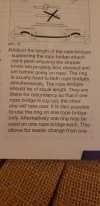
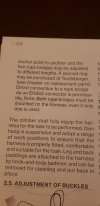
I was thinking about this the other day. The only thought I had was if one bridge were to fail without warning, sorta like the incident somewhat recently with that ancient self abrading bridge. Probably not relevant anymore. Just use proper rope for the bridge. I choose two separate bridges. 2nd one is usually just a placeholder when in an awkward position that may be uncomfortable or too time consuming to use the primary bridge. Comes in handy all the time. Could live without it but don’t want to.

Stumpsprouts
Been here much more than a while
- Location
- Asheville
Has this ever occurred in the industry? Seems really difficult.If the thing you cut is your bridge, 10 lines won't save you from a fall.
That’s the bottom line.Just use proper rope for the bridge.
Has it happened? I have no idea. That's why I'm asking people with more knowledge and experience than me. It does seem difficult to cut your bridge by accident but I wanted feedback from others who do more cutting, more climbing and probably more thinking about both.Has this ever occurred in the industry? Seems really difficult.
That’s the bottom line.

next time you need to change your bridge, try cutting it with your handsaw. even with full bodyweight its quite hard to completly severe it with on stroke (basket). it is really easy to cut trough a single weighed line, so having two independent lines connected to one bridge is not such a bad idea, in my opinion.
i have two bridges on my treemo s.light for comfort/organization.
friedrich
i have two bridges on my treemo s.light for comfort/organization.
friedrich

The bridge on a harness has known strength and wear characteristics that are easily inspected. It is fully under your control, a tree branch is not. That is the main difference and the reason for the two climbing line recommendation.
The recommendation for being tied in twice at a work station, is for both the increased stability it offers and the statistically significant danger to ropes from cutting tools. Your harness bridge will not be in the same danger zone unless it has been altered to be excessively long.
The recommendation for being tied in twice at a work station, is for both the increased stability it offers and the statistically significant danger to ropes from cutting tools. Your harness bridge will not be in the same danger zone unless it has been altered to be excessively long.
How did you attach your 2nd bridge? I'd love to see a photo of your set-up. Your comment about the bridge being in basket configuration makes a lot of sense. Half the weight on each side of the ring, less prone to being damaged from an errant cut.next time you need to change your bridge, try cutting it with your handsaw. even with full bodyweight its quite hard to completly severe it with on stroke (basket). it is really easy to cut trough a single weighed line, so having two independent lines connected to one bridge is not such a bad idea, in my opinion.
i have two bridges on my treemo s.light for comfort/organization.
friedrich
Stumpsprouts
Been here much more than a while
- Location
- Asheville
That was also why I asked the question. Curious to hear… I haven’t heard of an incident like this.Has it happened? I have no idea. That's why I'm asking people with more knowledge and experience than me.
hello,How did you attach your 2nd bridge? I'd love to see a photo of your set-up. Your comment about the bridge being in basket configuration makes a lot of sense. Half the weight on each side of the ring, less prone to being damaged from an errant cut.
i just tie a 120 cm treemo evo bridge into the lower d's with sliding fisherman's knots (the knot u would use to tie hitchcord).
it can be annoying if you wanna use the lower d's much but i prefer the upper ones anyway, most of the time.
friedrich
Tony
Carpal tunnel level member
- Location
- Lancaster, PA
I cannot speak To why the evo is set up that way. I do know in my on going experiment with a second bridge, linking them together keeps the unused one from flopping around.So then I suppose my next question, which may not have an answer, is why does the EVO have a single ring connected to two bridges? Does anyone know why they opted for this configuration? Inquiring minds want to know.
Tony
Sprucinator
New member
- Location
- Northern IL
This has crossed my mind a lot and it's the reason my lanyard is always connected to my lower d's. If my bridge gets cut or fails, my d's will hold me. It's the reason why I almost never connect both systems to my bridge.
I've also always been a little sketched out by my bridge just being a skinny single piece of rope. I have the new Evo and have both bridges together acting like a single on a swivel. Helps me sleep at night lol
I've also always been a little sketched out by my bridge just being a skinny single piece of rope. I have the new Evo and have both bridges together acting like a single on a swivel. Helps me sleep at night lol

- Location
- Tucson AZ!
If your looking for ideas when trying out the second bridge idea out, you could either make it longer than the original bridge you have or if the bridges you already have are on the longer side you could make your new bridges shorter. I adjust mine to suit the situation when I need to be up close and don't have much room I make it shorter. Like working a spar. When I use multiple tip to stabilize myself most times I like it a little longer. You could make an adjustable one with a mechanical device, like a petzel micrograb or even a prusik. Or you could just leave your rope long and adjust the knot to see what you see fit. I usually adjust my bridge very few times though out the day. depending what I'm doing for the day.
When it comes to rings I run would run three if I had two bridges. The far left one would go over both bridges and the next to on each bridge by them self. That way if you need a tip from different angles you can have it or if you want that redundancy you got that too or you could just use one ring over both bridges and then use beners to attach to the bridge instead of rings.
When it comes to rings I run would run three if I had two bridges. The far left one would go over both bridges and the next to on each bridge by them self. That way if you need a tip from different angles you can have it or if you want that redundancy you got that too or you could just use one ring over both bridges and then use beners to attach to the bridge instead of rings.
Last edited:

dspacio
Branched out member
- Location
- Narragansett Bay
I added a second bridge to Treemotion, the same way @Friedrich described but with 16 strand BWR rope. I am using a big swivel from the marine consignment. It's tied a bit long so I can clip it to my left when unused.
Yesterday showed me a mid-size (50 ft tall) Oak, with many good tie in points but thin and wide open in the center. Using an SRT to access, and a MRS in the opposite side of the tree, on two bridges; allowed easy movement. Many times it's stable enough to make cuts without needing to buck in. Extra time setting the 2nd system can increase speed in the tree.
Overall, as for original question, I agree with @DSMc , I use two tie-ins when I feel a need for redundancy related to the point I am tied into in the tree, much less out of concern of cutting the bridge. Having the bridges move independently balances the lift between the side Ds.
Yesterday showed me a mid-size (50 ft tall) Oak, with many good tie in points but thin and wide open in the center. Using an SRT to access, and a MRS in the opposite side of the tree, on two bridges; allowed easy movement. Many times it's stable enough to make cuts without needing to buck in. Extra time setting the 2nd system can increase speed in the tree.
Overall, as for original question, I agree with @DSMc , I use two tie-ins when I feel a need for redundancy related to the point I am tied into in the tree, much less out of concern of cutting the bridge. Having the bridges move independently balances the lift between the side Ds.












New threads New posts
-
test
-
 Free CEUs: February 05 & March 05 - 'Urban Forestry Today' Webcasts @ Noon (Eastern)
- Started by UFT
- Replies: 0
-

-

-
-
-








