Where should I begin?
1. The rough surface of the cross-section makes any guess as to responsible fungus species pretty unlikely, at least for me. A nice sanding of the cross-section and sanding or planning of the radial and transverse faces might be pretty and would definitely help see what is going on. Then again, I see folks give firm, confident diagnoses from cell phone picture for things I'd need a solid chunk of time and a good lab/library to determine. But that's just me.
2. If the wood is obviously decaying, it has lost some structural integrity. Is that a problem? For the living tree, the amount of intact, healthy wood determines stability, not the amount that is decayed. For timber and wood in service, all depends on what the wood is to be used for.
3. If the wood is to be milled into boards or posts, proper air-drying will arrest further structural loss but perhaps not kill the fungus. Some wood decay fungi will decay heartwood in the living tree, but not cause much decay in logs or milled products. Others will rip through both. I can't say here.
4. Grain patterns that are interesting to look at and add to economic value of sawn specialty products are by definition the result of tree growth and not directly due to fungal activity and decay. Decay fungi do cause spalting and zone lines which can add value to specialty wood products, but those aren't grain patterns.
So that's my two cents.


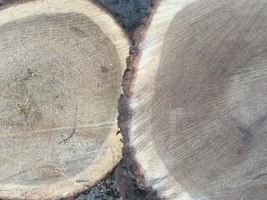 same log. Top end has decay in entire heartwood ! What fungus is this and will it spread to other white oak lumber? Is the wood structurally still sound. I am guessing not but wondering if this fungus will die when sawed open and leave me with unique grain patterns. Does any one have any experience with this? Thank you.


