Reach
Been here much more than a while
- Location
- Atglen, PA
Follow along with the video below to see how to install our site as a web app on your home screen.
Note: This feature may not be available in some browsers.


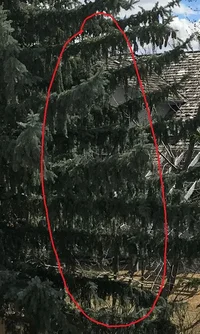
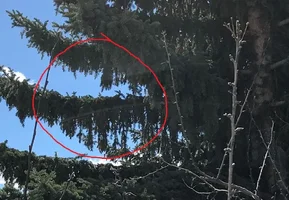
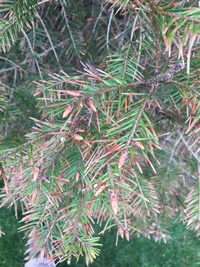
Not mite damage though there may be some subtle mite damage amongst all that nastinessSo I am far from an expert on insect damage, especially on conifers. I’m thinking this looks like mite damage, but I would like a second (third, fourth, fifth...) opinion as to what this is for sure. View attachment 58991
No I don't think so - there's areas where all the trees are about the same age and same planting style and soils etc. yet they're turning out like this. The specimens that do exhibit this weeping have had spider mites for two summers, at end of summer usually. Can't spray the whole neighbourhood though, over and over . . . . (also are black spruces and white spruces, nothing more exotic). But my own theory is it's a combination of things. Sad to watch these trees decline little by little, in spite of care.Pics are far away but are you sure that's not typical secondary and tertiary branch weeping typical of Norway spruce?
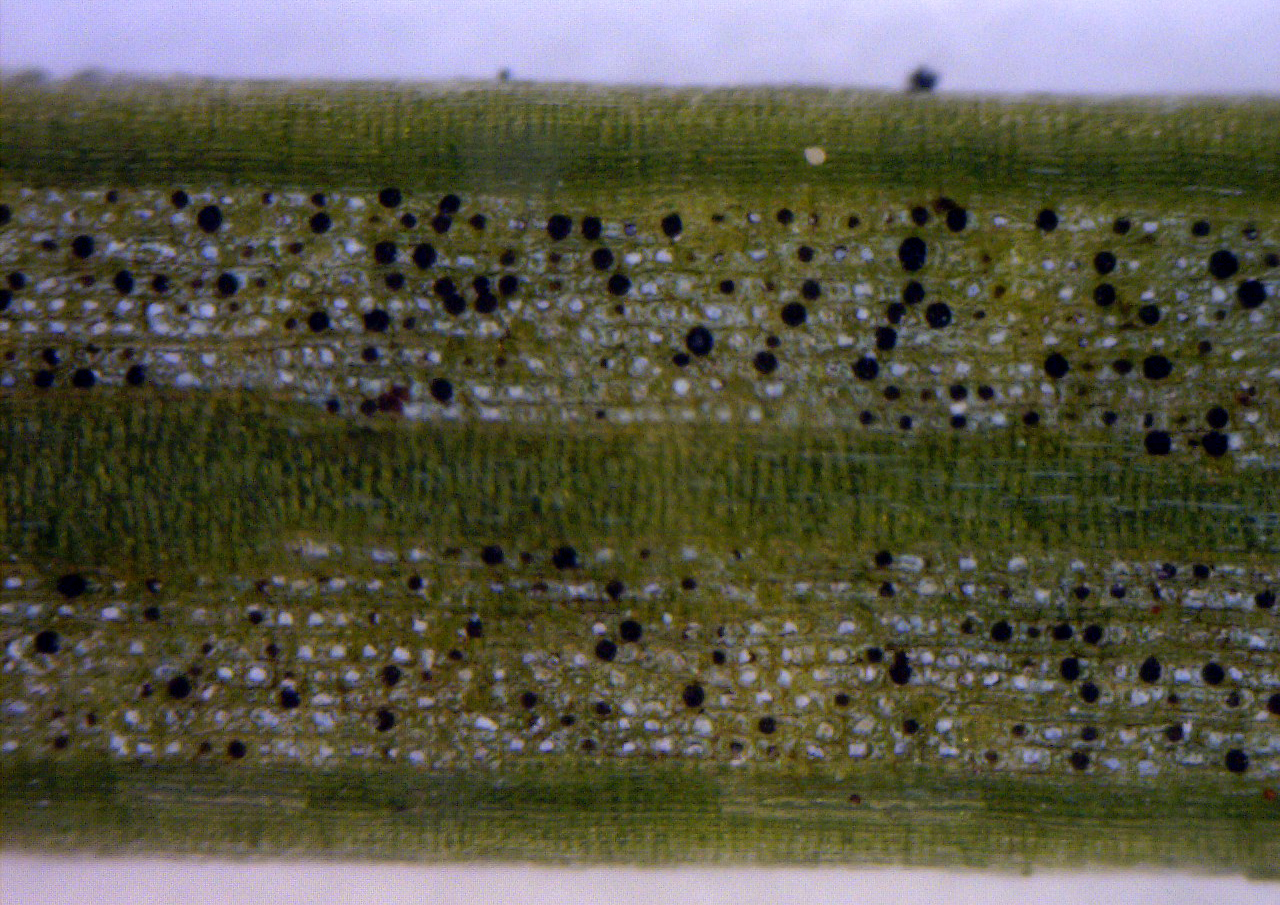
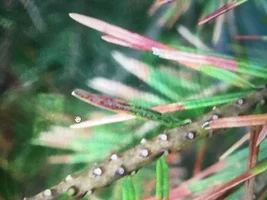
I believe that it is a Douglas Fir. There are several Blue Spruce on the property and none show signs of Spruce Spider Mite. This tree does not look right for that to me either, as it is a pest I am familiar with. My thought is that the needles look like mite or scale damage, but the needles are consistent across the whole tree.Let's start with the first pic...that is a fir, not a spruce. (Douglas-fir?) Could still be spruce spider mites...on that species, but not those pics.
Rhabdocline Needle cast??? (We don't have a lot of Doug-fir here, so I'm not as strong with these...)
Same photo. Try againView attachment 60278