- Location
- healdsburg, CA
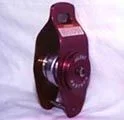
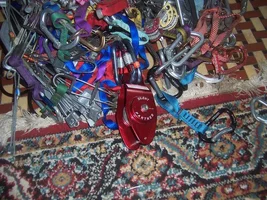
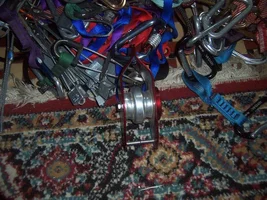
Called the 'Silent Partner', this might be a great tool for practicing the speed climb by yourself. I have'nt worked it but it seems like a possibility.
Frans
www.wrenindustries.com/silentpart_home.html
Silent Partner
Solo climbers have wished for a speed sensitive device that would automatically feed out rope while the climber advanced, but quickly lock in any kind of fall. The Silent Partner accomplishes this. It has a speed dependent mechanism that allows rope to easily move through it at typical climbing speeds, yet lock up in a fall. The Silent Partner attaches to your waist harness; no chest harness is needed. The device resembles a pulley on steroids. To use, the climber ties a clove hitch around the wheel. Inside the wheel is the centrifugal mechanism that allows the rope to smoothly feed while climbing. The increased speed of a fall causes the wheel to lock and the clove hitch stops the fall. There are neither sharp teeth nor radical rope bends, so the device is very gentle to your rope. The Silent Partner has been proven on many diverse climbs by a variety of climbers. It can be used for leading or top roping. The unit is very strong and damage resistant. It will catch a fall in any attitude, whether upright or upside down. NOTE: Like any device it must be backed up — never trust your life to a single tool. The Silent Partner comes with an extensive instruction manual. The device is totally CNC machined from aerospace alloys — no castings are used.
Strength: 5,000 lbf (22.2kN)
Weight: 16 oz. (453.6 g)
Price: $225
Frans
www.wrenindustries.com/silentpart_home.html
Silent Partner
Solo climbers have wished for a speed sensitive device that would automatically feed out rope while the climber advanced, but quickly lock in any kind of fall. The Silent Partner accomplishes this. It has a speed dependent mechanism that allows rope to easily move through it at typical climbing speeds, yet lock up in a fall. The Silent Partner attaches to your waist harness; no chest harness is needed. The device resembles a pulley on steroids. To use, the climber ties a clove hitch around the wheel. Inside the wheel is the centrifugal mechanism that allows the rope to smoothly feed while climbing. The increased speed of a fall causes the wheel to lock and the clove hitch stops the fall. There are neither sharp teeth nor radical rope bends, so the device is very gentle to your rope. The Silent Partner has been proven on many diverse climbs by a variety of climbers. It can be used for leading or top roping. The unit is very strong and damage resistant. It will catch a fall in any attitude, whether upright or upside down. NOTE: Like any device it must be backed up — never trust your life to a single tool. The Silent Partner comes with an extensive instruction manual. The device is totally CNC machined from aerospace alloys — no castings are used.
Strength: 5,000 lbf (22.2kN)
Weight: 16 oz. (453.6 g)
Price: $225