Used a number of times, even away from trees. Cranes, towing etc. industrial grade link fer sure.
Clevis is real 2 leg support to me, carabineer is more single leg like well 'moused' hook (
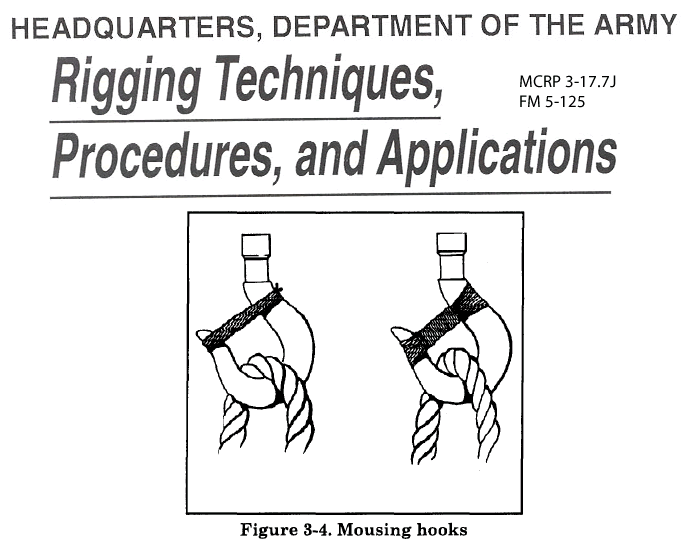
tinyurl.com/army-rig page.86 pic:3-4) fortifying solid leg ; but only 1 solid leg.
Note tight bands in both, then bound across tight in 2nd, like as sweating/swigging/Samson/perpendicular angle to make even tighter binding force for fortification of hook against bend open or load shift out; just as carabiner gate.
.
So carabineer or hook need to be usually heavier /larger stock to equal clevis. Carabineer gate side weakest link that defines strength is baby axle not pulled lengthwise down major axis of strength even but across minimal axis across length as weakest axle point receives 'real force'*.
.
We always prefer pin, especially on any spin potential, but would screw shut clevis by hand and back off 1/8 turn as anti-jam after stress for lowering and short pulls, wrench shut for extended or other complication, but receiver needs wrench to/or pass w/load. Want narrow clevis for strength.
.
Have used oversize with rating wet sanded off smooth as like over head Porty friction around bell of clevis , 1 leg out to sde redirect.
*
Perpendicular pulls/pushes are of 'real force', where the full cosine of 1 is expressed fully and across the cosine of 0 axis of the other, thus the real force.