Interesting statement in TCIA magazine article

It might be that the lichens are present and as the tree declines for other reasons, the lichens get more light through a thinner leaved canopy and proliferate. Lichens do rely somewhat on food generated by algae in the fungi/algae partnership and algae do photosynthesize so it does make sense that light plays a role in growth. There might also be a bit of allelopathy involved, even rain rinsed down to the root zone of the tree.


Have drones been sighted in the area? Because there is then that. ;)
 
Last edited:
" Lichens are actually a sign of really good air quality and will grow on almost anything given the chance."
worth repeating, Loved observing them (lichens) out west on the rocks, in the Parks, and great plains. Noting the different colors too
 
Lichens and mosses are absolutely not harmful to trees. Around New England when non-native blue spruces are dying from fungal degradation the lichens increase. There is more available light, dead and dying conifer limbs are the perfect structure for them to thrive on. Correlation is not cause in this case.
-AJ
 
Lichens and mosses are absolutely not harmful to trees. Around New England when non-native blue spruces are dying from fungal degradation the lichens increase. There is more available light, dead and dying conifer limbs are the perfect structure for them to thrive on. Correlation is not cause in this case.
-AJ
When somebody says "this stuff killed my tree" I can usually find a nearby rock with some lichen or a little patch on the siding of their house and I'll joke "Oh, my - look...it killed that rock too!" (acknowledging that their tree is in decline and yes, they've seen more lichen. They aren't dumb for making that assumption...I just want to point out - leaving no doubt - this is not the cause, so we need to look further to diagnose the real cause).
 
Observational Forensics of Sick Shade Trees was an interesting article.

In his never ending list of possible maladies trees can have and their symptoms he had this one that I found rather ridiculous.

“Lichens and mosses can be like the canary in the coal mine for a tree."...


I do think the author could have described the situation more clearly in this section but to be fair, he never said or even alluded to lichens and mosses killing trees. Just as the canary doesn't cause a gas leak, it does signal a possibility of one. A possible sign of decline, nothing more.
 
I do think the author could have described the situation more clearly in this section but to be fair, he never said or even alluded to lichens and mosses killing trees. Just as the canary doesn't cause a gas leak, it does signal a possibility of one. A possible sign of decline, nothing more.
I agree the words themselves are correct, but the author/editor isn’t considering the audience well enough. I think a few more sentence doing a better job describing would be better.
The average reader’s takeaway is Moss/lichen = bad. This will most certainly trickle through from folks reading this and coming to the conclusion they are harmful.
 
I do think the author could have described the situation more clearly in this section but to be fair, he never said or even alluded to lichens and mosses killing trees. Just as the canary doesn't cause a gas leak, it does signal a possibility of one. A possible sign of decline, nothing more.
yeah, kinda. If, as a professional, that's what I'm noticing, I'm missing a lot of other things going on (like the thinning canopy itself). I get homeowners notice that more than anything else.

As to the analogy of a canary in the coalmine, ironically, that may be the worst part of that break down. As @RyanCafferky noted in the OP, lichens are generally associated with better air quality. Canaries were brought into coalmines to detect bad air quality, so in that regard a lichen plays the polar opposite role.
 
Old school/traditional orienteering tactic uses moss and lichen growth on trees. Within a stand of trees there’s usually more moss on the N side. Must be the diseased side I suppose…
 
... As to the analogy of a canary in the coalmine, ironically, that may be the worst part of that break down. As @RyanCafferky noted in the OP, lichens are generally associated with better air quality. Canaries were brought into coalmines to detect bad air quality, so in that regard a lichen plays the polar opposite role.

I did state that he poorly worded his presumptions but I personally think that over analyzing the metaphors used is not really needed.
 
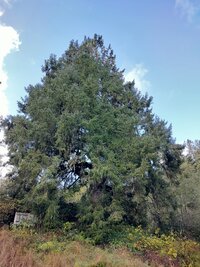
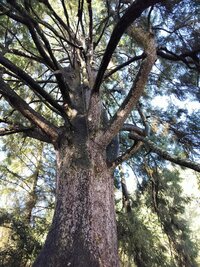
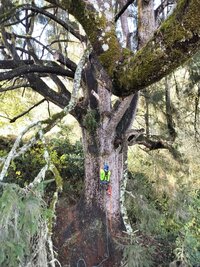
A few weeks ago, I had the pleasure of working on a rather large and old Sitka spruce with a significant amount of lichen in the top 30-40' of the canopy. For context, this tree is the tallest living christmas tree in the country and has been getting lit up with Christmas lights and a large star every holiday season for close to 100 years. An unknown number of years ago, the fire department that was managing the tree at the time had chained the 3 tops together right at the spot where the lichen gets heavy. over the years the tree has swallowed the chains and now has a noticeably sparser canopy above where the girdling occurred. The BCMA I was working with for the project asked me to remove the lichen from the upper crown because she thought that it was blocking photosynthesis in that upper crown. at first, I was hesitant to perform that work on the tree thinking that the lichen can't be having a negative effect on the tree and that removing the lichen wouldn't do anything. However, as I got into that upper canopy and inspected closer, I saw that the lichen was not just growing on dead branches in between clumps , but also completely smothering large amounts of live foliage and not allowing any sunlight at all into the foliage. To me, it appeared that the crown started to die back as a result of the girdling, and the lichen then took over where it now has much more sunlight than it previously had and prevented any chance of the tree top coming back to health. Anyways, I removed the lichen from the top and primed the rest of the tree, so time will tell if the correct decision was made. Anyways, not sure where I was going with this, but I just wanted to share some anecdotal evidence and also show yall a cool tree.
 
A few weeks ago, I had the pleasure of working on a rather large and old Sitka spruce with a significant amount of lichen in the top 30-40' of the canopy. For context, this tree is the tallest living christmas tree in the country and has been getting lit up with Christmas lights and a large star every holiday season for close to 100 years. An unknown number of years ago, the fire department that was managing the tree at the time had chained the 3 tops together right at the spot where the lichen gets heavy. over the years the tree has swallowed the chains and now has a noticeably sparser canopy above where the girdling occurred. The BCMA I was working with for the project asked me to remove the lichen from the upper crown because she thought that it was blocking photosynthesis in that upper crown. at first, I was hesitant to perform that work on the tree thinking that the lichen can't be having a negative effect on the tree and that removing the lichen wouldn't do anything. However, as I got into that upper canopy and inspected closer, I saw that the lichen was not just growing on dead branches in between clumps , but also completely smothering large amounts of live foliage and not allowing any sunlight at all into the foliage. To me, it appeared that the crown started to die back as a result of the girdling, and the lichen then took over where it now has much more sunlight than it previously had and prevented any chance of the tree top coming back to health. Anyways, I removed the lichen from the top and primed the rest of the tree, so time will tell if the correct decision was made. Anyways, not sure where I was going with this, but I just wanted to share some anecdotal evidence and also show yall a cool tree.
 

Attachments

  • IMG20241122093326.jpg
    IMG20241122093326.jpg
    1 MB · Views: 25
  • IMG20241122101341.jpg
    IMG20241122101341.jpg
    1.2 MB · Views: 25
  • IMG20241122121213.jpg
    IMG20241122121213.jpg
    1 MB · Views: 25
I sent over a shot of that section of that article to a friend of mine who is a former arborist, PHD and professor who specializes in lichens and specifically has studied a lot of lichens in trees. She said in her experience that there is zero correlation with die back or negative tree health and lichen and or moss growth. Here is part of what she said. “Some species of lichens specialize on dead wood, but there are no mechanisms for lichens to indicate poor health, slow growth, etc in host plants. Lichen growth really only indicates clean air and healthy biodiverse ecosystem, as you mentioned.”
 
I’d like to see the BCMA’s justification. Sure it could reduce photosynthesis yet stika is a very shade tolerant apex forest species. Around here Sitka, western red and hemlock are our primary apex successional species. Doug fir is somewhat of a pioneer after a large disturbance, the other species tend to hang out under full canopy closure and wait for a Doug to leave a light hole, then they shoot to exploit the extra light.
A bridge graft would likely be more effective. Even if the lichen removal proved some benefit it would be temporary and just regrow.
 
Those are the types of statements in arboriculture that infuriate me. Shame on TCIA and tempted to write them about it. This industry needs real accountability.
 

"Algae, lichens and mosses tend to be more common on plants lacking vigour, so their presence could indicate a need to improve the overall health of a plant. Algae and mosses, for example, tend to favour the damp, shady conditions created by congested growth on neglected trees and shrubs, while many lichens favour the bright conditions of a sparse canopy. If algae, lichens and mosses are seen on sickly or neglected plants, it is important to remember that their presence is a result of the plant’s condition, rather than the cause of it."

This paragraph was pulled from the above UK article. A very pro lichen, algae and mosses article from people who have a very good understanding of the subject matter.

Much better written but apparently in agreement with our much maligned TCIA article author.
 
Observational Forensics of Sick Shade Trees was an interesting article.

In his never ending list of possible maladies trees can have and their symptoms he had this one that I found rather ridiculous.

“Lichens and mosses can be like the canary in the coal mine for a tree. With few exceptions (such as the base of aged trees and the limbs of live oaks and maples), this is an indicator of stress in a tree. Healthy trees normally slough off bark before these non parasitic plants can get a foothold. “

Did anyone with any tree knowledge review this article? Lichens and mosses can be pretty ubiquitous in a lot of trees and in my experience have zero negative consequences or zero indication of tree health issues. Lichens are actually a sign of really good air quality and will grow on almost anything given the chance. Here in the northwest we have moss on many species of trees. Sometimes it is inches thick.

Would love to have other people chime in on this one.
I’m in coastal New England. Lichens are common place on healthy in my area, such as mosses on the North face of lower trunk, and sometimes thinner plate-like Lichens on older leaders/branches.

However, there are puffy, hair ball-like looking Lichens that develop on younger aged wood which I would strongly correlate with a tree being under stress or even in decline.
 

New threads New posts

Kask Stihl NORTHEASTERN Arborists Wesspur TreeStuff.com Teufelberger Westminster X-Rigging Teufelberger
Back
Top Bottom