- Location
- Nationwide
how it\'s done out west.
I worked with a guy from Ohio.
I think he wanted to be sure that I knew he wasn't a tree hugging pansy. I have a beard, Wesco's, full brim hard hat. This guy had an AA in forestry, and he spent a lot of time telling me about how he "set his professor straight on harvesting". Telling me about his opinions on clear cutting and jobs and the environment and telling me and telling me. I just let him roll. It's complex, multi-faceted. I'm not interested in discussing it, for the most part. I let him carry on, the truck bumped along the gravel road, as he railed against democrats and politicised every move, every decision, everybody. We stopped at a heavy welded yellow gate, with an unimagineably expensive lock. He talked about tree-sitters and hippies and working men. Talk, Talk, Talk.
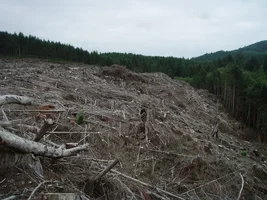
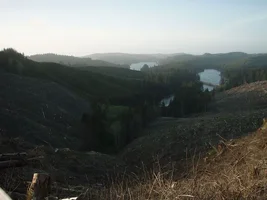
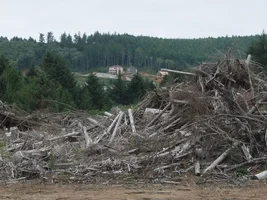
We walked up the road about a hundred yards, the heavy gravel crunched under our feet. You could see the cleared area ahead, a lighter grey in the heavy mist. We stepped out of the woods, across the cut boundary. the standing trunks tagged with yellow signs proclaiming ownership, some trees painted blue around the trunk. He was quieter now, younger than me, but still breathless from the incline up the skid road. We stopped on a hill, and looked down. Silent. The rain and mist drifted around us and ran down our jackets and the beads collected and dripped off my glasses. We looked straight down to the river about 1000' below us, the ridges pushed up higher than the angle of repose, nothing to block the view. Every last tree stripped, the wide gashes from the highlead turns scraped bare down to the bedrock. A 60 degree slope, every rock, stick, and stump churned, blackened, the grey broken bones and twigs and sticks left in rings around the black craters where magnificient PUM piles once stood. How many acres? a couple hundred? Stumps as big as a garage, old spring board cuts, maybe 100 years old now. The remnants of trees that stood when Bruno Heceta sailed up one of the most dismal, dangerous, storm wracked coastlines in the world. A pile of Alder logs, left behind, not quite a full load for a trip to the mill, abandoned by the lack of economy, zig-zagged processor marks punched into the bark. He was really quiet now, and I wondered if he thought back to conversations he had back at Community College. Stumps that a 6' man could lay on with a foot to spare on either side of his head and feet. We looked at the clearcut and I showed him the tail-holds where the yarder sat, the landing, and talked about the hook tender and the chaser and the shovel operator. We talked about the fallers, and the public image of timber cutting in general. We talked about the big companies, and their land holdings, and their relationship with the US Forest Service. He didn't say much. Just looked around. "I have never seen anything like this" was his response when we got back to the truck. "Ya wanna see a really big one? A really big clear cut? This thing goes for miles!" I asked?
"No. I've seen enough, thanks".
We didn't discuss logging in the Pacific Northwest again. In the morning I can hear the groan of the yarder and skidders from my house. they're putting in culverts on the road up to the section I Elk hunt in, or used to anyway. By November, it will look like an atomic bomb went off. For now, the cutters drive new F-450s, but give it a little while. Soon the trees will be gone. The jobs will be gone. But the big timber companies and executives, they'll be fine, and so will the politicians.
I worked with a guy from Ohio.
I think he wanted to be sure that I knew he wasn't a tree hugging pansy. I have a beard, Wesco's, full brim hard hat. This guy had an AA in forestry, and he spent a lot of time telling me about how he "set his professor straight on harvesting". Telling me about his opinions on clear cutting and jobs and the environment and telling me and telling me. I just let him roll. It's complex, multi-faceted. I'm not interested in discussing it, for the most part. I let him carry on, the truck bumped along the gravel road, as he railed against democrats and politicised every move, every decision, everybody. We stopped at a heavy welded yellow gate, with an unimagineably expensive lock. He talked about tree-sitters and hippies and working men. Talk, Talk, Talk.
We walked up the road about a hundred yards, the heavy gravel crunched under our feet. You could see the cleared area ahead, a lighter grey in the heavy mist. We stepped out of the woods, across the cut boundary. the standing trunks tagged with yellow signs proclaiming ownership, some trees painted blue around the trunk. He was quieter now, younger than me, but still breathless from the incline up the skid road. We stopped on a hill, and looked down. Silent. The rain and mist drifted around us and ran down our jackets and the beads collected and dripped off my glasses. We looked straight down to the river about 1000' below us, the ridges pushed up higher than the angle of repose, nothing to block the view. Every last tree stripped, the wide gashes from the highlead turns scraped bare down to the bedrock. A 60 degree slope, every rock, stick, and stump churned, blackened, the grey broken bones and twigs and sticks left in rings around the black craters where magnificient PUM piles once stood. How many acres? a couple hundred? Stumps as big as a garage, old spring board cuts, maybe 100 years old now. The remnants of trees that stood when Bruno Heceta sailed up one of the most dismal, dangerous, storm wracked coastlines in the world. A pile of Alder logs, left behind, not quite a full load for a trip to the mill, abandoned by the lack of economy, zig-zagged processor marks punched into the bark. He was really quiet now, and I wondered if he thought back to conversations he had back at Community College. Stumps that a 6' man could lay on with a foot to spare on either side of his head and feet. We looked at the clearcut and I showed him the tail-holds where the yarder sat, the landing, and talked about the hook tender and the chaser and the shovel operator. We talked about the fallers, and the public image of timber cutting in general. We talked about the big companies, and their land holdings, and their relationship with the US Forest Service. He didn't say much. Just looked around. "I have never seen anything like this" was his response when we got back to the truck. "Ya wanna see a really big one? A really big clear cut? This thing goes for miles!" I asked?
"No. I've seen enough, thanks".
We didn't discuss logging in the Pacific Northwest again. In the morning I can hear the groan of the yarder and skidders from my house. they're putting in culverts on the road up to the section I Elk hunt in, or used to anyway. By November, it will look like an atomic bomb went off. For now, the cutters drive new F-450s, but give it a little while. Soon the trees will be gone. The jobs will be gone. But the big timber companies and executives, they'll be fine, and so will the politicians.