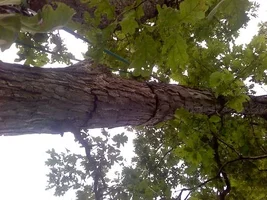
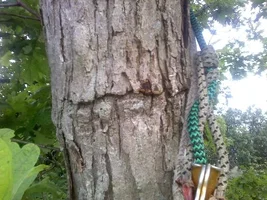
horizontal stress fractures on white oak

treebing

Been here much more than a while
Location
Detroit, Mi.
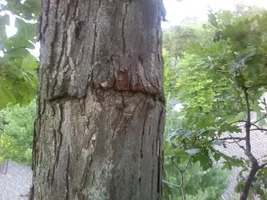
This white oak has a lot of these scars all up and down the trunk. It is over a couple of houses so the customers are worried. I climbed on it and shook it around, the tree feels real solid. There are no fruiting bodies and the scars look healed. What is your opinion on these and should it be a cause for worry?
 

Attachments

  • 236565-stressfracturetree.webp
    236565-stressfracturetree.webp
    44.6 KB · Views: 205
Horizontal cracks terrify me!

Wood has lots of strength in vertical but when those fibers are compromised there is a HUGE strength loss!

If you have the opportunity, take pieces like that and rip them open top to bottom with a chainsaw or if they're small a bandsaw. You'll learn a lot!
 
I just had Ed take down a tree on friday; one of many. anyway, it was a red oak.

nine stress cracks, looked hollow, sounded hollow with my hammer.

tree was removed, was not hollow. probably was okay. I wonder if the cracks made it sound different, or it I just made it sound different in my mind. Usually, that many stress cracks shows it is hollow.

I'd say I'm right with my visual and hammer maybe 95% of the time. This was in the 5% I was wrong.

I had hoped to see it hollow. Customer didn't care, they were glad to see it gone. They didn't like the idea it was stressed cracked through the center many times anyway. I now think the stress cracks were okay.

Hollen took it down.
 
[ QUOTE ]
so would you classify this tree as a hazard tree because of those scars?

[/ QUOTE ]

Because the potential targets are homes, yes. However, hazardous trees can be ranked; low risk, moderate risk, high risk, etc...

Where do you think this tree stands?
 
its a white oak. i have rarely seen failed white oaks, everything seems so solid about this tree except for these fractures. If this were a silver maple i would definitley be very concerned. It is not hollow. It is a forest tree that has been exposed by the building of the subdivision about 15 years ago. The customers are tree lovers and would love to hear me say its not high risk for failure. I hate being in this position. It is a visually nice tree and it would be a loss. I told them I would consult a panel of arborists and report back.

Does Shigo already have pictures of horizontal fractures milled like you say Tom? That would save us a step.
 
In Longleaf and Loblolly pine and occassionally oaks and maples I have seen these defects before. It seems they are most prevalent on forest trees that become exposed to the wind in the post adolescent stage of their lives (past the flexible sapling stage, once they have had several years of putting on heavy wood). In the pines theses ridges or stress features are a result of compressed fibers due to wind forces found on the side opposite of the direction of the prevailing wind. Our general contracting group recently harvested some longleaf pine from an urban forest to use as siding on another project and the compression rings weren't cracks but tightly compressed grain resulting in a curly appearence (wish I had a picture, sorry). If these defects on the white oaks are opposite the prevailing wind, this would be my best guess. Ripping a section would be beneficial to the investigation.
 
That almost looks to me like callousing from a cable or some wire that was around the trees at some point...
I have come across that several times with multi stemmed bur oaks in lake country were people think the trees are going fail. But the trees are fine since there is no included bark. Plus the wire is only about as high as a taller ladder and not high enough to do any good if they were to fail.
Check into that with the homeowner. If that is the case there should not be any increased chance of a hazard. At least not as much as a horizontal crack.
 
It is definitely not wire damage. there are about 8 or 9 of the cracks between 40 and 60 feet up the tree. All of them on the same side of the tree.
 
It does, but sometimes horizontal cracks can look like girdling and vice versa. It seems clear that there is growth on those wounds, so that's certainly worth considering.

Good comments all around on this one, I think the only thing to add is that ultimately your call should represent your best judgement and experience.

What I mean is; would horizontal cracks make sense for the crown and trunk structure? How well do your white oaks fare after primary failures? (our oregon white oaks often keep going for decades) Does your area get hit with really bad ice or wind storms?

IMO these questions along with your aerial assessment and gut feeling will tell you what to recommend. Be confident: you'll make the right call.
 
Is it possible to remove one of the limbs and check it out? When it's on the ground, cut into it to check what the cause is. Remove one that will be least missed.
Are there other trees with that type of damage?
Are the scars on the side of the tree that sees high winds?
Is it possible to thin the crown to reduce 'sail effect'?
Is a support system an option?
 
[ QUOTE ]
It is not hollow. It is a forest tree that has been exposed by the building of the subdivision about 15 years ago.

[/ QUOTE ]

Old deer stand maybe, could be rows of nials for ladder steps.? The 3 near each other be where the stand was?
 
[ QUOTE ]
[ QUOTE ]
It is not hollow. It is a forest tree that has been exposed by the building of the subdivision about 15 years ago.

[/ QUOTE ]

Old deer stand maybe, could be rows of nials for ladder steps.? The 3 near each other be where the stand was?

[/ QUOTE ]

Excellent guess. What I am wondering is why these areas are being called "defects" and "cracks" before they have been closely examined. Such negativity! Lots can be seen without chopping one down and dissecting. Poke and probe--drill it with an 1/8" bit if you need to to get some info.

better yet just get a rope in the top and pull hard on it.
 
[ QUOTE ]
X...did you dissect them to see what they looked like inside? Vertical dissections will teach us what Shigo started learning.

[/ QUOTE ]

OH, I just now looked at the first photo. I had read the whole thread too fast before. That looks like old mechanical damage or wire or chain damage. maybe a chain inside still?

On our red oak I was talking about, I was talking about vertical stress cracks, such as you often find when a tree twists in the wind and usually the tree also has a lot of hollow.

sorry, i was a little off subject. vertical cracks verses horizontal scars are quite different.
 
I threw my throw line at the very top of the tree and pulled on it in all kinds of ways. simulated a pretty rough storm. My feeling is its safe. They look bad though and they are all on the side of the prevailing west wind. They are too high for a deer stand. Thanks for all the feedback.
 

New threads New posts

Back
Top Bottom