I took down an oak yesterday, a "cavitized leaner" I described in another thread.
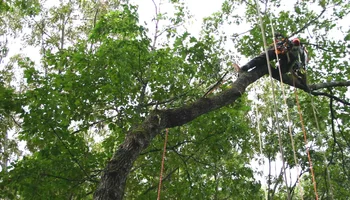
I set my two TIPs to other trees because I was concerned about the lead being sound where it branched off at a 45 degree angle at the 30 foot mark...there was a cavity from a limb rotting out about 75% of the diameter...that limb was vertical, must have been the main trunk at one time.
Once I got in the tree and on the leaning part, I bounced around a bit and could not make it fail (had already tried by puling from the ground with a rope). I roped out the limbs as I ascended, took out the top and chunks in pieces and finally got it all down.
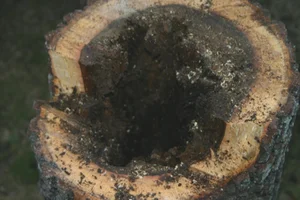
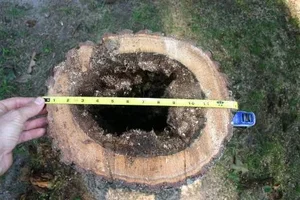
The surprise was when I took down the spar...it was very hollow from the ground up to about 6 feet (it was about 15 inch diameter where I cut it at 3 feet above ground). I discovered the hollowness when I made my face cut...it had me concerned about having enough hinge wood. There were not any signs of any disease or weakness at the base or anywhere external. The rot stopped at about 6 feet above ground and the tree was solid from there on up (except for the limb cavity at 30 feet...and it was localized).
Looking back now, I should have taken a sledge (or something heavy), I suppose, and "sounded" the stump before going up.
The tree held up well and I did not suspect any structural integrity deficiencies until I saw the hollow stump.
So here is the question: if you strike a stump and it sounds hollow, how do you decide whether it is safe to climb or not?
Or do you just use independent TIPS so you don't have to depend on the tree for support?
Or do you drill a hole through the tree to see what you do (or do not) encounter?
I have not had formal "hazard assessment training" and am looking for some suggestions.
Thanks.
I set my two TIPs to other trees because I was concerned about the lead being sound where it branched off at a 45 degree angle at the 30 foot mark...there was a cavity from a limb rotting out about 75% of the diameter...that limb was vertical, must have been the main trunk at one time.
Once I got in the tree and on the leaning part, I bounced around a bit and could not make it fail (had already tried by puling from the ground with a rope). I roped out the limbs as I ascended, took out the top and chunks in pieces and finally got it all down.
The surprise was when I took down the spar...it was very hollow from the ground up to about 6 feet (it was about 15 inch diameter where I cut it at 3 feet above ground). I discovered the hollowness when I made my face cut...it had me concerned about having enough hinge wood. There were not any signs of any disease or weakness at the base or anywhere external. The rot stopped at about 6 feet above ground and the tree was solid from there on up (except for the limb cavity at 30 feet...and it was localized).
Looking back now, I should have taken a sledge (or something heavy), I suppose, and "sounded" the stump before going up.
The tree held up well and I did not suspect any structural integrity deficiencies until I saw the hollow stump.
So here is the question: if you strike a stump and it sounds hollow, how do you decide whether it is safe to climb or not?
Or do you just use independent TIPS so you don't have to depend on the tree for support?
Or do you drill a hole through the tree to see what you do (or do not) encounter?
I have not had formal "hazard assessment training" and am looking for some suggestions.
Thanks.