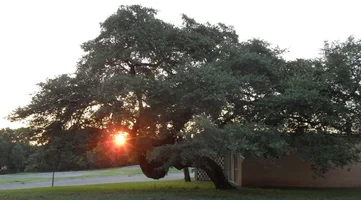
Grass under trees

Re: Grass under trees-some pictures

[ QUOTE ]
Dave, I don't think Tom will allow this gloomy doomy scenario to unfold.

[/ QUOTE ]

We know Tom has the knowledge to make the right choice here. That is not the problem. The problem is he is not being allowed to make the choice and is asking us, as tree advocates and professionals, for information that his superiors might find persuading. So my thought was to give known facts on problems created in the turf/tree relationship.

[ QUOTE ]
And I have seen very healthy St. augs lawns under very healthy live oaks.

[/ QUOTE ]

We can all, everyone of us, point to extraordinary situations where trees survive in spite of us and beyond all odds. We also know of many people who smoke heavily and drink heartily that live to a ripe old age. Would that be evidence in recommending that lifestyle?

[ QUOTE ]
Few big cuts; many small cuts will do the job. Trees btw will look better with no health consequences.

[/ QUOTE ]

Really. You have got to be kidding me here. Is this the procedure you would recommend for these trees if grass were taken out of the equation? If not, which is what I would hope you would say, then you are indeed compromising one for the other.

Dave
 
Overseeding with fescue and ryegrasses aren't going to work well in this instance as Tom's university is situated in the warm season grass zone and fescues and ryegrasses are in the cool season zone, with some tall fescues being able to be incorporated in the transitional zone, where Guy is located.

Tom's statement that these trees were "gutted a few years ago" shows that this is a temporary fix. And eventually, on some species, you will run out of the ability to create enough opening to achieve your goal. He states here that now there are only big, trunk cuts or many tip cuts available.

So if he goes in with the "few big cuts" there will be even less to work with next time...and there will be a next time. And the "many small cuts" are going to be labor intensive, and will they be enough to serve the purpose?

With trees you HAVE to look long term.

Turf management for a quality stand demands intensity in varying levels. St. Augustine is listed as having a high fertility requirement with a high disease potential. It has a low wear resistance, low heat tolerance and low drought tolerance. Putting those facts together will state that the needs of the turf are going to vary substantially to the needs of a live oak stand.

If the client is open to another species of green leafy substance, then it would be best to offer a design of mulch islands with shade loving plants, benches and walkways weaving through the trees (as mentioned above). The ophiopogon and liriope are both bunch grasses that will present a contrast that may not be appealing to the powers that be. If they are willing to go to that much of a difference, better to go with some design that makes a statement. This would result in a finished landscape that would enhance the area, allow a level of function that would also minimize the negative impact on the trees.

Caving to the maximizing of turf will result in mechanical damage and stress to the trees.

This could be an absolutely stunning alle for years and years to come.
 
[ QUOTE ]
Yesterday my supervisor told me that 'the word' came down from a muckety muck in admin that they don't like seeing the thin grass under the trees.

[/ QUOTE ]
Right. And the admin has a degree in...Arboriculture? Or was it a Greenkeepersdegree.

You're the man Tom. Don't even evaluate any option concerning cutting big limbs of those trees. If anything, the only option is reducing the amount of trees.
Maybe less is more in this case.
 
Seems like an excellent opportunity to educate. The potential for that space is huge. Like was said before, some benches, perhaps some underplantings, mulch beds...anything but turfgrass! Beautiful trees, a nicely landscaped area underneath would highlight this.

I'm actually a little surprised by Guy's post. We all have to play to our client's wishes in the end and of course budgetary concerns.

I agree with Dave, though. It would seem that the maintenance of turfgrass under those trees would forever be a tightrope balancing act in which concern for grass could tip the health of the trees towards a spiral fall. Educate, offer alternatives, come up with a landcape plan if you can justify it.

Good Luck!
 
[ QUOTE ]
[ QUOTE ]
Mount some plant lamps in the trees

[/ QUOTE ]

Leave it to Holly to think that far out of the box!

I LIKE IT!

[/ QUOTE ]

This is on a campus, an institute of higher learning for young and impressionable minds. Do we really want to propagate the myth that trees and turf can occupy the same space,thereby perpetuating a design that is notorious in its flaws.

Disneyland looks fantastic but it is an illusion.

Dave
 
St Augustine does fine in shade. In poor soil, not so much. On a campus, compaction is probably severe. Grounds staff probably dump chemicals routinely.

I always advocate for switching to organic soil treatments. In Austin, most soil is highly alkaline and N deficient. Compost brings N, activates microbial ecosystem, and adds organic material--and that's usually the only fertilization needed here. Organics decay, creating acids that release iron and other nutrients that are bound with C (because of the pH) while relieving compaction. Air spade can work compost in quickly to speed this process. Cornmeal can help avoid or treat fungal diseases. Insecticidal soap can treat chinch bugs.

Unfortunately, transition from chemical to organic can look terrible, making a tough sell to admins and likely leading to premature assessment that the alternative methods have failed.

Disclaimer: I don't work for a campus, or manage any grass other than my own. But this is what I believe (and I have a pretty nice patch of St Aug under a huge Shumard Oak in my front yard--looked even better before last year's extreme drought). Good luck, Tom.
 
St. Augustine is listed as the most shade tolerant of the warm season grasses. Some cultivars are better than others.

However, Tom's photos, and the concerns of the powers-that-be, show a very sparse turf. Not one that is thriving in the deep shade.

So if it is not the lack of sun, but soil issues, and I completely agree that this could be a contributing issue, then what good will it do to trim the trees? These trees will be thinned to no purpose.

Addressing a symptom rather than the cause is a short term approach.
 
why not install one of the nicer forms of astro turf? you can hardly tell the difference in it and real turf anymore.
 
Tom,

I would consider contacting the University of Guelph's Turfgrass Institute. If there are lumen levels necessary for turf, they'll have it and I'm thinking your institute would respect intercampus cooperation.

Babberney,

Some years ago, I worked on a three year project applying cornmeal as a pre-emergent fungal AND selective broadweed control, under auspice of UoGuelph. Sportsfields, not shadegrass, so results not applicable here, but I found it near impossible to broadcast cornmeal in the cool of a spring morning and not jones for a bowl of cornflakes for lunch. Rich stuff.

We plotted broadweed and fungal emergence and abatement against side-by-side chemical controlled turf (mecaprop, dicamba, 2-4-D) and control fields that got either nothing, or just aeration, topdressing and irrigation.

First two years were disappointing, but by the third year, the cornmeal applications were really starting to catch up to the chemically controlled field.

Before anyone asks, I was a mere equipment operator, and data collecting functionary.

But I was impressed that UoGuelph was ahead of the curve on investigating chemical alternatives.

Regarding the Live Oaks, from the photos, it looks (to me) like they could use some directional canopy pruning for separation at this point anyway. A conflicting branch is a conflicting branch whether it is from the parent or the neighbor. I'd be following Shigo into the outer third of the canopy regardless of the turf, and if that creates some light, all the better.

And anyway, (to me) after a week of pounding out removals, I would drool at the prospect of getting out to the canopy and seeing just how I could create light.

Northwind
 
[ QUOTE ]
...Regarding the Live Oaks, from the photos, it looks (to me) like they could use some directional canopy pruning for separation at this point anyway. A conflicting branch is a conflicting branch whether it is from the parent or the neighbor. I'd be following Shigo into the outer third of the canopy regardless of the turf, and if that creates some light, all the better.

And anyway, (to me) after a week of pounding out removals, I would drool at the prospect of getting out to the canopy and seeing just how I could create light.

[/ QUOTE ]

Amen; no choice imo. It sucks they were liontailed, and options are few, but that shell has to be pierced so light stimulates interior regrowth. If the turf benefits too, all the better. A few of the lower limbs look expendable; kinda gangly after being raised to 8' (which i understand the need for)

DisneyWorld is not an illusion; I've seen their crews at work.
Making a statement is great, when there are funds to deliver it. If Tom had a blank checkbook, no problem! But I agree there should be mulch islands at least out to protruding roots.

It'd be fun to climb those, in October...
santa.gif
 
There is a great article in this weeks American Nurseryman (June 2010) on ground covers. Large beds of bare mulch under trees isn't real attractive.
 
At the moment mulch rings are not an option.

When this issue is finally addressed there may be a place for mulch rings.

There are better trees to climb on campus than these though!
 

Attachments

  • 234387-CR-Sunrise.webp
    234387-CR-Sunrise.webp
    343.8 KB · Views: 71
We had about an acre area of dense canopy and poor grass cover that we tried an experiment. 8-12' diameter mulch circles. Just kind of slipped it in on the sly and then a few months later invited our Univ.'s president over for a look.
No tee up, just have a look at the area.
He exclaimed how wonderful the grass looked. We considered that a success.

Mulch rings are lower maintenance, and they drive the usage into certain center patches and in many places, the students go back to the sidewalks. A few paver glades were financed in cattle paths, too.

But from Tom's picts of the area I would have a very difficult time not saying anything like, "Are you crazy?"

It could be one of those phone game scenarios-- someone asks, "I wonder." and the next smaller on the food chain says "They said to Make It So."

Finally, and I know this isn't in place yet for either of our scenarios, but part of the TreeCampusUSA is an advisory board between students, staff, and faculty. Something like this would almost be required.

There is no TurfCampusUSA or TurfCityUSA. Let's hope not. Oh, wait, those are atheletic fields.
 
I can not say it more than twice, plant lamps in the tree set to run 3-5 hours a day. You'd not be thew fist to do it. Been done in Princeton NJ for a person that demanded grass in the whole yard no matter what.

A college can afford to post some lamps to run 3-5 hours a day off peck hours to keep the grass the dean wants.
 

New threads New posts

Back
Top Bottom