












Navigation
Install the app
How to install the app on iOS
Follow along with the video below to see how to install our site as a web app on your home screen.
Note: This feature may not be available in some browsers.
More options
You are using an out of date browser. It may not display this or other websites correctly.
You should upgrade or use an alternative browser.
You should upgrade or use an alternative browser.
Flint locker retrieval
- Thread starter seedy j
- Start date

kludge
Participating member
- Location
- Eastern PA
You could try tying a throw line to your retrieval end. As long as you have a retrieval device (ball, ring, etc.) you will have more control in pulling it out.

You could clip your blocking knot like this to ensure it gets pulled down:
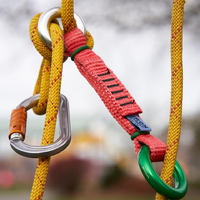
Or use a short piece of throwline and tie a lanyard clip onto the small ring and clip it to your blocking knot.
Or use a short piece of throwline and tie a lanyard clip onto the small ring and clip it to your blocking knot.

Muggs
Been here much more than a while
- Location
- Canuckistan
I retrieve mine exactly the same as a friction saver, with throwline and a retrieval ball. Helps get it back if you've taken redirects
With this it looks like the knot blocking will pull the flint locker down as you pull your climb line. Do you find the green ring adds friction to your climb line (as you retrieve it) if you've taken some redirects?You could clip your blocking knot like this to ensure it gets pulled down:
View attachment 91050
Or use a short piece of throwline and tie a lanyard clip onto the small ring and clip it to your blocking knot.

Matias
Been here much more than a while
- Location
- Butte County
I haven't found a non pulley based solution to that issue. I have been climbing back to the top and following my retrieval line back down, which is lame sometimes, but it never costs more than a few minutes, and I like climbing.With this it looks like the knot blocking will pull the flint locker down as you pull your climb line. Do you find the green ring adds friction to your climb line (as you retrieve it) if you've taken some redirects?
I haven't retrieved it that way as I haven't found the need to, but I honestly haven't used mine in a couple of years. That photo is off the WesSpur website.With this it looks like the knot blocking will pull the flint locker down as you pull your climb line. Do you find the green ring adds friction to your climb line (as you retrieve it) if you've taken some redirects?
Last time I saw Flint climb, I believe he used throwline to retrieve his, but it was during a master's climb in a competition. Not sure how he does it on a daily basis.

Steve Connally
Been here much more than a while
- Location
- Suffolk, Virginia
Granted I don;'t climb as often as others, the locker is still my go to. Even in a bushy conifer I've been lucky enough to never get it stuck. Seems to just slide down with a flick of the line. The stitched eye catches it enough when I reach the tail otherwise a retrieval ball. If concerned about bombing it out I'll do like the others explained and use a throw line.

southsoundtree
Been here much more than a while
- Location
- Olympia, WA
I don't get it.
Why not girth hitch the ring onto an (adjustable size to the situation) alpine butterfly, then thread the end through the ring?
Matias
Been here much more than a while
- Location
- Butte County
I had seen that video before I actually had the gear to climb single rope, and had forgotten it. I have some rings that desire a purpose, and have been looking for a tidier canopy anchor system. Thanks for the reminder
I don't get it.
Why not girth hitch the ring onto an (adjustable size to the situation) alpine butterfly, then thread the end through the ring?

I have tried it and want to use it more but I think the whole ideology of the flint locker system is great if it's midline attachable...quickies and quick links like I think I saw muggs do. Otherwise it's no more quicker or better is anyway than our modern canopy anchors.
Yes I understand the reduction in friction that the flint has over say the alpine butterfly with a quickie.
As with any anchor sling type situation, if you don't Want your gear to his the ground hard, just lower it with rope anf/or throwline...
Yes I understand the reduction in friction that the flint has over say the alpine butterfly with a quickie.
As with any anchor sling type situation, if you don't Want your gear to his the ground hard, just lower it with rope anf/or throwline...
Muggs
Been here much more than a while
- Location
- Canuckistan
Flint locker allows for retrieval after redirects, so you don't need to follow the path of the back end of your rope. Works best if it can float freely to minimize friction on retrieval, unlike the picture from the Wesspur catalogue above, now that I think about it
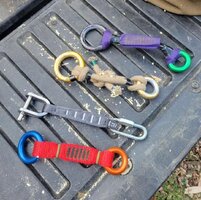
Matias
Been here much more than a while
- Location
- Butte County
So, just using them like tiny ring and ring friction savers?Flint locker allows for retrieval after redirects, so you don't need to follow the path of the back end of your rope. Works best if it can float freely to minimize friction on retrieval, unlike the picture from the Wesspur catalogue above, now that I think about it
View attachment 91098
kludge
Participating member
- Location
- Eastern PA
Very much but knot blocked to stop movement and turn it into an SRS system. On pitchy trees, I will often knot block my ring and ring and have that wrap the tree rather than have my rope wrap the tree like in a soft eight (flint locker). So they are very similar, but just the length varies and not used for DdRT.So, just using them like tiny ring and ring friction savers?
Muggs
Been here much more than a while
- Location
- Canuckistan
It's a tiny friction saver that rides underneath the branch, instead of on top of it...So, just using them like tiny ring and ring friction savers?
Sprucinator
New member
- Location
- Northern IL
https://fb.watch/oiMyJ-9DKN/?mibextid=NnVzG8
Patrick Fitch posted a video a bit ago about a "soft" retrieval method for a friction saver (used srs). Pretty neat and smart imo
Patrick Fitch posted a video a bit ago about a "soft" retrieval method for a friction saver (used srs). Pretty neat and smart imo
This looks like it'd be very consistent and controlled.https://fb.watch/oiMyJ-9DKN/?mibextid=NnVzG8
Patrick Fitch posted a video a bit ago about a "soft" retrieval method for a friction saver (used srs). Pretty neat and smart imo
southsoundtree
Been here much more than a while
- Location
- Olympia, WA
Looks over-complicated and shiny to me. Am I missing something important?
The marketing department at the arb companies will love it!
Why make two bulky knots with loops plus a carabiner to block?
One clove hitch on the biner would be lower profile. Would that not be a secure and more streamlined.
The marketing department at the arb companies will love it!
Why make two bulky knots with loops plus a carabiner to block?
One clove hitch on the biner would be lower profile. Would that not be a secure and more streamlined.
Sprucinator
New member
- Location
- Northern IL
a friction saver is something pretty common for most climbers to have (nothing really shiny or new at all really). The extra knots is def overkill imo but it's for an anchor so why knot? (lol) and when knot blocking for an anchor (especially life support) the biner is pretty standard for backup in case the knot pulls through. it's better to have the knot jammed up against the ring than the biner just because it's easier on hardware.Looks over-complicated and shiny to me. Am I missing something important?
The marketing department at the arb companies will love it!
Why make two bulky knots with loops plus a carabiner to block?
One clove hitch on the biner would be lower profile. Would that not be a secure and more streamlined.
Lastly, the OP was asking about a way to retrieve a soft 8 (basically a short friction saver) without having it crashing to the ground like retrieval usually goes. this soft retrieval allows a controlled retrieval so it doesn't get stuck on its way out.
if you've never heard of this type of anchor you should check it out. Super useful for large prune jobs where multiple redirects are necessary and you can still easily pull it out.
southsoundtree
Been here much more than a while
- Location
- Olympia, WA
I've heard of it. Seen a video.
I haven't used a ring and ring in over 10 years, personally.
So what is the benefit over one ring/ biner girth- hitched on the eye of a butterfly?
A carabiner against a ring is not going to damage anything.
Lowerable base-tie anchors are a good example of marketing department spin.
In about 13 years of basal anchoring, I've used a carabiner as extra gear sometimes for base- ties. Generally, just the climbing rope.
Nothing anodized.
I've climbed a few trees in that time.
All of my zero times of wanting to active the basal lowering system, I would have been happy with what was set as a lowering system.
It wouldn't pass the whistle stop test, which seems like academia. Some trunk friction that could hold a 1000 pound log could hold me.
I haven't used a ring and ring in over 10 years, personally.
So what is the benefit over one ring/ biner girth- hitched on the eye of a butterfly?
A carabiner against a ring is not going to damage anything.
Lowerable base-tie anchors are a good example of marketing department spin.
In about 13 years of basal anchoring, I've used a carabiner as extra gear sometimes for base- ties. Generally, just the climbing rope.
Nothing anodized.
I've climbed a few trees in that time.
All of my zero times of wanting to active the basal lowering system, I would have been happy with what was set as a lowering system.
It wouldn't pass the whistle stop test, which seems like academia. Some trunk friction that could hold a 1000 pound log could hold me.




















