Mark
I agree with your concerns about beech wood going pulpy so quickly, especially as their crowns can still look in good health.........it only becoming apparent how much the tree is decayed when its cut at ground level.... after all the climbing / rigging has been done.. like you say scary.
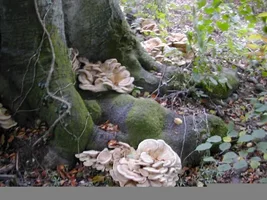
the decay fungi in the first post was Meripilus giganteus, its fruiting bodies dont last long, one frost and it rots away.
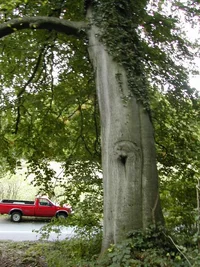
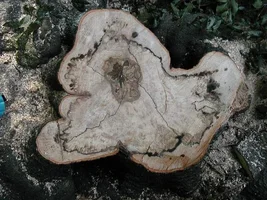
the attached picture is of a beech that had Ustulina duesta decay fungi.....its fruiting bodies are black crusty lumps and often quite small and so easy to miss..... this paticular tree showed no sign of ill health in its crown and there was just a small patch of the fruiting body visible.(which was why it was removed..being roadside) It was 80 feet tall and some of its branches had to be lowered....i never imagined that the decay would be as extensive as this, despite knowing that the fungi was present in this tree..it certainly made me think....as do all the beech i now climb do.


 Apr 09 (Free CEUs) & May 07 - 'Urban Forestry Today' Webcasts @ Noon (Eastern)


 KBNest -Midline Attachable SRS Canopy Anchor.