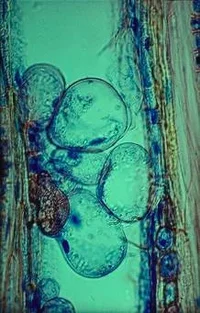
Dead (and Undead) Wood

Tom, I thought your initial question was in regards to the removal of deadwood on an individual tree, presumably in a residential setting, and whether or not doing so has positive health benefits for the tree.

As I said I always told my clients it was cosmetic. But after 40 years of observing response to removal of deadwood, I, personally, feel there is a positive affect on the health of the tree.

Science constantly amazes me by explaining to us things we do not understand. But sometimes just using your eyes to see what is in front of you is what you need to know. I think it is important when you are discussing deadwood in canopies to not confuse the health of an individual tree to the health of a forest. A forest is a massive organism and its needs are different than that required by the solitary tree in a client's yard.

I have never hyped the removal of deadwood and still don't, except for reduction of risk in target situations. However, I have no problems relating my personal observations, scientific proof or not.

As a tree guy I am very comfortable going out on a limb.
grin.gif


D Mc
 
[ QUOTE ]
Does removing dead wood from the canopy actually produce some net benefit for the tree? Does anyone out there actually know of any research that suggests trees respond positively when dead wood is removed?

[/ QUOTE ]

It's an excellent question, and the tracing of answers throughout this thread are interesting indicators about dogma, common sense, and thinking outside the box.

Let me try to respond in a somewhat chronological fashion and generally comment on each successive post. Naturally, I intend to be heretical just for the exercise of my cobbywebbed brain, but sometimes that also leads to thinking differently--which is an exercise that helps in considering new options:

Wounds stay open, and decay enters the parent, when the dead branch stays on. Wounds close when dead branches are removed.
That's been well documented.
Pruning dead wood also reduces load, which reduces strain and risk of failure. That benefits both tree and thee.


-----------------------------------------------------------


I don't agree. And I think it's important to look at the natural and expectable causes of deadwood before we developed opposable thumbs and saws. Limbs died as a result of being shaded, or succumbing to disease, or failing to be sustained by the internal transport processes of its parent woody cylinders. There are indeed, a number of other reasons, but I think statistically these three problems led to most deadwood.

Certainly, limbs are lost to wind, other falling limbs, and structural failure, but these limbs generally lie at the base of the parent tree and their eventual deadness ought not to be counted as deadwood.

Generally, these failures include open wounds that result from the limbs being forcefully removed and I don't think these conditions fit Tom's original question.

Deadwood in this discussion are the limbs that stay on trees for sometimes significant periods of time and we watch the progression of the leaflessness and bark shedding as our clues to that limb having died. CODIT is the tree's evolved response to dying and dead parts of the creature that runs on tree time and whose efficiency is often determined by the dead limb staying in place.

External natural breakage or pruning are outside the evolutional protections of CODIT because the loss is generally instantaneous and involves open wounding. CODIT is initiated, but has lost the usual locations for its actions, so the tree begins its defense at the wounded area rather than the orderly anticipation and closure of entry paths to pathogens and other decomposes.

A tree is very much aware of a dying limb and initiates CODIT well in advance of any physical breach of its exterior defenses. Most often, a limb stays in place while CODIT continues and finally breaks near the extended collar of the still living larger limb. For some, this may appear inefficient or disorderly, but it has served trees for millions of years.

Load reduction by pruning removes dead wood earlier in time and has a distinct advantage of keeping big limbs from falling on our heads, but Tom is asking about a biological reaction that benefits trees.

I don't think these issues have been well documented, and appear more likely to be things repeated and passed along.

-----------------------------------------


I define deadwood as a woody cylinder that has no leaves, no living cambium to sustain the cylinder growth, and no sugars contribution to the larger woody limb that it is attached. As tree time continues, the bark is breached and the limb is desiccated; de-composers enter and attack the internal xylem, and the inflexibility of the dead limb often concentrates the breaking point back at the living collar.

Regarding Shigo and Gilman, Alex kept CODIT 1, 2 and 3 and separately CODIT 4 as distinct protective evolutions. By the above definition, CODIT 4 is not really part of our discussion and I'll just put it on the shelf for a few moments.

I am surprised that the Gilman reference which is relatively recent is also rather dated with dogma and mythology snippets that I learned to distrust and challenge in my first days in the world of trees. I agree it's somewhat sanitized, and doesn't quite say that water sprouts sap the vigor of a tree, but I think it's still a bad blend of of hackneyed thinking and the veneer of some new knowledge.

If compartmentalization 1, 2 and 3 have worked, invasions from the external environment or from a body of deadwood itself ought to have been blocked and minimalized those local threats to the tree. During the time of effective compartmentalization, there may however be some pathogen migration or entry that threatens the health of the surviving limb and in that consideration, it may appear that removing deadwood has a biological value.

But what mass of deadwood then constitutes a threat? The full length of the limb, or short stub above a Shigo cut? I will argue that neither is as relevant as the instantaneous cut that short circuits the capacity of the evolved compartmentalizations that are part of a tree's internal biology.

Shigo cuts protect the integrity and continuity of the larger limb's point of attachment. Breakage of a live or dead limb by external forces such as wind or ice almost invariably rip and destroy the established structured connection of limb to parent. The larger question is, "Should we anticipate and intervene?"

-------------------------------------

Responding to Nick, I'm not sure that compartmentalization inside of the dead limb is any energy drain on the larger tree. Embedded inside my definition of deadwood is the recognition that depending on age, the bulk of that limb is already dead and the living parts were once contained only in a very small depth of the perimeter.

If you leave the dead branch on, the tree has to try to compartmentalize the whole branch, rather that just cover over the cut.

For most species, there are routine blockages and containment's by tyloses and other means that close the vessels having reached the end of their lives. If we think of it this way, limbs are simultaneously growing and compartmentalizing at the same time based on that specie's " useful life" of the cambium's daughter cells.

To coin a term, the woody cylinders of many species engage in a <u>soft CODIT</u> for most all of their lives. In its youngest term, a twig will be 100% dynamic growth as described by Alex, but as the twig ages, its living thickness will remain essentially the same and become a decreasing percentage of its diameter.

If I an correct in this, after a pruning cut, the most vulnerable entrances to pathogens will be those relatively new outer vessels of the limb not yet having the time or the instructions to compartmentalize. In both a pruning cut and a breakage, this process is left to the vessels in the parents cylinder to provide tyloses and physical barriers where the difference cylinders merge. Far too often a significant amount of wood is lost as the sites for CODIT to occur. Still, the tree trees to manage with what it has.

--------------------------------------------


The last post in this series as I'm writing my response, discusses DED and sanitation as the removal of dead and dying branches. For the most part, a dead or dying tree is less the result of a fungus as the tree's disproportionate response to the <u>presence</u> of the fungus. Long before the fungus moves down into the tree, the tree anticipates the invasion and sets tyloses in place to block the routes both locally and distant. It is a simple and often effective response except it also blocks of the regular transport of water upward in the xylem. Flagging is our clue to that attempted remedy.

Sticking to the concept of full disclosure we should remember that most elms come down by our practices and that many American elms do indeed survive. The tree that does not overreact and strangle itself has the chance to have the next generation's xylem vessels stay clear and provide the needed water transport. The fungus does not travel laterally and its' stuck in the vertical vessels it originally infected. At the end of the growing season, a surviving elm has a cross-section of an embedded infected vessels behind the new growth of clear vessels. I have argued for many years that encouraging a potentially infected trees growth should be a required part of any DED treatment. I recommended the use of the tree sausages just prior to inoculations to prep the tree with percolated water for upward transport and the reduction of local injection burning-- and an acceleration of new vessel growth. So far no one seems to care.

------------------------------------


As treehumper points out, deadwood is the consequence of livewood and trees have had a long time to figure things out and keep nature's systems in balance. it fits our hubris to think of nature as clumsy, but if she hadn't done as well as she did, we wouldn't be around to sniff at her inefficiencies.

We should also remember the deadwood fills our gas tanks and pays our mortgages so there are powerful forces aligned to defend and encourage deadwood removal. The important thing is to try to maintain some sort of perspective that recognizes the truths of both biology and economics. Maybe there is a scale with hacks at one end and stewards at the other. And maybe we pop up at different points on the scale at different times. Our own consideration of that positioning is a part of the definition of ethics which I thought was a sub-question in Tom's original posting.


Bob Wulkowicz
 

Attachments

  • 130012-tyloses.webp
    130012-tyloses.webp
    22.9 KB · Views: 218
Tom Otto's original question was essentially, "Is there a biological benefit to a tree by the removal of its deadwood?" And he then asked, were there any papers or studies that listed or explained those benefits? I touched on perhaps too many issues in my long-winded reply, so I'd like to step back to his opening post.

I have been bred to be a skeptic and whether or not I want it, I turn things over and over, poking at them and asking questions about their realities. Tom's question seems quite reasonable to me. We are continually told that removing deadwood is a goal that is born of its benefits. Most of the reasons listed did not specify the biological improvements to the health of a tree. I am not dismissing those reasons, I'd simply not like us to step too far away from the first question.

[ QUOTE ]
Tom D responds. ... I can't see any biological detriment to the tree from removing deadwood. To me, if no damage is done to the tree I'm less likely to dismiss the action.

[/ QUOTE ]

But, not having a biological detriment is not a conclusion that there is a biological benefit. Saying that there might not be any consequence or that an action is essentially benign, does not mean that a practice is recommendable or justified. In my childhood, every surgeon in sight was pulling out tonsils whether or not it was necessary.

We should be able to explain our work to a client-- or to a tree in that larger ironic sense. And we should strip away as much as we can of the spin and unfounded rhetoric that we complain about in other areas. Tom O. asks, "Show me the science", in a world preoccupied with show me the money.

Keeping a limb from hitting me on the head is an excellent reason for removing deadwood and I'd champion it at every opportunity. I'd probably be less emphatic about the threat of twigs, but I will listen to the explanations of removals for biological benefits.

I did find a site, questioning the usefulness of tonsillectomies:
http://www.webmd.com/parenting/news/20040909/tonsil-removal-has-little-benefit


(I wonder if a future study would show that getting a tonsil re-transplant would keep my prostate humble?)


Bob Wulkowicz
 
By far most of the reasons for removind deadwood are aesthetic or for safety. To the tree itself it usually is no impact whether the dead limb stays on or is shed. But there are a few pathogens that have specialized in entering the tree from a base in a dead branch. These are non obligate fungus species, often specialists to specific tree species and/or specialists in feeding on usually not available substances like terpens and suberine. As being non obligate they induce enzymes and phytotoxins into live tissue and kills it and then feeds on the deadwood. These can easily enter through all the codit walls and some even the barriere zone.
As written above the tree prepares itself before a branch dies by thickening the collar and removing starches from the branch. Some research suggests that a breaking point is prepared too. This makes sence as a protection to the above mentioned pathogens as there is no logic in supplying the enemy with a bridge head for further attack.
All in all trees are capable of dealing with these threats under natural conditions, a different story may occur under the artificial environments most street trees lives.
Cheers
Svein
 
"Most often, a limb stays in place while CODIT continues and finally breaks near the extended collar of the still living larger limb. For some, this may appear inefficient or disorderly, but it has served trees for millions of years."

Most often..is this based on random observation or imagination or what? How often does a dead branch break off right at the collar?Not very. Open wounds serve other organisms such as decay fungi and bugs, which is also part of nature's plan. but we are here to optimize the tree, which is why we remove dead wood before live wood is infected.

If significant resources are being translocated back from the dead/dying branch to the rest of the tree, then there is reason to hold off on pruning. Except in those rare instances, removing dead wood allows quicker sealing, and protection from pathogens. A very biological reason.
 
The op seemed to want reassurance that removing deadwood had a scientifically-based, documented beneficial reason in order to sell this service to his clients.

I am up to my eyeballs in furthering my knowledge on the biology of trees, the importance of understanding pathology and the consequences of what we do. The thirst for this knowledge appears to be unslakable. However, I'm not sure we need to provide scientific papers on every aspect of our work. We should not lose focus on who we are and what we do, which as residential arborists is often aesthetically-based.

We, as residential arborists, are tasked with the duty of maintaining the individual client's trees in settings no longer natural to that tree involving many other considerations, such as aesthetics, safety, and space restrictions. We try our best (or at least certainly should) to do this in a manner that enhances the tree and minimizes negative impact to it. Faced with these situations, leaving the tree alone to do what it "naturally" has been doing for millions of years is, IMHO, no longer a realistic option.

Sylvia
 
I'm not qualified to speak about whether deadwood removal has biological benefits but I agree with Sylvia that in large part we remove deadwood for reasons of aesthetics and safety. And if we ignore the fact that we also do it to produce income, we're kidding ourselves.
 
[ QUOTE ]
"Most often, a limb stays in place while CODIT continues and finally breaks near the extended collar of the still living larger limb. For some, this may appear inefficient or disorderly, but it has served trees for millions of years."

Most often..is this based on random observation or imagination or what? How often does a dead branch break off right at the collar?Not very. Open wounds serve other organisms such as decay fungi and bugs, which is also part of nature's plan. but we are here to optimize the tree, which is why we remove dead wood before live wood is infected.

If significant resources are being translocated back from the dead/dying branch to the rest of the tree, then there is reason to hold off on pruning. Except in those rare instances, removing dead wood allows quicker sealing, and protection from pathogens. A very biological reason.

[/ QUOTE ]

Tom Otto's question remains the same and is still unanswered. We don't have much at all of typical scientific paperwork that explains the actual biological value of the removal of deadwood.

And I agree with Sylvia that we don't necessarily need scholarly papers on everything in order to be productive and appropriate. But, speaking for myself, Tom's question includes a more basic uncomfortable suggestion that removing deadwood simply may not be justified by our present anecdotal responses.

I started in this business in 1988 and had a difficult time wrapping my head around all of the pronouncements of "Why We Prune."The most difficult one for me was a profoundly stupid statement that we pruned watersprouts " because they attack the vigor of the tree." I'm busy trying to learn how trees grow, and there is some dimbulbed clump of ever-repeated dogma telling me lies.

We're now a bit more sophisticated and educated about watersprouts and the good arborists understand them to be valoable indicators of a tree's health, not some parasitic aberration that trees are too stupid to hold in check.

My arrival in the world of arborciulture was at a wonderful time when many "facts" were starting to be questioned and many new concepts were advanced. That was, and is, a very healthy condition for everybody and for everytree.

I also had the good fortune to attend the ISA's first student conference and was astounded by the students' energy and enthusiasm, and their fierce interest in ethics. One young man got up and told us about his boss sending him up to prune a dead tree. His righteous indignation was understood by everyone, and it all became a memory for me and I never lost.

In my opinion, one of the most serious obstacles and dangers to moving forward our personal knowledge about tree growth and tree care is the ever present, ever growling chipper. The grunts are tasked to keep filling it and rarely allowed to look at something strange or something that might interest them. The very people most eager to learn and having a wonderfully absorbtive curiosity, get yelled at if they stop to look. when Shigo said, "Touch trees," he didn't mean pushing them into the maw of a noisy orange box, he meant, let them teach you.

The young people at that first conference and the new workers today will have to fight and be righteous about getting real biological facts; they will have to question dogma and pronouncements that seemed to explain, but have an odd musty smell when they're approached a bit more closely. I don't mean this just for the issues of removing dead wood, there is a wealth of clunky issues and poor science surrounding us.


Bob Wulkowicz
vroam.gif


(Removing the deadwood from that dead tree didn't need no stinkin' scientific paper; it had a gullible client, a greedy boss, and a young man who vowed he would never do that again.)
 
[ QUOTE ]
"Most often, a limb stays in place while CODIT continues and finally breaks near the extended collar of the still living larger limb. For some, this may appear inefficient or disorderly, but it has served trees for millions of years."

Most often..is this based on random observation or imagination or what? How often does a dead branch break off right at the collar?Not very. Open wounds serve other organisms such as decay fungi and bugs, which is also part of nature's plan. but we are here to optimize the tree, which is why we remove dead wood before live wood is infected.

If significant resources are being translocated back from the dead/dying branch to the rest of the tree, then there is reason to hold off on pruning. Except in those rare instances, removing dead wood allows quicker sealing, and protection from pathogens. A very biological reason.

[/ QUOTE ]


I had actually intended to respond to Guy in my previous post, but thought it was more important to reemphasize that we still needed to answer Tom Otto's original question. Having muttered around it in that arena for a while, let me return to a few paragraphs of Guy jousting:

Guy muses that my quote includes incomplete observations or imaginings that unfairly undercut the reasons for deadwood removal. Now I do understand that imagination is a mortal sin for the unimaginative, but it is indeed critical to moving our visions forward and in that process finding new facts and concepts that have never been considered.

I try really hard not to dismiss things out of hand. I think of it as a part of professional discipline that one should listen. Science and mathematics going back to the guys who were trying to figure out just what a number was, are filled with argument and anger to flat-out dismissal of new ideas.

In my previous post, all that one had to do to justify pruning was to waive a page with the printed reasons of "Why we prune". Now a number of those pronouncements are simply embarrassing. Those dogmas and then reconsiderations are always likely to be a part of evolving science. It is also interesting that an awful lot of people think that those facts are at the end of finite knowledge and anything "further" is irrelevant or irritating.

Let me ask some questions of Guy about deadwood:

I do understand certain trees anticipating the dormancy of winter will translocate various important compounds back into the woody cylinder near the leaf attachment. I also watched Alex identify areas of starch storage in many different trees by a simple chemical test. Starch was used for storage because it didn't migrate as did the pesky sugars to follow the laws of diffusion and might not want to stay where the tree intended.

Shigo has also said many times that the transformation of stored starch to sugar required a living cell.

Making the assumption that Guy's significant translocation of starches/sugars would most logically be, or most biologically be, back to the parent cylinder such as a limb or trunk. How does that occur if the vessels are being sealed, the internal wood is undergoing a chemical change, and there is an acceleration of the death of cells in the dying limb?

What scientific research can someone share with me that involves say a 10 inch limb, 15 feet long, moving its carbohydrates back to the interface between the trunk and the limb?

There are indeed parenchymal, ray, and other cells that live many years, but that is inside a living operating system. By definition, those cells will be dying and do they, in their time allowed, change starches to sugars and hope that diffusion through the apoplast and symplast pathways move those products the full 15 feet?

If there is in fact a process that relocates important materials to the larger tree from a dying lamb, then when would the limb have finished that process and be eligible for deadwood removal?

(My assumption would be removal before that time would not be a biological benefit for the trade.)

If living cells are required to transform starch to sugar, do we understand their number, presence and role in a dying limb?

I don't mean any disrespect to the discussions and opinions of the posts here, my awareness of other perspectives and conclusions prompts my own questions about what we're told.


-----------------------------------

I don't know quite what to make of Guy's complaint I haven't seen enough or keep to some delusional imagination about how and where trees shed dead and dying limbs. Generally, both the limb and the parrot cylinder contribute to the interface and the interweaving of the gossamer engines at a junction. A dead or dying limb does not add to the structure and only the parent growth creates the extending collar. That collar does not close because the dead or dying limb is in the way.

The isolated collar can only close or "seal" as Guy says it, when the deadwood is gone. Twiggy things and such can get pinched off, but the larger limbs have much of their original strength and permanence still in place. A tree might wait a long time to finally close an old junction.

The 10 inch diameter, 15 foot long limb is a considerable lever and has a significant potential to break at some point. It is also desiccated and subsequently not as flexible as it once was, and cannot distribute a wind or ice loading as easily across its length by bending.

Add to this the probability that CODIT might "weaken" the structural capacity of the limb wood at the junction. The combination of factors suggest something more frequent than Guy's, "How often does a dead branch break off right at the collar? Not very."

Or, as Treebear points out, perhaps the decomposers can concentrate at the expanding collar for their own reasons or take advantage of favorable conditions that the collar might provide. Those conditions could promote pinching or breakage.

Is there a scientific study about where deadwood generally breaks-- either in a forest or in the experience of urban arborists?

----------------


We don't need credentials, or prior approval and permission to ask a question. It helps everyone to have the question reasonably formulated and relevant to the interests of the audience and the questioner. Beyond that it's an adventure, something that we should realize that this freedom is critical to success in our chosen careers. Universities really don't like good questions as they interfere with the process of ladling out possible answers to the expected tests. Students scribble as much down as they can, anticipating what will be in the quizzes and hoping for high scores.

Regrettably, none of this makes much difference after one's first job and it is increasingly unlikely that anybody will ask what was your grade point average in some arcane subject.

I suspect that neither Guy nor I know much at all about points of breakage for deadwood and our factoid fussing ought to be given the boot.


Bob Wulkowicz

parry.gif
 
Bravo to all!!!

It's GREAT to read threads like this with lots of meat.

Alex would be pleased to see disscusions such as this.

PS as for me, I'll remove the deadwood.

"JUST CUT IT !"
 
[ QUOTE ]
I suspect that neither Guy nor I know much at all about points of breakage for deadwood and our factoid fussing ought to be given the boot.

[/ QUOTE ]

I don't know about that. I think if well, but differently informed people kick opposing (or just different) viewpoints around we can all learn from it... assuming it stays professional and civil.

I agree with Eric_E too... nice meaty thread, well worth the time to read and re-read.
 
Back to the difference between sealing off a wound and compartmentalization, which are two entirely different processes.
blush.gif


I am curious to know whether or not the tree is able to compartmentalize the spread of decay more effectively with the absence or presence of deadwood (in other words, whether or not a NTP cut has been made or not).
confused.gif


According to Shigo, when dead branches are removed promptly, decay-causing fungi will be resisted by the branch protection zone. In other words, the longer the dead branch is left on the tree, the further the decay spreads vertically and radially. (Shigo, Modern Arboriculture).

Not to mention that deadwood is an energy source for fungi. This would all seem to imply sound 'biological' benefit for the removal of deadwood.
cool.gif


jp
grin.gif
 
interesting points here, i was always under the assumption (well not assumpion, i just read it in the isa cert study guide) that by removing dead wood it removed the food for the fungi which in turn helped the tree resist the spread of decay so that the boundary line isnt constantly being pushed and possibly breached.

is this wrong?
 
Musing here.....

If the tree is reasonable healthy then the compartmentalization should resist the fungi. The fungi in turn has a symbiotic relationship with the tree to cause the eventual shedding of the dead/dying limb to allow the callous wood to close over the site.

Is it beneficial for the tree to remove the limb? If the tree is under stress then it may not be able to effectively compartmentalize and thus the longer the limb and fungi are present then the greater the risk of increased decay into the trunk or main limb.
 
Thank you to all who took the time to respond to this post again. Regardless of your opinions about this, I really think it's great to ask these questions and ruminate about possible answers. This seems to be a great opportunity for a manipulative research project. I think Shigo would approve.

I once asked a well known ecologist a question about a tree and he responded with, "it's complicated, and it depends."

Thanks,

Tom
 
[ QUOTE ]
i just read it in the isa cert study guide) that by removing dead wood it removed the food for the fungi which in turn helped the tree resist the spread of decay so that the boundary line isnt constantly being pushed and possibly breached.

is this wrong?

[/ QUOTE ]No, and neither is this: "the longer the dead branch is left on the tree, the further the decay spreads vertically and radially. (Shigo, Modern Arboriculture).

Not to mention that deadwood is an energy source for fungi. This would all seem to imply sound 'biological' benefit for the removal of deadwood."

Not research, but 2 respected publications, which gives some backup to my 43 years of anecdotal observation and handson work, and the other commonsense views we have heard here.

This topic would be worthy of research, perhaps, IF there was a demonstrable downside to removing dead branches, and IF there were no other worthier topics.

O and Chip do not worry; I have been chatting up wulkie for some time and it is always civil.
cool.gif


Yoozhully.
bangtard.gif


Fung brung dung, hung tongue.
 
[ QUOTE ]
O and Chip do not worry; I have been chatting up wulkie for some time and it is always civil.

[/ QUOTE ]

Guy,

Is it as much being civil, or is it that we're just boring?
zzz.gif


bob
 
[ QUOTE ]
[ QUOTE ]
O and Chip do not worry; I have been chatting up wulkie for some time and it is always civil.

[/ QUOTE ]

Guy,

Is it as much being civil, or is it that we're just boring?
zzz.gif


bob

[/ QUOTE ]True, we may bore each other more than we tick each other off, these days.

This topic came up yesterday at a veteran tree symposium, neville fay speaking up for retention of deadwood to preserve flora and fauna. i made the points that removing deadwood permits the wound to seal, lessening decay and preserving tree structure, and preventing sapwood infections like hypoxylon from spreading to the parent branch. Trees that are managed for bugs and crud belong in zero-target areas.

The debate will continue, and as it does we will rethink our practices. And that is a good thing.

treeworks.co.uk
 

New threads New posts

Kask Stihl NORTHEASTERN Arborists Wesspur TreeStuff.com Teufelberger Westminster X-Rigging Teufelberger
Back
Top Bottom