- Location
- Thunder Bay, Ontario
[ QUOTE ]
We need a healthy biodiversity in towns and cities as well as in the wild areas. Dont you agree?
[/ QUOTE ]
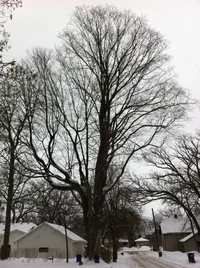
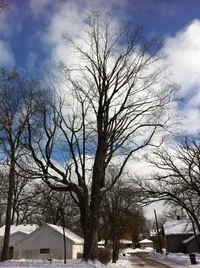
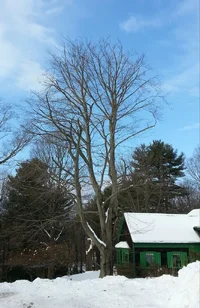
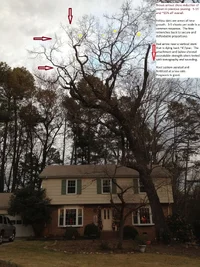
We sure do! But how is reducing a mature tree a reasonably way to achieve biodiversity. Large, mature trees return the most benefits to our cities strictly because of their size, surface area and longevity. Reducing a tree like this is an unsustainable practice and not helpful to the client, the tree, the urban forest and the environment in general.
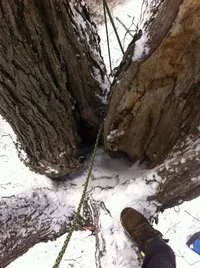
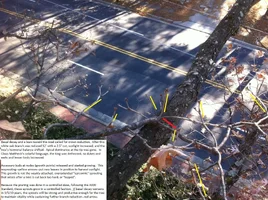
I'm not knocking the quality of pruning, it was done very well (and very quickly! 3 hrs of climbing for that is fast, good work) and the goals were achieved while maintaining good tree from fundamentals.
I question the pruning prescription. As a dedicated, educated arborist, you have come up short in educating the client as to what is best for the tree and the urban forest. I don't subscribe to the notion that "the customer is always right". Was she an arborist, a forester, a horticulturalist, a scientist even?
What will this tree look like in 5 years? 10 years? the client may have you back on a 5 year cycle, but what if the client moves away and the tree is left to grow past the reduction?
I'm not trying to be confrontational, I think this topic merits some discussion. I think crown reduction should be applied to abnormal situations, like an infirm tree, infrastructure conflicts, orchards and the like. Reduction should never be applied to healthy, mature trees with enough room to grow to mature size, we have so many other tools to keep those trees healthy, education is one of them.
Vince
We need a healthy biodiversity in towns and cities as well as in the wild areas. Dont you agree?
[/ QUOTE ]
We sure do! But how is reducing a mature tree a reasonably way to achieve biodiversity. Large, mature trees return the most benefits to our cities strictly because of their size, surface area and longevity. Reducing a tree like this is an unsustainable practice and not helpful to the client, the tree, the urban forest and the environment in general.
I'm not knocking the quality of pruning, it was done very well (and very quickly! 3 hrs of climbing for that is fast, good work) and the goals were achieved while maintaining good tree from fundamentals.
I question the pruning prescription. As a dedicated, educated arborist, you have come up short in educating the client as to what is best for the tree and the urban forest. I don't subscribe to the notion that "the customer is always right". Was she an arborist, a forester, a horticulturalist, a scientist even?
What will this tree look like in 5 years? 10 years? the client may have you back on a 5 year cycle, but what if the client moves away and the tree is left to grow past the reduction?
I'm not trying to be confrontational, I think this topic merits some discussion. I think crown reduction should be applied to abnormal situations, like an infirm tree, infrastructure conflicts, orchards and the like. Reduction should never be applied to healthy, mature trees with enough room to grow to mature size, we have so many other tools to keep those trees healthy, education is one of them.
Vince