Conspiracy Theories

Status
Not open for further replies.
I'll add a few lines here.

Without going to someone else's work, write up replies in your own words so that a third grader can understand.

Three building bombs.

OKC
World Trade Center
Twin Towers

I;ve skimmed descriptions of all of them by explosive demo experts. Watched building demo shows on TV

In each case there is an expert that says one bomb wouldn't do the damage. It was caused by many small explosives. I see what it takes to do a building demo...lots of drilling and yards and yards of wire. Done by numbers of people.

Now, I'm getting close.


So far...not one of those drillers and wire stringers have been found.

On the other hand the Watergate Plumbers got caught. There was some expertise on dirty tricks on that team.

So...where are the platoons of bombers needed to wire up the three buildings. Remember...no cut/paste..for third grade understanding...how?
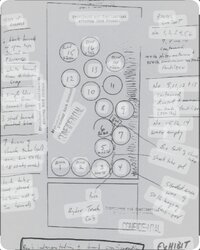
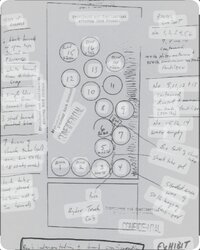
Right here , that's his sketch.
 

Attachments

  • 20230919_070838.jpg
    20230919_070838.jpg
    53.2 KB · Views: 4
A careful examination of photos showing the "A" row columns and the large header from the third floor reveals absolutely no air blast shock wave fracture, which is consistent with the pressure falloff with distance from the truck bomb. The cleaned-up building structure (Tab 4) shows that the failure line across the roof goes all the way to the ground except around columns B4 and Bs at the second and third floor levels. Reinforcement rods stripped out of beams and floors extend straight down on all floors. Columns A3, A5, A7, and B3 collapsed straight down as the apparent result of demolition charges at the column juncture with the third floor for column B3 and with the third floor level header for columns A3, A5, and A7. The even numbered columns (A2, A4, A6, and A8) in Row A collapsed straight down because they were supported at the third floor by the header, which necessarily failed with the demolition of its conjunctions with columns A3, A5, and A7. When columns A2 through A8 collapsed straight down, the roof and floor fracture lines at all floors acted as an instant hinge line, which would have given all floors collapsing down a slight tug toward column row B. Because of the collapse of column B3, the floors were cropped closer to the north side of columns B4, B5, which resulted in damage by falling debris to sheet rock on columns B4 and B5 at the third floor level. The so-called "pit" area behind columns B4 and B5 was caused either by the blast from the truck bomb pushing out the ceilings of the first and second floors or from the demolition charge on column B3. From the third floor it would look like a "pit" into which much debris fell. The blast pressure in this area would have been sufficient to exceed the ultimate yield design strength of the floor. There were large areas at this pressure being held only by the floor-thick, reinforced concrete around the 20-inch reinforced concrete columns in the B row. The floor of the first floor could not be blown downward, because it was a heavy concrete slab on compacted earth. The ceilings of the first and second floors nearer the truck between the A and B column rows could also have been blown upward initially. Although the truck bomb had insufficient power to destroy columns, the bomb was clearly responsible for ripping out some floors at the second and third floor levels.

Photographic Evidence of Demolition Charges

Turning next to the demolition charges in the building, refer to the picture at Tab 5. Here you see column A9 with no spalling as one would expect with the blast pressures involved and the decorative indents are unmarred. Note also the grooves at the top of the column and across the header. When the demolition charge on column A7 went off, the charge instantly left a 40 foot cantilevered header supporting column A8. Cascading columns and beams from above probably snapped off the end with a clear structural fracture, including rugged cracks and rough surfaces. There is a large unseen beam extending from behind the column, between the decorative groves, back to the first floor header. This beam adds considerable rigidity to the lower oddnumbered columns in Row A. Turning next to Tab 6, the stub of column B3 has been cleared, showing the bare reinforcement rods at the third floor level. The large header from the third floor level has fallen almost straight down with what appears to be demolition charge damage clearly evident to the right of column A3. The exposed reinforcement rods are clearly seen at the header end to the right of column A3. It appears that the demolition charge pulverized the header and columns out to about two feet from the juncture. Column A3 is standing there with the clean reinforcement rods clearly extended. Also, the architectural decorative band is clearly evident without blemish (indicating no blast damage in excess of yield strength). In this picture, the failure of the header at column As is still covered with rubble, and is not visible. However, the discontinuity in the slope of the header on either side of the column As location clearly shows that it failed in the region of its juncture with column As. Tab 7 shows the localized damage to the header at the position of column As, the closest column to the truck bomb crater. The end of the beam on which the men are standing shows evidence of a demolition charge at its juncture with column As. Several feet of the beam juncture appear to have been pulverized away by a demolition charge and the ends jammed together in the collapse. The blast pressure from the truck bomb would have been in the 400 pounds per square inch region, a factor of 10 below the yield strength of concrete. Tab 8 shows the localized demolition damage at the juncture of column A7 and the header. The same telltale demolition charge evidence is clear. The straight edge of the decorative grove at the juncture can be seen on both the column and the header. In my discussions with the building architect, who was on the scene as an advisor throughout much of the cleanup, he told me that the residual building was structurally sound and that the Murrah Building could have been rebuilt. This is totally consistent with the collapse of columns with demolition charges because the inflicted structural damage is more localized. Discussions above have been limited to the reinforced concrete structure of the Murrah Building. Reinforced concrete columns are hard targets for highexplosive bombs. Structures that have large areas for blast loading and low mass can be destroyed at considerable range from a large blast. That is why glass, plaster, and light structures were destroyed at considerable distance from the Murrah Building, but not reinforced concrete columns. Five pounds of blast pressure will flatten most frame houses.


Conclusions

The Murrah Federal Building was not destroyed by one sole truck bomb. The major factor in its destruction appears to have been detonation of explosives carefully placed at four critical junctures on supporting columns within the building. The only possible reinforced concrete structural failure solely attributable to the truck bomb was the stripping out of the ceilings of the first and second floors in the "pit" area behind columns B4 and By. Even this may have been caused by a demolition charge at column B3. It is truly unfortunate that a separate and independent bomb damage assessment was not made during the cleanup, before the building was demolished on May 23 and hundreds of truck loads of debris were hauled away, smashed down, and covered with dirt behind a security fence. When the picture at Tab 4 was made, all evidence of demolition charges had been removed from the building site (i.e., the stubs of columns B3, A3, A5, A7 and the demolished junctures at the header with columns A3, A5 and A7. All ambiguity with respect to the use of supplementing demolition charges and the type of truck used could be quickly resolved in the FBI were required to release the surveillance camera coverage of this terribly tragic event.
 
A careful examination of photos showing the "A" row columns and the large header from the third floor reveals absolutely no air blast shock wave fracture, which is consistent with the pressure falloff with distance from the truck bomb. The cleaned-up building structure (Tab 4) shows that the failure line across the roof goes all the way to the ground except around columns B4 and Bs at the second and third floor levels. Reinforcement rods stripped out of beams and floors extend straight down on all floors. Columns A3, A5, A7, and B3 collapsed straight down as the apparent result of demolition charges at the column juncture with the third floor for column B3 and with the third floor level header for columns A3, A5, and A7. The even numbered columns (A2, A4, A6, and A8) in Row A collapsed straight down because they were supported at the third floor by the header, which necessarily failed with the demolition of its conjunctions with columns A3, A5, and A7. When columns A2 through A8 collapsed straight down, the roof and floor fracture lines at all floors acted as an instant hinge line, which would have given all floors collapsing down a slight tug toward column row B. Because of the collapse of column B3, the floors were cropped closer to the north side of columns B4, B5, which resulted in damage by falling debris to sheet rock on columns B4 and B5 at the third floor level. The so-called "pit" area behind columns B4 and B5 was caused either by the blast from the truck bomb pushing out the ceilings of the first and second floors or from the demolition charge on column B3. From the third floor it would look like a "pit" into which much debris fell. The blast pressure in this area would have been sufficient to exceed the ultimate yield design strength of the floor. There were large areas at this pressure being held only by the floor-thick, reinforced concrete around the 20-inch reinforced concrete columns in the B row. The floor of the first floor could not be blown downward, because it was a heavy concrete slab on compacted earth. The ceilings of the first and second floors nearer the truck between the A and B column rows could also have been blown upward initially. Although the truck bomb had insufficient power to destroy columns, the bomb was clearly responsible for ripping out some floors at the second and third floor levels.

Photographic Evidence of Demolition Charges

Turning next to the demolition charges in the building, refer to the picture at Tab 5. Here you see column A9 with no spalling as one would expect with the blast pressures involved and the decorative indents are unmarred. Note also the grooves at the top of the column and across the header. When the demolition charge on column A7 went off, the charge instantly left a 40 foot cantilevered header supporting column A8. Cascading columns and beams from above probably snapped off the end with a clear structural fracture, including rugged cracks and rough surfaces. There is a large unseen beam extending from behind the column, between the decorative groves, back to the first floor header. This beam adds considerable rigidity to the lower oddnumbered columns in Row A. Turning next to Tab 6, the stub of column B3 has been cleared, showing the bare reinforcement rods at the third floor level. The large header from the third floor level has fallen almost straight down with what appears to be demolition charge damage clearly evident to the right of column A3. The exposed reinforcement rods are clearly seen at the header end to the right of column A3. It appears that the demolition charge pulverized the header and columns out to about two feet from the juncture. Column A3 is standing there with the clean reinforcement rods clearly extended. Also, the architectural decorative band is clearly evident without blemish (indicating no blast damage in excess of yield strength). In this picture, the failure of the header at column As is still covered with rubble, and is not visible. However, the discontinuity in the slope of the header on either side of the column As location clearly shows that it failed in the region of its juncture with column As. Tab 7 shows the localized damage to the header at the position of column As, the closest column to the truck bomb crater. The end of the beam on which the men are standing shows evidence of a demolition charge at its juncture with column As. Several feet of the beam juncture appear to have been pulverized away by a demolition charge and the ends jammed together in the collapse. The blast pressure from the truck bomb would have been in the 400 pounds per square inch region, a factor of 10 below the yield strength of concrete. Tab 8 shows the localized demolition damage at the juncture of column A7 and the header. The same telltale demolition charge evidence is clear. The straight edge of the decorative grove at the juncture can be seen on both the column and the header. In my discussions with the building architect, who was on the scene as an advisor throughout much of the cleanup, he told me that the residual building was structurally sound and that the Murrah Building could have been rebuilt. This is totally consistent with the collapse of columns with demolition charges because the inflicted structural damage is more localized. Discussions above have been limited to the reinforced concrete structure of the Murrah Building. Reinforced concrete columns are hard targets for highexplosive bombs. Structures that have large areas for blast loading and low mass can be destroyed at considerable range from a large blast. That is why glass, plaster, and light structures were destroyed at considerable distance from the Murrah Building, but not reinforced concrete columns. Five pounds of blast pressure will flatten most frame houses.


Conclusions

The Murrah Federal Building was not destroyed by one sole truck bomb. The major factor in its destruction appears to have been detonation of explosives carefully placed at four critical junctures on supporting columns within the building. The only possible reinforced concrete structural failure solely attributable to the truck bomb was the stripping out of the ceilings of the first and second floors in the "pit" area behind columns B4 and By. Even this may have been caused by a demolition charge at column B3. It is truly unfortunate that a separate and independent bomb damage assessment was not made during the cleanup, before the building was demolished on May 23 and hundreds of truck loads of debris were hauled away, smashed down, and covered with dirt behind a security fence. When the picture at Tab 4 was made, all evidence of demolition charges had been removed from the building site (i.e., the stubs of columns B3, A3, A5, A7 and the demolished junctures at the header with columns A3, A5 and A7. All ambiguity with respect to the use of supplementing demolition charges and the type of truck used could be quickly resolved in the FBI were required to release the surveillance camera coverage of this terribly tragic event.
I don't know but I doubt that that was the result of mix of implosions with one truck explosions.
He was using ANFO ( fertilizer ) packed in full of drum cans , right ? Have you seen just one drum can ANFOs explosion ? I bet there are on YouTube somewhere.

It's no joke .

And he had how many in total ?

And With his sketch he didn't even had any releys .

It's a most primitive style .
lighting up a fuse cable like some old TV cartoon character would do .

Like oldest gold miners lighting up with fuse cable with matches.


Not even using those typical push down T handle remote switch ... LoL

Even an stupid won't do that method and if it's so ? sure there were some delays and it's makes sense with how the forces it traveled in bit diagonally . And look at formations of drum cans in a truck on that sketch . It's creating a fan Shape. That would concentrate forces of power .
 

Attachments

  • 20230919_070838.jpg
    20230919_070838.jpg
    53.2 KB · Views: 2
Last edited:
The third grader doesn’t understand your cut/paste explanations.
Me ? I didn't cut & paste any sentence tho. You mean my grammars?
Well, I don't have good translators here . LoL
Whatever it is, I think it was all done by Timothy Mcveigh alone and there were no implosions inside of building.
But what I don't understand is Why he chose that particular building ?
Whats so significant to destroy that building ??
I just don't get it. A whole thing.
 
Me ? I didn't cut & paste any sentence tho. You mean my grammars?
Well, I don't have good translators here . LoL
Whatever it is, I think it was all done by Timothy Mcveigh alone and there were no implosions inside of building.
But what I don't understand is Why he chose that particular building ?
Whats so significant to destroy that building ??
I just don't get it. A whole thing.

I wasn;t speaking to you. McVeigh and his buddy did that up together as far as I'm concerned. I'd like a simple explanation of how all these conspiracies could have been pulled off. This isn't Mission: Improbable
 
I wasn;t speaking to you. McVeigh and his buddy did that up together as far as I'm concerned. I'd like a simple explanation of how all these conspiracies could have been pulled off. This isn't Mission: Improbable
Well, I just don't agree with Implosions . By just looking at the photo, looking ball park at the diagram of the truck sketch photo I can tell its got a enough punch to do just all that.
Nothing complicated as "Mr. Daniel the specialist " describes it . But his copy & paste might be the answer .
I'll say It's Plain and simple.
Just One idiot, Timothy Mcveigh did it. LoL
 
Last edited:
I'll add a few lines here.

Without going to someone else's work, write up replies in your own words so that a third grader can understand.

Three building bombs.

OKC
World Trade Center
Twin Towers

I;ve skimmed descriptions of all of them by explosive demo experts. Watched building demo shows on TV

In each case there is an expert that says one bomb wouldn't do the damage. It was caused by many small explosives. I see what it takes to do a building demo...lots of drilling and yards and yards of wire. Done by numbers of people.

Now, I'm getting close.


So far...not one of those drillers and wire stringers have been found.

On the other hand the Watergate Plumbers got caught. There was some expertise on dirty tricks on that team.

So...where are the platoons of bombers needed to wire up the three buildings. Remember...no cut/paste..for third grade understanding...how?
Some of the theories for 911 were Israeli technicians. Many of those 120 rounded up after has specialty’s in ordnance and electrical jobs in the army. Fox did a 4 part series on it years ago. I can find it if you want it. Also look at the Gelatin group and the illegal acces they got to the towers and made a balcony as an art project. Loads of boxes marked from a wiring fuse manufacturer. I con provide references if you want them. .
 
See this is where I just don't understand how other people can't see the obvious.... We don't need an engineering report or an explanation of how the drums were detinated when a little common sense will do just fine....

It's pretty simple.. so simple a third grader should be able to understand it....

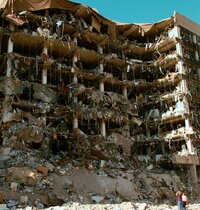
you can't have an exterior bomb blow out steel reinforced conrete columns without taking out every piece of wall and floor for a hundred yards or more... There is no way that those columns were taken out from en external bomb and have the building still look like this.

I have zero respect for the opinion of anyone that can't see this obvious truth. Sorry but if you can't see that, you're an idiot IMO....
 

Attachments

  • OKC bombing.jpg
    OKC bombing.jpg
    225.5 KB · Views: 3
Some of the theories for 911 were Israeli technicians. Many of those 120 rounded up after has specialty’s in ordnance and electrical jobs in the army. Fox did a 4 part series on it years ago. I can find it if you want it. Also look at the Gelatin group and the illegal acces they got to the towers and made a balcony as an art project. Loads of boxes marked from a wiring fuse manufacturer. I con provide references if you want them. .
It's way worse than that.. there were iron oxide micro balls in the dust that could have only come from thermite.. and it gets worse than that.. yes, it was controlled demolition, but they also used a tesla weapon to turn the buildings to dust....

this 38 second video will blow your mind


and here goes building 7 (never hit by planes or significant debris) at free fall speed, at 5:42 PM

 
HE SAID, "PUT SOME NEW BATTERIES IN YOUR HEARING AID"!!!
The conspiracy people can always find some documents to back up their idiotic ideas from other nut cases around the world. There seems to be lots to choose from.
Can I ask a question? If you think it’s nonsense why come on here, read it and then insult people? I just don’t get it
 
I’m familiar with that information.
That's not a surprise.. posted that for others...


I've seen pictures of buildings that were bombed or shelled since cannon have been used. Especially since cameras got portable in early 1900's. There are plenty of pics that look like the OK building.

ANd Tom.. that's not a surprise either... I rest my case....
 
I con provide references if you want them. .

Sure: this sounds like this gang might be a real Mission: Improbable team

For me, what it boils down to is to combine the results of building destruction from two causes.

There are plenty of History Channel type building demo shows. The buildings are prepped before exploding them. Full reveal stuff. I see the buildings skinned out to just concrete Then lots of hammer drills, concrete shears on skid steers and what looks like thousands of feet of wire to control the demo explosions.

My mind can't align the conspiracy theory with what is shown on the shows.
 
Status
Not open for further replies.

New threads New posts

Kask Stihl NORTHEASTERN Arborists Wesspur TreeStuff.com Teufelberger Westminster X-Rigging Teufelberger
Back
Top Bottom