
One thing I can say is that Gordon's devices are constantly being refined and upgraded based purely on real world feedback over many years of use by many working arborists in different locations and with different climbing styles. For better or worse, he is not beholden to meeting certification standards that require modifying the BDB in ways that make it work less effectively. This is what I assume @Muggs means as well but I'm sure he'll speak for himself.

Navigation
Install the app
How to install the app on iOS
Follow along with the video below to see how to install our site as a web app on your home screen.
Note: This feature may not be available in some browsers.
More options
You are using an out of date browser. It may not display this or other websites correctly.
You should upgrade or use an alternative browser.
You should upgrade or use an alternative browser.
Compact Bulldog Bone
- Thread starter surveyor
- Start date
Reg
Branched out member
- Location
- Victoria, BC
Thanks. Im sure he will speak for himself too.One thing I can say is that Gordon's devices are constantly being refined and upgraded based purely on real world feedback over many years of use by many working arborists in different locations and with different climbing styles. For better or worse, he is not beholden to meeting certification standards that require modifying the BDB in ways that make it work less effectively. This is what I assume @Muggs means as well but I'm sure he'll speak for himself.
The device has not been tested or certified to Ansi, ISO or EN regs, in 10 years ? That's a whole other can of worms. The standards primarily are in place to protect everyone from manufacturer, retailer, tree company owner to the workers on the jobsite. Same with Harness, climblines and their connectors. Don't know what else to say about that.
As I said, for better or worse, although which side you see is colored by experience with this particular device or the absence of that. I'm assuming you climbed on your own device prior to it receiving any sort of certification. There is some amount of practical understanding of risk and personal responsibility involved that many folks seem totally comfortable accepting when dealing with a trusted maker, which is what Gordon is.
Reg
Branched out member
- Location
- Victoria, BC
Yes of course I did. If I had an accident it wouldn't effect anyone else. But I wasn't selling the device for others to use. The lifestyle of building stuff in small batches and selling to others would have massive appeal to me. I would never have to deal with another tree customer again. Nor look at or drive my stupid truck and chippers around, and so on. I wouldn't have to speak to hardly anyone in fact.As I said, for better or worse, although which side you see is colored by experience with this particular device or the absence of that. I'm assuming you climbed on your own device prior to it receiving any sort of certification. There is some amount of practical understanding of risk and personal responsibility involved that many folks seem totally comfortable accepting when dealing with a trusted maker, which is what Gordon is.
But in Canada at least, without testing and certification, I don't think I could get any kind of products liability insurance. In the event of a mechanical fault or failure, whether legit or a scam....im in big trouble to say the least. Not to mention the situation I created for the victim either. I don't see a way around in these parts.

For those who ask questions about the Bulldog Bone, here is what I send out:
The adjustable Bulldog Bone is made from aircraft grade 7075 aluminum, with stainless steel joints and Neptune coated steel friction links. The adjustable bollard is brass, which uses a ss 10-32 machine screw to move the bollard back and forth, The Bone weighs 14.4 Oz. and has been tested by both a US rope company and a EU gear company. The rope manufacture tested to see where the Bone would start to creep with a typical range of climbing ropes, which test averaged about 450 lbs, give or take about 200 lbs depending on the rope construction and size. The Bone seems to like the 11.7mm size rope the best, but will handle approx, 0.7mm either side of that depending on the rope and the climbers weight. I do not recommend the Bone for climbers with a gross weight of over 250.00. The gear manufacture subjected the Bone to a 15KN load for a duration of 5 minutes, with no damage to the device. The Bone ships with a brief instruction manual, and much discussion of the Bone can be found a treebuzz.com. There are many youtube videos of the Bone if you use the search parameter of "compact Bulldog Bone". The Bone was a work in progress staring in 2010 until I began to offer them for sale in Aug of 2014. It is intended as primarily an SRT device, but can also be used in an MRT system. I also make an alternate non adjustable elongated aluminum bollard for the Bone, which has two wear faces, and I can provide spare parts as desired. The primary wear parts are the spine, bollard, and friction links.
I have always been open to the idea of a gear company taking over the Bone, and have been approached
by a US company and an EU company, but the offer made seemed paltry to me. So I have just carried on providing them to those who ask.
The adjustable Bulldog Bone is made from aircraft grade 7075 aluminum, with stainless steel joints and Neptune coated steel friction links. The adjustable bollard is brass, which uses a ss 10-32 machine screw to move the bollard back and forth, The Bone weighs 14.4 Oz. and has been tested by both a US rope company and a EU gear company. The rope manufacture tested to see where the Bone would start to creep with a typical range of climbing ropes, which test averaged about 450 lbs, give or take about 200 lbs depending on the rope construction and size. The Bone seems to like the 11.7mm size rope the best, but will handle approx, 0.7mm either side of that depending on the rope and the climbers weight. I do not recommend the Bone for climbers with a gross weight of over 250.00. The gear manufacture subjected the Bone to a 15KN load for a duration of 5 minutes, with no damage to the device. The Bone ships with a brief instruction manual, and much discussion of the Bone can be found a treebuzz.com. There are many youtube videos of the Bone if you use the search parameter of "compact Bulldog Bone". The Bone was a work in progress staring in 2010 until I began to offer them for sale in Aug of 2014. It is intended as primarily an SRT device, but can also be used in an MRT system. I also make an alternate non adjustable elongated aluminum bollard for the Bone, which has two wear faces, and I can provide spare parts as desired. The primary wear parts are the spine, bollard, and friction links.
I have always been open to the idea of a gear company taking over the Bone, and have been approached
by a US company and an EU company, but the offer made seemed paltry to me. So I have just carried on providing them to those who ask.
Reg
Branched out member
- Location
- Victoria, BC
Great, but that doesn't answer anything I asked. And Im the only one that's asked you anything in the last couple of pages.For those who ask questions about the Bulldog Bone, here is what I send out:
The adjustable Bulldog Bone is made from aircraft grade 7075 aluminum, with stainless steel joints and Neptune coated steel friction links. The adjustable bollard is brass, which uses a ss 10-32 machine screw to move the bollard back and forth, The Bone weighs 14.4 Oz. and has been tested by both a US rope company and a EU gear company. The rope manufacture tested to see where the Bone would start to creep with a typical range of climbing ropes, which test averaged about 450 lbs, give or take about 200 lbs depending on the rope construction and size. The Bone seems to like the 11.7mm size rope the best, but will handle approx, 0.7mm either side of that depending on the rope and the climbers weight. I do not recommend the Bone for climbers with a gross weight of over 250.00. The gear manufacture subjected the Bone to a 15KN load for a duration of 5 minutes, with no damage to the device. The Bone ships with a brief instruction manual, and much discussion of the Bone can be found a treebuzz.com. There are many youtube videos of the Bone if you use the search parameter of "compact Bulldog Bone". The Bone was a work in progress staring in 2010 until I began to offer them for sale in Aug of 2014. It is intended as primarily an SRT device, but can also be used in an MRT system. I also make an alternate non adjustable elongated aluminum bollard for the Bone, which has two wear faces, and I can provide spare parts as desired. The primary wear parts are the spine, bollard, and friction links.
I have always been open to the idea of a gear company taking over the Bone, and have been approached
by a US company and an EU company, but the offer made seemed paltry to me. So I have just carried on providing them to those who ask.
Here's another question, is there something wrong with my English ? Because Whenever I ask a direct and easy question I get an answer or response to something I didn't ask. Or bizarrely I get accused of being jealous of a person and device that I can only find out about by following trials of internet dust and whatnot....Jealous Just by asking a question. it reminded me of what politicians do, they call you a name to distract you because they don't like your direction and want to throw you off course. Im not going to ask you anymore questions Gordon, because evidently its a waste of asking.
As for this leaflet you have copied and pasted, as another non-answer. I heard the same thing almost word for word on a treemuggs video that I found earlier.
I did also notice a moment where he pointed out that the climber must unclip the chest ascender before sitting back in the harness. It seems the bottom cam won't engage otherwise and the device will instead just move down the rope freely. I relate to this after having a similar issue with my own design, never thought anything of it. But those uncaring people at Notch told me that's a fail, and a deal breaker if it couldn't be fixed.
Point being, if the climber somehow lost consciousness or control in that moment, the device wouldn't catch him.
It took time, hassle and a lot of digging, but it got fixed. Along with heat issues and the dynamic or drop tests. Lots of time, frustraion and money. Its been made apparent now, by others not you, that the product is sold as life support with no testing certification. I assume then you know it would fail the criteria, otherwise in 10 years you surely would have got it done.
I don't doubt that it's not a good, solid device that's evolved for better in those 10 years. I see certainly could find no evidence of accidents. But that's not the point.
Incidentally, as a young fella I drove for many years without car insurance, for one reason or another. I justified it in the belief that I was a very good driver and nothing would happen to me. That was until I crashed into someone else. My fault. Thankfully I was the only one injured, but the knock on effect was truly life changing and not for the better. Never again.
With that said, if you are going to favorably compare/promote your Bulldog against these 'upstart' devices, in regards to weight, cost and functionality. Then do it fairly. It should be recognized that the "upstarts" were evidently held to a much higher standard in order to be lawfully move through the supply chain to the end user. Of course they are going to cost more, probably weigh more and perform differently.
Some good info here of applicable standards. Surely it would be better to have something than nothing at all
Product certification for arborist gear: What it is, why it matters
A Notch Equipment expert talks about why certifications matter, how to spot them, and what they mean for your arboriculture gear.
 notchequipment.com

Yep....I forever will be. I want one of each that I don't have. Just released or proven in the fields makes no difference.most, if not all of us here are a bunch of gear junkies,
Even though I've read 2 bad reviews on the brand new Throttle, and told myself I don't want it, it's so intriguing.
It just looks so damn sexy. I've always thought the Akimbo would take the world by storm. Then I learned how finicky it can be with rope choices. It too, still draws me.
Yes, I'm a junkie.

Muggs
Been here much more than a while
- Location
- Canuckistan
how and why would Gordon's device be watered down by mass production. Explain that to me. Thanks.
If a huge company takes over the production of a piece of kit, they will push hard to "optimize" each and every piece to squeeze as much profit as they can from it. If they think they can sell a hundred thousand units of a device, then shaving even a few dollars from the cost of each one is just money in the bank for them. I see nothing controversial in pointing this out, this is how the world works. Just holding a BDB in the hand, you can tell that this device is not made for the masses. No corners have been cut. This thing is made to last, by a craftsman who knows what he is doing. The bulldog bone is made for professionals, and it works. If you want one you have to interact and correspond personally with the inventor. This appeals to me. And if he wants to plug his own device in his own thread, more power to him.
Reg
Branched out member
- Location
- Victoria, BC
On some respects I'd agree with you. Certainly a Walmart lampshade, or princess auto drill set product types, almond thousands more. But industrial life support equipment is a little different, don't you think ?If a huge company takes over the production of a piece of kit, they will push hard to "optimize" each and every piece to squeeze as much profit as they can from it. If they think they can sell a hundred thousand units of a device, then shaving even a few dollars from the cost of each one is just money in the bank for them. I see nothing controversial in pointing this out, this is how the world works. Just holding a BDB in the hand, you can tell that this device is not made for the masses. No corners have been cut. This thing is made to last, by a craftsman who knows what he is doing. The bulldog bone is made for professionals, and it works. If you want one you have to interact and correspond personally with the inventor. This appeals to me. And if he wants to plug his own device in his own thread, more power to him.
Let's look at a few examples, say, the petzl Zigzag, the Roperunner pro and vertical. DMM kinsi saddle. All mass produced life support. Please tell me where it appears they cut costs ?
I'll put it another way too. From the photos Ive seen here, I could copy and make the Bulldog here at home, as easy as breathing. I think it's made to a similar standard and fabrication that I can also work to. But if I pick up and look and the Rope Runner Vertec, I couldn't reproduce that device as long as I have a hole in my arse. I don't have the tooling capabilities or know how. Not by a mile. Probably the zigzag is no different, although I've never actually held one. I could give you many other examples of mass produced life support items, that are excellent quality because they have to be. One reason is due to the regulations I mentioned previously. The other is the manufacturering technology of the factory itself.
If a huge company takes over the production of a piece of kit, they will push hard to "optimize" each and every piece to squeeze as much profit as they can from it. If they think they can sell a hundred thousand units of a device, then shaving even a few dollars from the cost of each one is just money in the bank for them. I see nothing controversial in pointing this out, this is how the world works. Just holding a BDB in the hand, you can tell that this device is not made for the masses. No corners have been cut. This thing is made to last, by a craftsman who knows what he is doing. The bulldog bone is made for professionals, and it works. If you want one you have to interact and correspond personally with the inventor. This appeals to me. And if he wants to plug his own device in his own thread, more power to him.
I think the deal here is it gets modified it so much, they make it their own practically. Leaving less percentage for the inventor.On some respects I'd agree with you. Certainly a Walmart lampshade, or princess auto drill set product types, almond thousands more. But industrial life support equipment is a little different, don't you think ?
Let's look at a few examples, say, the petzl Zigzag, the Roperunner pro and vertical. DMM kinsi saddle. All mass produced life support. Please tell me where it appears they cut costs ?
I'll put it another way too. From the photos Ive seen here, I could copy and make the Bulldog here at home, as easy as breathing. I think it's made to a similar standard and fabrication that I can also work to. But if I pick up and look and the Rope Runner Vertec, I couldn't reproduce that device as long as I have a hole in my arse. I don't have the tooling capabilities or know how. Not by a mile. Probably the zigzag is no different, although I've never actually held one. I could give you many other examples of mass produced life support items, that are excellent quality because they have to be. One reason is due to the regulations I mentioned previously. The other is the manufacturering technology of the factory itself.
With a good vertical mill, anything could be duplicated. If one is alien to mill work, it wouldn't take much to become acquainted. As with anything. some seat time improves the skills. Reverse engineering has been a gift to me. Although, I'd rather just purchase the device.
Reg
Branched out member
- Location
- Victoria, BC
Not true brother. Your not going to mill the curves and indents to that quality and precision. DMM is another example. Masters of hot forgiving.I think the deal here is it gets modified it so much, they make it their own practically. Leaving less percentage for the inventor.
With a good vertical mill, anything could be duplicated. If one is alien to mill work, it wouldn't take much to become acquainted. As with anything. some seat time improves the skills. Reverse engineering has been a gift to me. Although, I'd rather just purchase the device.
As for percentages. We'll we weren't talking bout that. Stay on point. Muggs made the statement that all mass producing manufacturers cut corners to save on costs. So I asked him to name a few in regards to life support.
The 2 devices that started this whole debacle are the Blackbird and Throttle. Which respectable took 5 and 6 years to bring to market. Does that sound like cutting corners ? The cost would've been.in the millions. Do you know the rope runner pro took a whole year to pass the dynamic pull tests. It had to pass lots of other tests too....but that is perhaps the most difficult. Without passing that test, there's no rope runner pro. They didn't just give up and instead make a video saying don't do this and that, oh and by the way sign this waiver saying you can't sue us if the device fails.
As for percentage, if you want to touch on that. Its negotiated beforehand, not after. Obviously based on who does and pays for what during the R&D. An inventor would then look t the projected sales and decide is it worth it. The ability to meet demand is also a big factor in that. High number of sales is how the inventor gets a good return on his work. But all that is irrelevant if the build of the final prototype is not up to code because its not certified.
Not true brother. Your not going to mill the curves and indents to that quality and precision. DMM is another example. Masters of hot forgiving.
As for percentages. We'll we weren't talking bout that. Stay on point. Muggs made the statement that all mass producing manufacturers cut corners to save on costs. So I asked him to name a few in regards to life support.
The 2 devices that started this whole debacle are the Blackbird and Throttle. Which respectable took 5 and 6 years to bring to market. Does that sound like cutting corners ? The cost would've been.in the millions. Do you know the rope runner pro took a whole year to pass the dynamic pull tests. It had to pass lots of other tests too....but that is perhaps the most difficult. Without passing that test, there's no rope runner pro. They didn't just give up and instead make a video saying don't do this and that, oh and by the way sign this waiver saying you can't sue us if the device fails.
As for percentage, if you want to touch on that. Its negotiated beforehand, not after. Obviously based on who does and pays for what during the R&D. An inventor would then look t the projected sales and decide is it worth it. The ability to meet demand is also a big factor in that. High number of sales is how the inventor gets a good return on his work. But all that is irrelevant if the build of the final prototype is not up to code because its not certified.
Solid gold here Reg. I for one appreciate it.On some respects I'd agree with you. Certainly a Walmart lampshade, or princess auto drill set product types, almond thousands more. But industrial life support equipment is a little different, don't you think ?
Let's look at a few examples, say, the petzl Zigzag, the Roperunner pro and vertical. DMM kinsi saddle. All mass produced life support. Please tell me where it appears they cut costs ?
I'll put it another way too. From the photos Ive seen here, I could copy and make the Bulldog here at home, as easy as breathing. I think it's made to a similar standard and fabrication that I can also work to. But if I pick up and look and the Rope Runner Vertec, I couldn't reproduce that device as long as I have a hole in my arse. I don't have the tooling capabilities or know how. Not by a mile. Probably the zigzag is no different, although I've never actually held one. I could give you many other examples of mass produced life support items, that are excellent quality because they have to be. One reason is due to the regulations I mentioned previously. The other is the manufacturering technology of the factory itself.
ghostice
Been here a while
- Location
- Way west of Lake ONTARIO
Couple of other points to the ones Reg has made maybe, but I think they need to be said (pls don't shoot the messenger).
In most juridictions there are some sort of H&S regulations requiring that life support gear meet some standard of certification, be that CSA/ European or ANSI or something. Commercial use of gear outside of these standards can actually be a violation of statute, voiding things like WCB or opening up potential lawsuit/ fines if something did happen. Maybe void company insurance too (which usually has a clause requiring compliance with laws somewhere in the fine print). Small one person shows are still subject to these regulations, at least up here, if you take dinari for your work.
Second, large outfits I have worked for in the past actually audited their contractors even to the point of examining their gear and inspection records. I've mentioned issues like counterfeit crane parts in a past Buzz thread with Mark. Contractors had one chance to buck up or they didn't get to bid down the road. Again small one man shows will often never get the scrutiny you get from municipalities etc. but it doesn't mean they shouldn't aspire to that performance level.
Third, even one man shows might want certified equipment knowing this would probably also entail the ability (and ethic) for the manufacturer to run a decent recall (there's been a few of those in recent years for sure). I know for me, companys like DMM are a benchmark given their performance in the Director recall. They stepped up. Stuff happens (a good read is the book "Normal Accidents") but I personally want to buy from outfits that will stand behind me if it does (we're not just buying tent pegs here). You can "comply" even if you're a small gear maker (August and MB did testing on their harnesses).
Undoubtedly, for me anyway, there's room for non certified gear for recreational use on my own. But to use these on a job that I charge for, probably not. But that's just my own line in the sand. There will be a whole spectrum of perspectives on this depending I supppose on individual working experience, industry size, company size, etc.
But I have kept making the point, go back to regulations/ standards and see what they say. Even if not in your own geographical area perhaps it would be wise to have a look to see what others are doing as "best practice". Most of the clauses/ sections have come about by the school of hard knocks, sometimes very hard knocks.
I'd encourage any life support gear provider to go thru testing regimen and obtain relevant certification, even just one (recognizing that keeping up with things for example like the many saw protective pants standards worldwide could be a full time job - well done Clogger).
Be careful out there.
In most juridictions there are some sort of H&S regulations requiring that life support gear meet some standard of certification, be that CSA/ European or ANSI or something. Commercial use of gear outside of these standards can actually be a violation of statute, voiding things like WCB or opening up potential lawsuit/ fines if something did happen. Maybe void company insurance too (which usually has a clause requiring compliance with laws somewhere in the fine print). Small one person shows are still subject to these regulations, at least up here, if you take dinari for your work.
Second, large outfits I have worked for in the past actually audited their contractors even to the point of examining their gear and inspection records. I've mentioned issues like counterfeit crane parts in a past Buzz thread with Mark. Contractors had one chance to buck up or they didn't get to bid down the road. Again small one man shows will often never get the scrutiny you get from municipalities etc. but it doesn't mean they shouldn't aspire to that performance level.
Third, even one man shows might want certified equipment knowing this would probably also entail the ability (and ethic) for the manufacturer to run a decent recall (there's been a few of those in recent years for sure). I know for me, companys like DMM are a benchmark given their performance in the Director recall. They stepped up. Stuff happens (a good read is the book "Normal Accidents") but I personally want to buy from outfits that will stand behind me if it does (we're not just buying tent pegs here). You can "comply" even if you're a small gear maker (August and MB did testing on their harnesses).
Undoubtedly, for me anyway, there's room for non certified gear for recreational use on my own. But to use these on a job that I charge for, probably not. But that's just my own line in the sand. There will be a whole spectrum of perspectives on this depending I supppose on individual working experience, industry size, company size, etc.
But I have kept making the point, go back to regulations/ standards and see what they say. Even if not in your own geographical area perhaps it would be wise to have a look to see what others are doing as "best practice". Most of the clauses/ sections have come about by the school of hard knocks, sometimes very hard knocks.
I'd encourage any life support gear provider to go thru testing regimen and obtain relevant certification, even just one (recognizing that keeping up with things for example like the many saw protective pants standards worldwide could be a full time job - well done Clogger).
Be careful out there.
Last edited:
Reg
Branched out member
- Location
- Victoria, BC
I don't know about shooting the messanger, but that post deserves the full firing squad. Too many facts. You just took me back 20 years. If I wasn't such a prisoner of that same etiquette of yesteryear, I would in fact press the like button. Where are you based and what's your background ?Couple of other points to the ones Reg has made maybe, but I think they need to be said (pls don't shoot the messenger).
In most juridictions there are some sort of H&S regulations requiring that life support gear meet some standard of certification, be that CSA/ European or ANSI or something. Commercial use of gear outside of these standards can actually be a violation of statute, voiding things like WCB or opening up potential lawsuit/ fines if something did happen. Maybe void company insurance too (which usually has a clause requiring compliance with laws somewhre in the fine print). Small one person shows are still subject to these regulations, at least up here, if you take dinari for your work.
Second, large outfits I have worked for in the past actually audited their contractors even to the point of examining their gear and inspection records. I've mentioned issues like counterfeit crane parts in a past Buzz thread with Mark. Contractors had one chance to buck up or they didn't get to bid down the road. Again small one man shows will often never get the scrutiny you get from municipalities etc. but it doesn't mean they shouldn't aspire to that performance level.
Third, even one man shows might want certified equipment knowing this would probably also entail the ability (and ethic) for the manufacturer to run a decent recall (there's been a few of those in recent years for sure). I know for me, companys like DMM are a benchmark given their performance in the Director recall. They stepped up. Stuff happens (a good read is the book "Normal Accidents") but I personally want to buy from outfits that will stand behind me if it does (we're not just buying tent pegs here). You can "comply" even if you're a small gear maker (August and MB did testing on their harnesses).
Undoubtedly, for me anyway, there's room for non certified gear for recreational use on my own. But to use these on a job that I charge for, probably not. But that's just my own line in the sand. There will be a whole spectrum of perspectives on this depending I supppose on individual working experience, industry size, company size, etc.
But I have lept making the point, go back to regulations/ standards and see what they say. Even if not in your own geographical area perhaps it would be wise to have a look to see what others are doing as "best practice". Most of the clauses/ sections have come about by the school of hard knocks, sometimes very hard knocks.
I'd encourage any life support gear provider to go thru testing regimen and obtain relevant certification, even just one (recognizing that keeping up with things for example like the many saw protective pants standards worldwide could be a full time job - well done Clogger).
Be careful out there.
ghostice
Been here a while
- Location
- Way west of Lake ONTARIO
Cowtown to the east of you is now home.
Background was scientific/ regulatory but started doing treework with my Dad, being a scared little guy holding onto a handle on a 60" bar on elm and oak removals (before there was hair). Ended my career in process safety for European engineering outfits in oil and gas and LNG on ~$5B up projects. Have had the misfortune to investigate ~18 fatals in my time. Have climbed alpine, ice, trees and structures for thirty/ forty years, but help folks these days with their leafy things.
Reg what I appreciate in your work is the care I see in the trees and it seems in what you're doing with your mechanical climber/ descender (and hopefully some day with the arborella). Ya get it. And looking forward to a new practical chute design for the PE chipper to tame the blizzard of chips that it kinda fires in a general direction.
Keep the faith.
Cheers guy
Addenda: East not west as originally written!
Background was scientific/ regulatory but started doing treework with my Dad, being a scared little guy holding onto a handle on a 60" bar on elm and oak removals (before there was hair). Ended my career in process safety for European engineering outfits in oil and gas and LNG on ~$5B up projects. Have had the misfortune to investigate ~18 fatals in my time. Have climbed alpine, ice, trees and structures for thirty/ forty years, but help folks these days with their leafy things.
Reg what I appreciate in your work is the care I see in the trees and it seems in what you're doing with your mechanical climber/ descender (and hopefully some day with the arborella). Ya get it. And looking forward to a new practical chute design for the PE chipper to tame the blizzard of chips that it kinda fires in a general direction.
Keep the faith.
Cheers guy
Addenda: East not west as originally written!
Last edited:
Reg
Branched out member
- Location
- Victoria, BC
Cowtown ? You mean East of me ? The only places west of here are Sooke and Port Renfrew, then the Pacific.Cowtown to the west of you is now home.
Background was scientific/ regulatory but started doing treework with my Dad, being a scared little guy holding onto a handle on a 60" bar on elm and oak removals (before there was hair). Ended my career in process safety for European engineering outfits in oil and gas and LNG on ~$5B up projects. Have had the misfortune to investigate ~18 fatals in my time. Have climbed alpine, ice, trees and structures for thirty/ forty years, but help folks these days with their leafy things.
Reg what I appreciate in your work is the care I see in the trees and it seems in what you're doing with your mechanical climber/ descender (and hopefully some day with the arborella). Ya get it. And looking forward to a new practical chute design for the PE chipper to tame the blizzard of chips that it kinda fires in a general direction.
Keep the faith.
Cheers guy
Thanks for the info too. I could tell you were someone who doesnt just guess at things or makes it up as you go.
I designed some tree tools probably 15 or more years ago now. Mostly rigging hardware but some other stuff too. Still get my commission to this day. Having somewhat of an unplanned revival with the climbing stuff more recently. Hopefully it works out. Put my foot in it here of course, but so be it. And my wife asks why I have no friends.
Merle Nelson
Been here much more than a while
- Location
- SF Bay Area, CA

I did say, "I think,'' and I said nothing of cutting corners. By percentages, I meant the inventor only gets a commission on sales compared to what Gordon gets for the BDB. After all testing and mods are done, it's understandable. It still does seem the inventor is practically shadowed over by the corporate manufacture. This is what I thought was ''on point.'' Gordon's choice to keep the BDB all his.Not true brother. Your not going to mill the curves and indents to that quality and precision. DMM is another example. Masters of hot forgiving.
As for percentages. We'll we weren't talking bout that. Stay on point. Muggs made the statement that all mass producing manufacturers cut corners to save on costs. So I asked him to name a few in regards to life support.
The 2 devices that started this whole debacle are the Blackbird and Throttle. Which respectable took 5 and 6 years to bring to market. Does that sound like cutting corners ? The cost would've been.in the millions. Do you know the rope runner pro took a whole year to pass the dynamic pull tests. It had to pass lots of other tests too....but that is perhaps the most difficult. Without passing that test, there's no rope runner pro. They didn't just give up and instead make a video saying don't do this and that, oh and by the way sign this waiver saying you can't sue us if the device fails.
As for percentage, if you want to touch on that. Its negotiated beforehand, not after. Obviously based on who does and pays for what during the R&D. An inventor would then look t the projected sales and decide is it worth it. The ability to meet demand is also a big factor in that. High number of sales is how the inventor gets a good return on his work. But all that is irrelevant if the build of the final prototype is not up to code because its not certified.
I thought this debate was started over the BDB thread and Gordon's implementing it? I completely agree with your last paragraph. My hat's off to you for what you have contributed to the arborist community. Both in tactics and gear. I am not an inventor. I am good at reverse engineering and modifying things....to an extent.
It is possible to copy and mill something in duplicate. Of course it takes a good mill, the correct tooling, and at least basic milling skills. The less the skill, the more time involved. Then there's also CNC milling which is a whole different level. For the record, if I were to mill a duplicate of something, it would be for personal use and not resale. My milling comment originated from yours on milling the BDB and anything else is to complex.
Reg
Branched out member
- Location
- Victoria, BC
There's always a trade off between setting up a shop and going it alone as a brand, or partnering for commission. One thing about the latter that can't be overstated is the actual cost of production and distribution on mass, once all the other R&D, and legal hurdles have been paid for and overcome. I'll repeat this again 5 and 6 years for the blackbird and Throttle to EN standards, as well as optimized for mass production.I did say, "I think,'' and I said nothing of cutting corners. By percentages, I meant the inventor only gets a commission on sales compared to what Gordon gets for the BDB. After all testing and mods are done, it's understandable. It still does seem the inventor is practically shadowed over by the corporate manufacture. This is what I thought was ''on point.'' Gordon's choice to keep the BDB all his.
I thought this debate was started over the BDB thread and Gordon's implementing it? I completely agree with your last paragraph. My hat's off to you for what you have contributed to the arborist community. Both in tactics and gear. I am not an inventor. I am good at reverse engineering and modifying things....to an extent.
It is possible to copy and mill something in duplicate. Of course it takes a good mill, the correct tooling, and at least basic milling skills. The less the skill, the more time involved. Then there's also CNC milling which is a whole different level. For the record, if I were to mill a duplicate of something, it would be for personal use and not resale. My milling comment originated from yours on milling the BDB and anything else is to complex.
If the ambition is to create and distribute big batches, say thousands at one time, around the globe, the ability and cost of this would be very difficult for a small operation.
You also have to factor in how to protect your design on topic everything else. If you haven't got IPR a big fish could just take your idea if they like it. They can make a better version and more of them at a price you just can't compete with. Incidentally, I have to pay the remainder on $45'000 in lawyers fees for my own IPR, as part my contract with Notch. Its still not a guarantee that another manufacturer won't try to rip it off down the line, but having a company like Notch stood with me, it's much less likely to happen. Another note on IPR or Patents. Aside from it costing a lot of money, the design or significant working parts of it has to be unequivocally Novel in the eyes of the examiners, or it doesn't qualify. But you are already $10,000 before you even find that out
The incentive to create large batches is that the process is more profitable per item. But thats just not realistic on so many levels for a small outfit. Whereas a big company has the manufacturing capability, the transportation and dealer networks already in place and waiting.
I could summarize by asking, would you rather own a big piece of something small, or a small piece if something big ?
Once the big operation is flowing and items being sold, the inventor receiving his commission, really doesn't have to do a lot allover. Maybe help with promotion, or in many cases he is then free to get on with designing the next thing and start the process thereafter. How is his time over the next few years going to be best spent. Or maybe he does nothing. I know how I'd answer that, but it's an individual thing
On the other matter of milling. Im set up here to turn and mill, to a level and speed. I'd really like to upgrade, but it would mean selling other relevant machines just to make space.
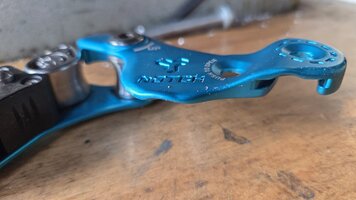
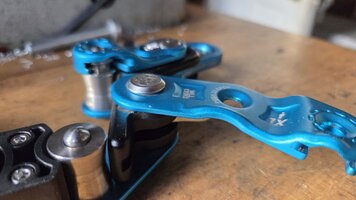
Like I said, I could make the Bulldog, the akimbo too, having just looked at it. But not the rope runner Vertec. Maybe with a 4-5 axis cnc, or a 3D printer, but not what I have now. I took a couple photos, see what you think. Forget the push buttons and stuff, and just look at the blue plates. Aside from the curves, there's the little inside radius where the connectors press in and out of. Let me know what you see. Thanks
Reg
Branched out member
- Location
- Victoria, BC
Oh and one last caveat. The big company betrays you, or sells and the new owners decide to flush you down the toilet. You may well have a contract, but are you willing to risk your house on it ? I personally know 2 member here where similar has happened.
New threads New posts
-
test
-

-
-
-

-
 Hitchhiker 2 on a shackle
- Started by Johnathan Jackson
- Replies: 4
-


