Climbing above rot with no place to flop.

ClimbingTN

Branched out member
Location
Columbia
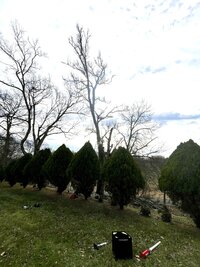
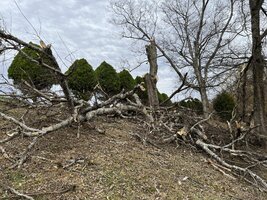
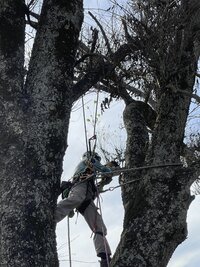
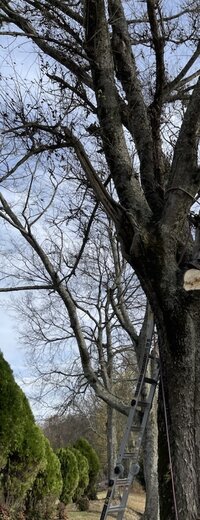
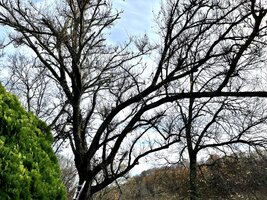
I’m rethinking my decision and trying to get some advice before getting into this situation again. I have watched climbers and bucket guys take very large tops 40ft plus when they encountered rot or they just did it that way. I’m not suggesting they were right or wrong because IDK. I've never seen a crane in my area. Maybe there is a smarter and safer way to handle this. Here ya go…My tree was in a yard and collateral damage all sides. One side was a building, arborvitaes, ornamental cedars and other trees to get caught in or damage. It was also on a hillside. A flop in any direction would destroy something. There was not an another tree close enough to tie into. I climbed the ladder to get to the trunk and yes I already had a TIP. I climbed and dropped everything except the rotten top. The lean is going back to arborvitae and there’s a building you can’t see. The rearward leader was hollow rotten and it just felt to scetchy to climb above it. The last photo cropped and it is the leader in the center. See the hollow rot. I think it was doable but, a pull test made it move too much for my liking. I made the decision to notch it and at least if it went wrong direction, damage would be less. It couldn’t hit the building or her cedars. She said she was going to take out the arborvitae’s next year anyway. I had a bull rope up high with slight tension on it. I made a face cut about 3 feet below the rot. You can see it in the photos before and after. Water poured out when I made the back cut. I promptly came down and we pulled it over. Thoughts or suggestions?
 

Attachments
  • IMG_3801.jpeg
    IMG_3801.jpeg
    1.4 MB · Views: 63
  • IMG_3804.jpeg
    IMG_3804.jpeg
    704 KB · Views: 59
  • IMG_3808.jpeg
    IMG_3808.jpeg
    1.3 MB · Views: 57
  • IMG_5781.jpeg
    IMG_5781.jpeg
    884.4 KB · Views: 59
  • IMG_3833.jpeg
    IMG_3833.jpeg
    130.9 KB · Views: 57
Last edited:
Ryan Schetle (horribly misspelled their name) and @Matt Follett did a presentation at our chapter conference. They got some hard data on the pushback/fling forces on taking hemlock tops. I’d love to see it shared more broadly.

This was in response to a handful of good climbers being killed from the resulting stem failures. There’s always another way, don’t take the risk.
 
Ryan Schetle (horribly misspelled their name) and @Matt Follett did a presentation at our chapter conference. They got some hard data on the pushback/fling forces on taking hemlock tops. I’d love to see it shared more broadly.

This was in response to a handful of good climbers being killed from the resulting stem failures. There’s always another way, don’t take the risk.
Which part of my story were you commenting "There’s always another way, don’t take the risk." I tried to fully explain my actions to learn something. Would you explain and offer some insight.
 
I'm a bit confused on your question... What are you asking exactly? If there's another way to do it? It's hard to say. Without being there, seeing the tree and the site, there's a million ways it could have been done better or worse.

Did you break anything? Did anyone get hurt? Was the customer happy with the results? If the answer is yes, you did what you could. There's always hindsight, but it's hard for us to have much perspective on it. What I'm comfortable climbing you may not be and visa versa.

I think that, given the information provided, you may have made a good choice. If you felt that it wasn't safe to climb above or do any different then that's the decision you ride with. It's not worth your life or someone else's if you have an educated reason. Proud of you for stepping up to safeguard you, your team, and your customer.

If you can, break things down for us a bit more. What do you want answered, and what can the hive mind help either reaffirm or teach you. Thank you for sharing either way.
 
The part that concerns me was that maybe I took too big of a top. See the top in 2nd photo jpeg 3804 where the ladder is. That’s where I cut just below the rot. I did the cut and got down and we pulled it over. It didn’t take much to overcome the back lean because we already had some tension on it. The pull was moderate…I needed more back cut but, freaked when the water poured out. It was just the largest topping I’ve done so, maybe that’s what has me guessing. Questions:To be direct…Is it acceptable to cut large tops to shorten the tree if you can’t/won’t climb past rot? What if the tree isn’t accessible by equipment and it can’t be flopped? Basically…I felt like that was the scenario I was in.
 
Last edited:
I've taken huge tops, upwards of cutting the tree in half. There's not hard and fast rule to any of it. If it fits it ships. I mean, if it wasn't dead and rotten if the site allowed I'd have still cut it in half. It's faster and easier and safer.

I'm still missing something in your question. Why would it ever not be acceptable to put as much of the tree down as quick and safe as possible?

@evo I'm interested in the pushback forces. Notch setup and back cut has a lot to do with pushback on spars. I'd love to hear more on this, particularly with OPs decayed lead issue. At what point are pushback forces dangerous?
 
I take tops at 2' or less, sometimes... height from ground that is.

I've topped a tree just above single- story gutter height as it was 15' to tall to clear the clothes line. 80' tree.

Etc etc

There is a combo of push-back from a large top and the lever-effect of the spar on the roots from from the top pushing back.

A large top to avoid climbing higher is fine, if all parts can withstand the forces.

Regrowth tops usually have more decay below the break or cut than above.

Decay tends to be in the wood present at the time of wounding.


Species vary in characteristics.

Tree ID is important!!
 
Which part of my story were you commenting "There’s always another way, don’t take the risk." I tried to fully explain my actions to learn something. Would you explain and offer some insight.
I don’t know, I wasn’t there but there are always options and trade off’s. Often going higher and taking small cuts is less stress on the structure.
Also wasn’t meaning anything directly but more so in a broad generalization.

So, risk vs reward.. can a bucket get in there, spider or wheels? Crane?
Can it be climbed and pieced small?
Can a main tip and a few redirects starting at a neighboring tree spread the load?
I see no need for rigging, so no huge loads.
How can large weight shifts be minimized?
Did you go about it in the wrong approach? Hell if I know, I wasn’t there! Could have horrible things happen with those long laterals? Looks like it.
 
I've taken huge tops, upwards of cutting the tree in half. There's not hard and fast rule to any of it. If it fits it ships. I mean, if it wasn't dead and rotten if the site allowed I'd have still cut it in half. It's faster and easier and safer.

I'm still missing something in your question. Why would it ever not be acceptable to put as much of the tree down as quick and safe as possible?

@evo I'm interested in the pushback forces. Notch setup and back cut has a lot to do with pushback on spars. I'd love to hear more on this, particularly with OPs decayed lead issue. At what point are pushback forces dangerous?
They compared different notches and notch angles. I don’t think they varied the depth much.
Fairly shallow angled Humboldt’s were the lowest forces. But the big takeaway is how high the spar stress was across the board. Worst was an open face as I recall. I’ll hit up the notes if Matt doesn’t chime in.
 
They compared different notches and notch angles. I don’t think they varied the depth much.
Fairly shallow angled Humboldt’s were the lowest forces. But the big takeaway is how high the spar stress was across the board. Worst was an open face as I recall. I’ll hit up the notes if Matt doesn’t chime in.
This is what I'd learned a bit about too. I tend to take tops with Humboldts for this very fact. I don't remember the source (could have been the old practical climber video series) that explained the fiber full and lever forces on the spar. Something about how it breaks off when the face closes breaks the fiber more evenly with the least amount of pull and least likelihood of catching.

I ask because, like op mentioned, the spar was dead and decaying. I'd not heard of any "studies" of the effects pushback forces had on decayed spars, or really of any type of dead tree related climbing and practical work studies. I was hoping maybe the one you mentioned had something about it. A lot of times we kind of just hope the dead spar holds out, as there's not much practical information to base the holding strength of the wood on.

Sure, we have vector of decay and things to think about, but it's still just a shot in the dark. I generally figure if the wood is punky and I can pull parts out with my hands I shouldn't climb it. I wonder if this information could have helped op to have made a more sound decision, either in knowing him climbing above the decay was a bad idea or knowing for next time he could climb higher.

Just thinking out loud. Species is a strong indicator for this line of thinking too. Climbing dead willow is a more risky endeavor than dead burr oak and the like.
 

New threads New posts

Back
Top Bottom