Bulge On Cherrybark Oak

Now that is interesting. I've never seen such a thing. Any dissections published or presented?
Hope the CT event was worthwhile. I had to bow out due to health stuff. I hate to do that.
 
Now that is interesting. I've never seen such a thing. Any dissections published or presented?
Hope the CT event was worthwhile. I had to bow out due to health stuff. I hate to do that.

Hope you are feeling better. I look forward to coming to one of your talks another time. He didn't show any dissection but one of the pictures in the presentation showed this very thing. It was worked into part of his presentation regarding the importance of shelter or barrier trees and the developed dependency on one and other for wind and storm resistance.
 
Why is it not possible for an area of decay to be all around?
Well for one thing, if the decay extended into the cambium layer and that went all the way around? you get the picture there. An increment bore is not that invasive. A decent metal detector should find metal up to 10 inches in... definitely not invasive- use one daily here, saves on chain and unwanted sharpening. Smacking it with a mallet will at least let you know if its hollow on one side or not.. but...
 
  • Like
Reactions: ATH
Joining the party late....am I totally off my rocker? At first look I thought it looks like thicker bark where smooth patch hasn't decayed the outer bark as much as it has the areas above and below...which leads to another set of questions! But I agree with those who are guessing it is solid...I'd almost bet on it.
 
Well for one thing, if the decay extended into the cambium layer and that went all the way around? you get the picture there. An increment bore is not that invasive. A decent metal detector should find metal up to 10 inches in... definitely not invasive- use one daily here, saves on chain and unwanted sharpening. Smacking it with a mallet will at least let you know if its hollow on one side or not.. but...

I don't think it's a matter of decay moving into the cambium, rather a reaction by the cambium to a reduction in heartwood due to decay.
 
Last edited:
But a wound and or decay all the away around may have been fatal long ago?

Looks a little thick for smooth patch but maybe?
 
...

Looks a little thick for smooth patch but maybe?
I agree when I looked closer. That was my first reaction when I first looked at the pic on a small screen so thought I'd throw it out there. See pleny of white oak with bands of less disturbed bark...
 
Hey thanks so far and please keep the speculation rolling in. I did get up there with a wand type metal detector and got hits all over the lower areas, including the bulge. Most of the hits were where there was visible signs of barbed wired. Also, the mallet sounding revealed that the wood in the bulged area appears to harder and higher pitch than the other areas. There were no hollow areas that i could tell. I don't have an increment borer yet, but I may purchase one with help of the homeowners association. I will probably need some help in reading the sample if I get that far.

When you observe the tree from a distance from all available angles, you can't help but notice several things: 1) the tree appears to make a slight angle between upper section and lower section with angle origin in the bulge area; 2) the part above the bulge angles toward the limb weight; 3) the bulge is more pronounced on the sides with the limb weight; 4) The bark of the bulge also has horizontal cracks that correlate to the more pronounced bulge areas.

Also, I took an photo of the tree taken from further away and put it into my photo software, used grid lines and angle feature, and confirmed that there does appear to be an angle created at the bulge. This is not anything very scientific of course, but I had at least 3 beers and looked at this thing off and on for several hours and I kept seeing the same thing.

WHY DO I CARE ABOUT THIS TREE?
Other than it's gorgeous and it makes our subdivision less ordinary? The reason I'm interested in this tree/property is that the owner (the developer of our subdivision) has been wanting to shed this .35 acre property for 20 years, but no one is interested in taking it on - mainly because of the old non-active family cemetery (graves going back to the 1700's). It is non-taxable because of the cemetery, but it is also non-buildable and our city planner has been excessively restrictive about what an owner can do with it - without doing an archeaological survey that is - though I can challenge some of that. It backs up to my property and I've always wanted it because there are 18 different tree species back there. But, you got those two veteran oaks to deal with (4-5ft DBH, 120-130ft tall, comparable spread). The southern red oak has a internal cavity that extends at least 8 feet up from ground; and this cherrybark has that bulge. He will deed over the property for $1, but then it's my liability if the trees fall on the neighboring houses. The neighborhood association doesn't really want much to do with it, other than maybe contributing a few bucks here or there for maintenance costs. The owner really doesn't care and would just let the tree fall, but won't spend any money to investigate problems and remove dead wood. I have a small part-time tree business and will climb and dead wood most anything, but as far as take down, I don't touch anything this size. As a favor to myself though, I have been taking care of the pruning and mosquito control back there for the last year. But when it comes to those two oaks, I am treading lightly. I have already received one quote of $8,000 per tree to remove, just in case it came to that. Even if I put the wood on the ground myself, the disposal cost would still be significant.

 
Last edited:
Hey thanks so far and please keep the speculation rolling in. I did get up there with a wand type metal detector and got hits all over the lower areas, including the bulge. Most of the hits were where there was visible signs of barbed wired. Also, the mallet sounding revealed that the wood in the bulged area appears to harder and higher pitch than the other areas. There were no hollow areas that i could tell. I don't have an increment borer yet, but I may purchase one with help of the homeowners association. I will probably need some help in reading the sample if I get that far.

When you observe the tree from a distance from all available angles, you can't help but notice several things: 1) the tree appears to make a slight between upper section and lower section with angle origin in the bulge area; 2) the part above the bulge angles toward the limb weight; 3) the bulge is more pronounced on the sides with the limb weight; 4) The bark of the bulge also has horizontal cracks that correlate to the more pronounced bulge areas.

Also, I took an photo of the tree taken from further away and put it into my photo software, used grid lines and angle feature, and confirmed that there does appear to be an angle created at the bulge. This is not anything very scientific of course, but I had at least 3 beers and looked at this thing off and on for several hours and I kept seeing the same thing.

WHY DO I CARE ABOUT THIS TREE?
Other than it's gorgeous and it makes our subdivision less ordinary? The reason I'm interested in this tree/property is that the owner (the developer of our subdivision) has been wanting to shed this .35 acre property for 20 years, but no one is interested in taking it on - mainly because of the old non-active family cemetery (graves going back to the 1700's). It is non-taxable because of the cemetery, but it is also non-buildable and our city planner has been excessively restrictive about what an owner can do with it - without doing an archeaological survey that is - though I can challenge some of that. It backs up to my property and I've always wanted it because there are 18 different tree species back there. But, you got those two veteran oaks to deal with (4-5ft DBH, 120-130ft tall, comparable spread). The southern red oak has a internal cavity that extends at least 8 feet up from ground; and this cherrybark has that bulge. He will deed over the property for $1, but then it's my liability if the trees fall on the neighboring houses. The neighborhood association doesn't really want much to do with it, other than maybe contributing a few bucks here or there for maintenance costs. The owner really doesn't care and would just let the tree fall, but won't spend any money to investigate problems and remove dead wood. I have a small part-time tree business but don't touch anything this size. As a favor to myself though, I have been taking care of the pruning and mosquito control back there for the last year. But when it comes to those two oaks, I am treading lightly. I have already received one quote of $8,000 per tree to remove, just in case it came to that. Even if I put the wood on the ground myself, the disposal cost would still be significant.

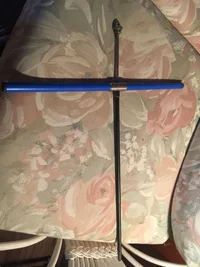
Increment bore is very easy to use. The general way is to select an area of interest and screw the device into the tree, take care not to bend it! when you feel you have gotten deep enough, or ran out of tool, quickly turn the device in a jerking manner the opposite direction a half turn, that breaks the core free. The sample will come out in the bore insert just like a drill core. you can examine the rings for color changes, deformities and bonding characteristics. Remove the sample from the insert and gently bend it.. if it breaks easily that could be a delamination or possibly rot if it spans several growth rings or is obviously punky. Typically the core can be placed back in the hole with no ill effect. You can also use wood glue to seal the hole if it makes you feel better. Normally holes are drilled in suspect trees at breast height, at the root crown and at any suspect area in at least 3 sides of the tree toward the center and not at an angle unless for some reason you cannot go straight in, for instance, metal protrusion or a wall preventing it. Good work so far!
 
I am pretty OCD when buying equipment and like to know specs by heart. Let's say I wanted to go quickly buy a quality borer, is there one you would recommend? The neighborhood association might kick in up to $100.
 
I am pretty OCD when buying equipment and like to know specs by heart. Let's say I wanted to go quickly buy a quality borer, is there one you would recommend? The neighborhood association might kick in up to $100.
They aren't cheap tools for what you get, I wouldn't bother with anything less than 20" long though. They typically come in a tube that becomes the handle... let me go get one , I'll be right back.
 

New threads New posts

Kask Stihl NORTHEASTERN Arborists Wesspur TreeStuff.com Teufelberger Westminster X-Rigging Teufelberger
Back
Top Bottom