













Birdyman88
Branched out member
- Location
- Arlington
Okay, anyone want to speculate on what this bulge may be?
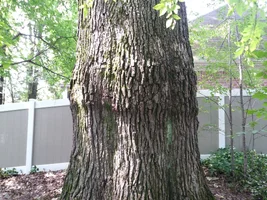 This is an old Cherrybark Oak, about 130ft tall, 4.6' DBH. The bulge is located about 6' above the ground. There are raised areas from old barbed wire lower on the trunk, but they aren't anywhere close to being this size. The tree has large 20" diameter limb, 45' long, that is dead with signs of hypoxylon canker. There is other major dead wood as well. The tree is still very much alive, but the upper canopy looks thin in some areas. Other than some cavities where old limbs were shed, and a few small spots where the bark has smoothed, there aren't any other signs of disease on the trunk. The tree has never pruned, at least in the history of our subdivision. The majority of the limb weight is on the left side and back side of tree (as you're looking at picture).
This is an old Cherrybark Oak, about 130ft tall, 4.6' DBH. The bulge is located about 6' above the ground. There are raised areas from old barbed wire lower on the trunk, but they aren't anywhere close to being this size. The tree has large 20" diameter limb, 45' long, that is dead with signs of hypoxylon canker. There is other major dead wood as well. The tree is still very much alive, but the upper canopy looks thin in some areas. Other than some cavities where old limbs were shed, and a few small spots where the bark has smoothed, there aren't any other signs of disease on the trunk. The tree has never pruned, at least in the history of our subdivision. The majority of the limb weight is on the left side and back side of tree (as you're looking at picture).





















