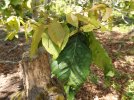
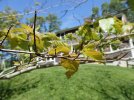
Beech Leaf Disease

Yikes! Thanks for the update, I just learned spotter lantern fly was found in Oregon
Do you have any beech in WA ?

Years ago I worked in Tacoma for many weeks or months at a time. Just not as arborist.

I could easily live there !
 
Last edited:
Do you have any beech in WA ?

Years ago I worked in Tacoma for many weeks or months at a time. Just not as arborist.

I could easily live there !
They grow very well here. But none native. There is a champion bronze beech in my ole neighborhood in PDX. Long before I knew what a beech tree was, I’d duck out from the punk house shows and sit under it.
 
Well, we have basically no mature native beech here in Maine any more. It'd be a shame to lose the euro beech too, here's hoping we dodge this one for a while
 
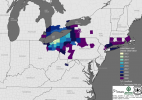
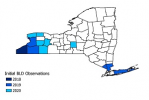
Some updated info on Beech Leaf Disease - Progression Maps & Info.

It has now been found in:

Ohio
Ontario, Canada
Pennsylvania
New York
New Jersey
Connecticut
Rhode Island
Massachusetts
West Virginia (not official confirmation)
Virginia
Maine

Currently, Beech Leaf Disease cause has been confirmed as a contributor by a nematode, Litylenchus crenatae mccannii.
However, the nematode may not be the only Culprit !

74AWPZERIZFA5FS57KFREKMJRY.png


Link:

 
Last edited:
Great question.

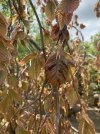
This is from a beech tree in a sales yard at a retail nursery on Long Island. Sure as hell looks like BLD and not mites. I mentioned it to their “tree guy”, and he didn’t seem to care.
View attachment 82240
@Jzack605 Do you know the species of Beech in the Pic ?

The "striped leaves" definitely look like BLD.

However, the "browned / dead ? leaves" do not look like my dead / dying BLD ?
Mine shrivel up and then turn brown & blackish eventually.
 
Last edited:
@Jzack605 Do you know the species of Beech in the Pic ?

The "striped leaves" definitely look like BLD.

However, the "browned / dead ? leaves" do not look like my dead / dying BLD ?
Mine shrivel up and then turn brown & blackish eventually.
I am not sure what browned/dead leaves you are talking about. Are you referring to the remnants of the buds?

It was a weeping cultivar, pretty sure a euro.
 
First, thank you, Greg, for your attention to this disease. After spending the last eight years strategically rigging down large dying oak trees in order to make safe the dozens of surrounding beech trees, I have been traumatized by Beech Leaf Disease, as beeches constitute a large part of my property.

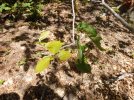
As for the appearance of the affected leaves, I find that it changes as the tree attempts to find new ways of surviving. The same thing happened after these same trees were stripped bare by gypsy moth caterpillars a few years back. I copiously watered the trees back then, hoping to force new buds. It worked, but the new leaves were notably different from the originals in color and size, and they were clustered more closely together (in what seemed like an attempt to conserve energy and water).

The following photos show how on my trees the greenish-brown and dark-green-veined leaves exist on the same branches. I must say that I am excited by the relatively good condition of the new leaves.

new-old2.JPG

new-old1.JPG

I also notice that when the springtime buds initially opened, they invariably became dark-green-veined and damaged leaves. Subsequently, the trees stopped opening those buds and instead began to put leaves out at the base of those buds. Those leaves are healthier yet dissimilar in appearance, as described.

P6060007.JPG
 
First, thank you, Greg, for your attention to this disease. After spending the last eight years strategically rigging down large dying oak trees in order to make safe the dozens of surrounding beech trees, I have been traumatized by Beech Leaf Disease, as beeches constitute a large part of my property.

As for the appearance of the affected leaves, I find that it changes as the tree attempts to find new ways of surviving. The same thing happened after these same trees were stripped bare by gypsy moth caterpillars a few years back. I copiously watered the trees back then, hoping to force new buds. It worked, but the new leaves were notably different from the originals in color and size, and they were clustered more closely together (in what seemed like an attempt to conserve energy and water).

The following photos show how on my trees the greenish-brown and dark-green-veined leaves exist on the same branches. I must say that I am excited by the relatively good condition of the new leaves.

View attachment 82266

View attachment 82267

I also notice that when the springtime buds initially opened, they invariably became dark-green-veined and damaged leaves. Subsequently, the trees stopped opening those buds and instead began to put leaves out at the base of those buds. Those leaves are healthier yet dissimilar in appearance, as described.

View attachment 82268
1. My Beech trees, particularly the larger trees, have lasted much longer than I thought when I first became aware of BLD in 2016. (Very small trees, not so much.)
2. The degradation rate seems to vary from year-to-year.
3. This year is particularly BAD for my large Beech. Lots of leaf damage. :(
 
Last edited:
  • Sad
Reactions: JCB

New threads New posts

Kask Stihl NORTHEASTERN Arborists Wesspur TreeStuff.com Teufelberger Westminster X-Rigging Teufelberger
Back
Top Bottom