Arborvitae uproot

flyingmosstreen

Participating member
Location
Rochester
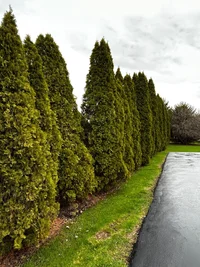
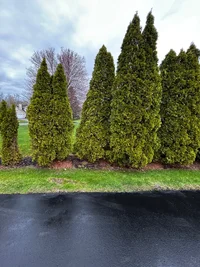
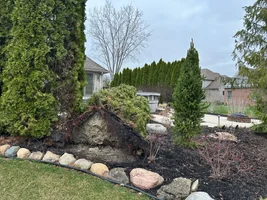
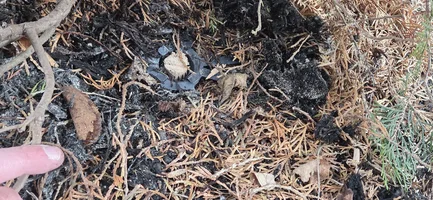
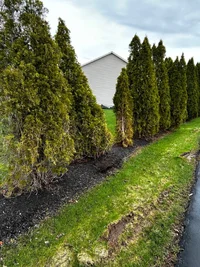
Hey y’all. Looking for some ideas and suggestions. I have a client with a row of arborvitae planted broad side to prevailing wind. The landscaper who installed them (guessing 10 or more years ago) built a very small berm and planted directly into the berm. I now have multiple uprooting bushes. You can see that none of the roots actually integrated into the original soil and just made a mat/carpet of fine roots just under the surface. Our solution is to remove a few, stake a few that are not yet uprooting, and replace one with a green giant variety. Pictures below.

My main question is how do I plant the new so that roots will actually be encouraged to take in the native soil. Without having to dig down below the “artificial” grade IMG_3229.webp
img_3228-webp.101716
 

Attachments

  • IMG_3228.webp
    IMG_3228.webp
    394.7 KB · Views: 50
  • IMG_3227.webp
    IMG_3227.webp
    423.9 KB · Views: 2
Did they put a weed barrier down? Those certainly inhibit successful route development.

How is the soil below the berm? If the berm is nice loose rich organic soil that is on top of clay that was stripped of topsoil when they built the neighborhood, the roots are just staying where they feel happy.

I would use an air knife or air spade to mix the berm and "yard" soil together while loosening that yard soil and incorporating somewhere getting material into it. I would also do some of the same around the trees that you are leaving in order to encourage them to develop deeper and wider roots.

Also (actually, not "also" this is primary item) observe proper planting practices:
*Were the initial trees grown in a pot? If so were there encircling roots and was the root ball shaved to correct that problem?
*Were the trees planted too deep?
*Spend time at planting to pull some soil off of the top of the root balls on the new trees to make sure they are going in at the correct depth.
 
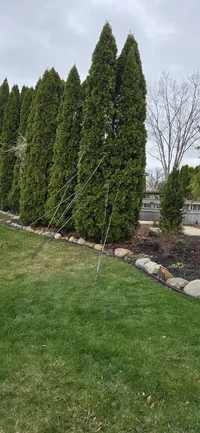
We had some pretty nasty winds a few weeks ago that uprooted a couple of trees. The clients wanted to attempt straightening these trees. In such situations, I always tell the client:
We need to ask why the tree didn't root well in the first place and what we are going to do differently to change that situation.

In the first one where the tree tipped entirely over, we could clearly see the soil under what was brought in to make a planting bed is pretty poor. I tilled that with the air knife and amended it to encourage better root depth.

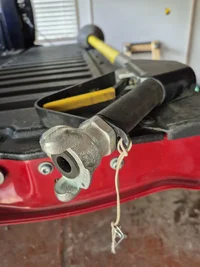
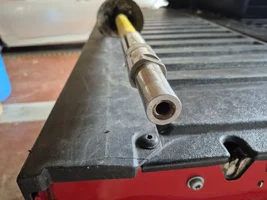
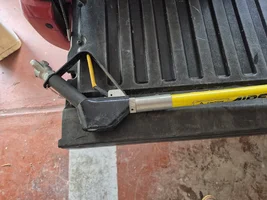
In addition to the stakes and straps I also put in a few Arbor Stakes.... I have not used them previously. I had just learned about them at the Ohio tree care conference in February and bought a box. Because there was a big fibrous root system, I think they should help hold this tree in place.

IMG_0517_20260323_104258.webp

20260323_135131.webp

20260323_133353.webp

(But also curious to hear what others think!)
 
Last edited:
@ATH

Thanks for all this info. I hadn’t thought about what goes on in developments when building and how they strip off that top layer of soil. I can take a closer look but definitely can bet on a heavy clay underneath the berm. I don’t think weed mat was placed underneath but I bet these trees were either b&b or pots and were not teased upon planting if I am just going off of evidence of poor planting practices to begin with.

I’ll keep folks updated here. I don’t have access to an airspade but was thinking of using a broad fork like what no-til farmers use to loosen soil before adding amendments etc.
 
.... I don’t have access to an airspade but was thinking of using a broad fork like what no-til farmers use to loosen soil before adding amendments etc.
@Rusticus has a good deal on one:
 
@ATH

Thanks for all this info. I hadn’t thought about what goes on in developments when building and how they strip off that top layer of soil. I can take a closer look but definitely can bet on a heavy clay underneath the berm. I don’t think weed mat was placed underneath but I bet these trees were either b&b or pots and were not teased upon planting if I am just going off of evidence of poor planting practices to begin with.

I’ll keep folks updated here. I don’t have access to an airspade but was thinking of using a broad fork like what no-til farmers use to loosen soil before adding amendments etc.
If you go the broad fork route, lay down well composted chips first, as you fork do so in a manner that the chips fall down into the crack.

Probably nothing wrong with tryin the old school 2-3” drill auger for vertical mulching. Not as good as other methods but it still has its place.
 

New threads New posts

Back
Top Bottom