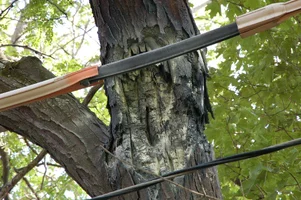
Another silver maple with cables

Like I said, most utilities will not say they offer any insulating properties, much less that they are insulated.
 
You would be hard pressed to have a utility say line hose or line guard is insulation, never mind get it in writing. It is an extra level of protection. It degrades in UV, moisture, air, back of the truck covered in oil and acid rain, etc etc etc. They are tested every 6-12 months so you never know how far from the last test date they are or what has happened since.

MAD is not to be thrown out the window once line hose is put up. it doesn't turn the power lines into monkey bars or a zip line!
 
Keith,

Remember this picture?

The tree was burning with the cover in place.
 

Attachments

  • 144145-DSC_9563_2.webp
    144145-DSC_9563_2.webp
    472.7 KB · Views: 115
Linehose is protective insulation, the manufacturer states that it is insulation and it is rated and tested for it's insulating properties.
It is what it is until it fails inspection or testing.
 
TMW

That picture is of a piece of tree guard used to protect the jacket of the wire from rubbing off, it DOES have some limited insulating properties, but nothing like line hose.


It is only rated and guaranteed from the factory. Once it leaves and after its first use it is considered degraded, until its next inspection 6-12 months down the road.

Tell you what see if you can get a linesman to put two pieces, new or used, of line hose up. Put one on a phase, and one on a ground wire. Then see if he will barehand each of those hoses off spikes.

Line hose and coverup, are an extra level of protection, not a failsafe. If this was the case linesman wouldn't wear rubber gloves, sleeves, or work out of insulated booms. They would ONLY use line hose.


We have to be careful how this info is presented and argued. We obviously have a good grasp on these issues. Think of a greenbean, or a inexperienced Arborist reading this and thinking line hose is an insulation barrier guaranteed to work. I have seen line hose left on so long that it crumbles when touched. YOU NEVER KNOW the history of that piece of rubber!
 
MAD is the strict guidline. Being stuck in this recliner I can't get the picture I want. I am not sure we are referring to the same item.. I am writing about a piece that comes in 10 foot sections, orange and {tin foily} chrome, that is attached just prior to the work and removed immediatly there after. I don't know any thing else about it other than we use it when we are working around the lines, and the utility comes out and installs it. Try to get more info. I am not referring to the weatherproofing that offers 0 protection. In Nashville the utility had several styles of the black covering, none were insulators, some more resistant to squirrels, others tree rubbing, and some on backlot lines, Hendrix bundles for I don't know what. Regardless, WE SHOULD NOT RELY ON ANY OF THESE TO PROTECT US FROM ELECTRICITY! MAD is minimum approach distance for the greenbeans FYI.
 
Here are the only three pieces (basically!) of coverup I ever used as a linesman. The two closest to the pole on the right side of the photo are called lineguard, it is made of stiff plastic, and generally used on 23Kv and above. The long slender stuff is generally referred to as linehose. May be used on 23 and above, mostly seen on lower voltage distribution circuits. The others there being held on with yellow clothespins, are generally reffered to as blankets. There are also showercaps (not shown) that go over cutouts, insulators etc etc.


S5030327.JPG
 
My intent with reposting the picture was to show that the tree was burning through contact with a line that had cover on it. Proving the point that the cover isn't insulation and should never be relied upon to keep workers safe.

Sorry if I misled anyone.
 
What's the story on that?
It looks as if the tree was making contact with the primary and current was traveling through the tree to get to the neutral.
When was the protection placed, before or after the fire?
 
The protection was placed on after the tree had been in contact with the wire. However, the tree was still being energized with the cover in place.

There was no indication of damage on the service line at the bottom of the picture.
 
How was it determined that the tree was still energized and not burning from the previous contact?
Did the burning actually stop for a period of time then start again or is there a chance the fire never did go out and continued to burn after the protection was placed?
 
Kevin,

The tree showed signs of contact with the line for at least 12 years. It was not clear on how long before the picture was taken that the protection was put in place, but based on the condition of the cover, it had been there a while.
 
A tree in contact with the primary is very common around here, as Tim said for many years. Around here the covering is called "rubber goods or when dealing with the contractor 'rubber it up" We use when we need to break MAD and get closer than 10'. It's important to treat any possiable conductor as live, protected wire, or even a line kill, alway treat it LIVE.
 
"device for protecting linemen from accidental contact with energized lines"
I think this is how they should be viewed.
 
[ QUOTE ]
Linehose is protective insulation, the manufacturer states that it is insulation and it is rated and tested for it's insulating properties.
It is what it is until it fails inspection or testing.

[/ QUOTE ]I think the safe way of stateing this would be "it is what it is(not insulation) until it passes inspection and I see the rating that is given. time and elements will degrade all these materials.
 
I've always treated line hose as simply an aid to visibility when looking up; nothing more.

I still don't get why you couldn't tear that tree apart with a 75 footer. I guess pictures aren't the same as being there.
 

New threads New posts

Back
Top Bottom