

So I was reading over the manual for my 'new to me' chip truck, a 2006 GMC 5500 with the 6.6 Duramax and Allison Auto, I think the 1000?
I actually do use low-range a lot: towing the chipper up steep gravel roads/driveways (I'm talking 'side of a mountain' roads here), backing the chipper into positions up steep gravel driveways, pulling over trees, skidding logs, all sorts of things. With my F350 I usually just put it in low and leave it there until I'm done with that bit of work where it's necessary, as it makes it easier on the clutch/trans than roasting it in high-range doing low-speed, high-load jobs. The manual here says specifically not to use 'park' while in low-range, and while not the end of the world, it means either having to switch back to high-range every time I want to stop the truck for a little while (say, when moving between already staged piles of brush to chip) or apparently risking damage. Anyone have any insights into this limitation of the Allison trans?
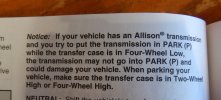
I actually do use low-range a lot: towing the chipper up steep gravel roads/driveways (I'm talking 'side of a mountain' roads here), backing the chipper into positions up steep gravel driveways, pulling over trees, skidding logs, all sorts of things. With my F350 I usually just put it in low and leave it there until I'm done with that bit of work where it's necessary, as it makes it easier on the clutch/trans than roasting it in high-range doing low-speed, high-load jobs. The manual here says specifically not to use 'park' while in low-range, and while not the end of the world, it means either having to switch back to high-range every time I want to stop the truck for a little while (say, when moving between already staged piles of brush to chip) or apparently risking damage. Anyone have any insights into this limitation of the Allison trans?


