Rope Runner

See now that's funny Rich, I find that my softer ropes that flattened also had better friction than my harder/rounder ropes. Some of that might change with a concaved face though as that would increase the surface area of contact.

As far as machines go that really depends on a lot. The easy answer is a used Bridgeport knee style, any clones will also work. It is the basic starting point for 2d & 2-1/2d work.
The problem with the flattened rope, some and maybe most, hold that shape, next time you go up you find yourself with a varied friction at the bird as the rope diameter or should I say thickness, changes depending on the rope orientation. Also when you start down, the friction changes as the rope diameter or again, the thickness changes depending on how flat that section of your line has become. Say you go up and down a 10' section a bunch of times, that section will be flatter than the other parts of the line. So here you are going down the nice round rope getting the right friction, then you hit a flattened section and the thickness has changed, like going from a 11.7 mm line to a 10 mm line and you are starting to slide. Part of the reason everyone is so keen on finding the right rope for it. Personally I think all ropes (assuming a given size) should be a little more consistent on a device. I realize rope characteristics are important but I feel the effect should be something more on the lines of what we get with other devices like RW, HH, Uni etc.
 
C'mon guys let's not reinvent the wheel...the bird is good just the way it is...if you are bored it's cool...nothing holds great on the bird...it will peel off...
 
C'mon guys let's not reinvent the wheel...the bird is good just the way it is...if you are bored it's cool...nothing holds great on the bird...it will peel off...
I agree, the bird is fine and anything you put there will peel off. I will say that I think the lower body could use a little something to help the bird out a little and make it light to the touch. I still think a slight curve and concave shape will do the job. I like what you have done monkeylove and I think if you could smooth out some of the speed bumps you have near the bollard and pulley it would not impede the tending function and still add a little of the friction that I think would help. Until I get the time to do mine, I'm just blowing hot air. I have been running mine with that small added plate and found a huge improvement. Today I was practicing a little rescue and took myself and another climber down the rope together, RR had the entire load and the bird could be released and operated very smoothly.
 
Well i didn't know about plasti dip and the more i'm looking around the more i feel that may be a durable solution. It looks like this stuff wont peel untill you really make efforts to take it off.

Some additive tips that may help :
- Really good cleaning is important
- Ambiant air, paint and painted object should be at 77°F
- When painting by pulling objects in the plasti dip 30/40mn should be waited between two layers, and not the usual 15mn when spraying
- Plasti Dip Primer is suposed to offer stronger grip on surfaces
- Plasti Dip coat is suposed to ehance resistance
- To have a well dryed result the longer we wait the stronger it gets, counting in hours is just to have a dry surface, counting in days/weeks seems to be more realistic to get a stabalized dip


I'd be really glad Gmcttr if you could keep us informed how good or bad your plasti dip stays on the bird. It looks really nice, it would be great if it is as durable as informations about plasti dip say it should be. Thanks by advance !

 
Last edited:
Turned 0.050" off my bollards and sleeved them with Titanium today. Remember, I got a used one so it had some wear already. I'll see how they hold up after some more use.
 
I wonder with the bump on the body does it act like a governor keeping one from reaching top speed. Which could be a good thing, for some it might be a hindrance as well.
 
It would be interesting to have both. Ascend with one and then descend and then do the exactly same with the other body. Also do a stimulated work climb with jumps and descending fast, on both bodies and note changes then put pros and cons on here for all to read! :)
 
All this business you guys are playing around with is why I think the lower bollard should be in slotted adjustment holes identical to the bollard up on the bird. You could really dial the RR in with adjustability on both bollards. I think I posted this on another thread some time ago, but thought I'd chime in with it here. I like to keep the bird from working too hard and have that bollard wide open for the best feel, and adjust the friction down below.

The first RR I had worked with everything wide open for a while and it began to creep on 11.5 after a few months so I closed up the bird a bit. Then I played around with flip-flopping the lower bollard arms and ran it in "narrow mode", which worked but added a touch of friction during ascent. I had an old bronze sheave kicking around from the Surveyor during the ZK-1 days and I swapped that with the lower bollard. The contour was enough to take away friction on ascent, but was tight enough to run with the bird wide open again.

To be honest, I'd like to see non-rotating sheaves in both bollard locations to aid in keeping the rope round and providing a bit more friction. It might even perform across a wider variety of climb lines without much adjustments.

Still like seeing all the ideas. Low & Slow, right?!?! :)
 
The one I idea I had was a contained sheave/pulley portion in the middle of the body. Like the hump idea but with rotating hump if that makes sense.

Would that be to difficult to make?
 
The one I idea I had was a contained sheave/pulley portion in the middle of the body. Like the hump idea but with rotating hump if that makes sense.

Would that be to difficult to make?

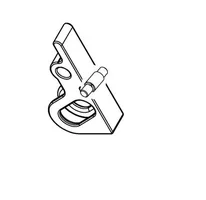
this is just done in paint but is this what you mean, trying to understand, just took the pictures out of rope runner manual
runner mod.webp
 
Always low and slow Oceans. Lots of good ideas to play with. Kevin as I know you will see this.....The Rope Runner is amazing just as you send it, it is another fine invention from your mind. We are just trying stuff, I would use the stock version all day long, all year long. Nice Job.
 
Would it be possible to just add a replaceable part ?
Thought about it hearing Richard talking about his try with a steel carabiner. The diameter was to big but the idea looked to have benefits : possibility to adapt to different ropes, protection of the body from friction. It sounds like more versatility and durability.
 
I made one with the hump and ran it today with the Titanium bollards, it worked well Rich. As far as the hump slowing max descent speed, I can't really answer that one. They both bomb down way faster than I would ever do routinely. Some of the thoughts on concaved surfaces have merit and when I get to it will probably make that my next experiment.

20140916_175300.webp
 
Monkey, when I look at your avatar, I now realize you have one hand on your chin, and the other is holding a Rope Runner as you ponder...hmmmmmm...LOL!!!
 
Lol, close Oceans. Actually that was on a flight home from vaca in Mexico and I was reading "An Illustrated Guide to Pruning". I think the RR was easier and more fun.
 

New threads New posts

Kask Stihl NORTHEASTERN Arborists Wesspur TreeStuff.com Teufelberger Westminster X-Rigging Teufelberger
Back
Top Bottom