- Location
- Herefordshire, England
Howdy All,
Its great to be here! I have a stretch tent company and have been working with rigging and rope systems for a years now and there are a few trusted ways to create rope sections that are connected to (Precisely unknown) forces that are pegged into the ground with 25mm rebar 1200mm stakes. They are long and beefy and I had to extent them as I was consistently pulling the industry standard pegs 90cm out of the ground. I am confident they are being pulled really really hard:- The full strength of four men is gradually and consistently added to the large structures and it must be hard or it isnt right. Its a fairly brutal job to do. I could test the ropes but it is within the field proven strength range of the equipment application and I havent had the need, nor a rope ever break, but it will straighten open snap hooks and also damaged equipment is never installed.
If you take a look at the attachment you can see the main rope terminals that are used.
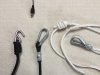
It is all 8mm polyester braid. I am assuming its static rope. I havent noticed it being especially dynamic.
I know for climbing 8mm is probably too thin but, heres the real question; -Are the swage blocks a respectable alternative to splicing and or stitching? Do you think squishing the ropes together in this way weakens the rope under tension? It looks to me that they are usually found on steel tensioned cables and are respected in other fields. How about in yours?
Its great to be here! I have a stretch tent company and have been working with rigging and rope systems for a years now and there are a few trusted ways to create rope sections that are connected to (Precisely unknown) forces that are pegged into the ground with 25mm rebar 1200mm stakes. They are long and beefy and I had to extent them as I was consistently pulling the industry standard pegs 90cm out of the ground. I am confident they are being pulled really really hard:- The full strength of four men is gradually and consistently added to the large structures and it must be hard or it isnt right. Its a fairly brutal job to do. I could test the ropes but it is within the field proven strength range of the equipment application and I havent had the need, nor a rope ever break, but it will straighten open snap hooks and also damaged equipment is never installed.
If you take a look at the attachment you can see the main rope terminals that are used.
It is all 8mm polyester braid. I am assuming its static rope. I havent noticed it being especially dynamic.
I know for climbing 8mm is probably too thin but, heres the real question; -Are the swage blocks a respectable alternative to splicing and or stitching? Do you think squishing the ropes together in this way weakens the rope under tension? It looks to me that they are usually found on steel tensioned cables and are respected in other fields. How about in yours?