@southsoundtree No doubt, yet one of the biggest issues with getting that point across is so many of the old ones are hollow. Not unlike bigleaf maple.
I think it’s that and some of their wrap for ‘widow’ makers has an element to how they can be hard to ‘read’ or unpredictable…. Meaning I’ve been certain that a decaying strip that looks legitimately bad must mean the rot goes pretty deep and it’s basically a horse shoe of good wood. WRONG, it’s literally just half an inch in depth and it’s pretty solid.
Other times it might look fine but for an alder it’s pretty darn bad.
Around here they are being attacked by a bark beetle, that brings in a fungi which is quickly fatal. Tops wink out rapidly and some just will have a half dollar sized black ooze spot and blink out in one to two years.
Some are crazy good compartmentalizers others are utter trash.
More so to the layman, painting them all with the broad brush of, junky trees, weed trees, widow makers, and they only live to 40-60 years anyway. Mow deem weeds down..
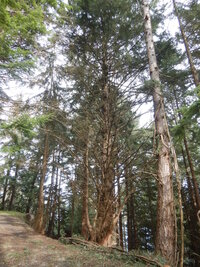
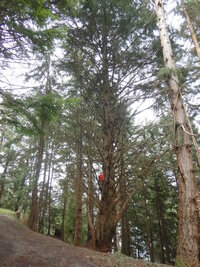
@27RMT0N have you read the fire scar data from Waldron island? Continuous control fires about 8-10 years apart, the introduction of small pox spaced them much further out, and then when whitey finally colonized the area they essentially ceased. I wonder if that tree started its life in open grown prairie? Got a read on the age of the neighbors? Any old charcoal ‘stains’ on the butt?
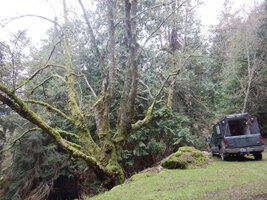
I’ve heard many of the oaks were leveled to feed the kilns post settlement.
You’ll notice some structures overgrown with ivy or eroding on the lapping shore near town. They are lime kilns. Our boys have had a sudden interest in them, so we’ve visited the three we know of a few times now. They reek of mystery and intrigue, but their past is … Continue reading

lifeonorcasisland.com




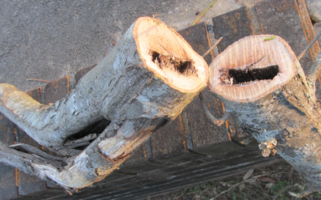
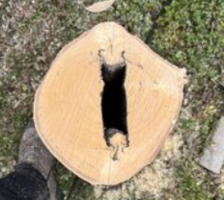
 Also check out the rings closely on ClimbingTN's to see the matching halves.