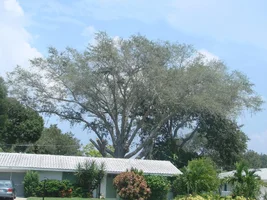
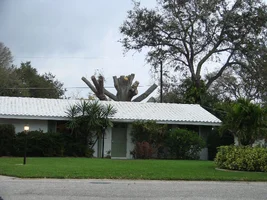
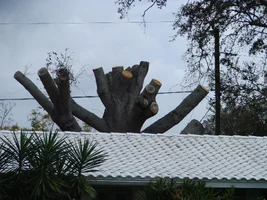
[ QUOTE ]
I dont see how reducing that tree will help anything. It looks like it could have been thinned out. Will the tree not respond with a bunch of suckers everywhere you cut it?
Just curious.
[/ QUOTE ]
One = it will reduce the lever effect, look down at the junction of all the branches, there is evidently some decay there from the previous work. That's a potential failure point
Two = If the reduction cuts are made at an appropriate point, i.e. to a lateral that is about 1/3 size of the bit being removed, it is big enough to assume the apical dominance and hence will suppress MOST of the suckering around the cut. There will probably be some but not to the same extent as if it were topped. Hopefully there will be some flushing out lower down too. Species dependant of course, I deal with tropical trees so can't speak for yours.
I dont see how reducing that tree will help anything. It looks like it could have been thinned out. Will the tree not respond with a bunch of suckers everywhere you cut it?
Just curious.
[/ QUOTE ]
One = it will reduce the lever effect, look down at the junction of all the branches, there is evidently some decay there from the previous work. That's a potential failure point
Two = If the reduction cuts are made at an appropriate point, i.e. to a lateral that is about 1/3 size of the bit being removed, it is big enough to assume the apical dominance and hence will suppress MOST of the suckering around the cut. There will probably be some but not to the same extent as if it were topped. Hopefully there will be some flushing out lower down too. Species dependant of course, I deal with tropical trees so can't speak for yours.