
Navigation
Install the app
How to install the app on iOS
Follow along with the video below to see how to install our site as a web app on your home screen.
Note: This feature may not be available in some browsers.
More options
You are using an out of date browser. It may not display this or other websites correctly.
You should upgrade or use an alternative browser.
You should upgrade or use an alternative browser.
Topping, Pollarding, or what??
- Thread starter climbingmonkey24
- Start date

The Green One
Participating member
- Location
- Frenchtown
Here is a link to some valuable insight regarding Pollarding. :
https://www.ancienttreeforum.org.uk/resources/videos/veteran-tree-management/
Scroll down, and watch the Lecture by David Lonsdale on the Management of Pollards.
I's say shoot Mr. Lonsdale an e-mail, but sadly he passed away in 2024.
https://www.ancienttreeforum.org.uk/resources/videos/veteran-tree-management/
Scroll down, and watch the Lecture by David Lonsdale on the Management of Pollards.
I's say shoot Mr. Lonsdale an e-mail, but sadly he passed away in 2024.

Evo
Been here much more than a while
- Location
- My Island, WA
Personally I’d call that ‘retopping’ it’s not legit pollarding and it’s more of a hybrid management somewhere between topping and pollarding.Looked at these trees this morning.
Client wants to cut the growth back about to where the bigger main branches end. You might be able to tell it has been done before.
Instinctively my first thought is “topping”but I also know that aggressively pruning like this is a technique some people use.
As far as I know, the client used to cut it back themselves but hasn’t been able to because it’s gotten to be a bit too much. So my question is, is this something you’d do or do you think it has gotten too big for that kind of pruning to actually be beneficial.
They also said that they want to make the trees shorter to hopefully make them become more wide…
View attachment 100771
Wait till risk of the last hard frost has passed. Or better yet push for a removal/replacement strategy

flushcut
Been here much more than a while
- Location
- Delavan, WI
Looking at this tree I’d say cut it back to where they “pollarded” it before. The tree is already fooked so why not. Maybe use it as a case study.

southsoundtree
Been here much more than a while
- Location
- Olympia, WA
The formatting of the linked page is 'off' for me.

climbingmonkey24
Carpal tunnel level member
- Location
- United States
I already got the contract and the job is set to be done towards the end of February / early March which is what they asked me to do. I wrote everything down in the estimate about how there are risks to the tree, that it would require continual maintenance for it to be effective, etc. They thanked me for my notes when they emailed me back telling me they wanted to move ahead with the project.
I’m not sure it would be wise to go back now and start advocating for removal / replacement, although I suppose I could find a way to mention it if I really wanted to without coming across like I’m trying to steer the client one way. Plus who knows, maybe they would take my advice and start caring for it on a regular basis.
I’m not sure it would be wise to go back now and start advocating for removal / replacement, although I suppose I could find a way to mention it if I really wanted to without coming across like I’m trying to steer the client one way. Plus who knows, maybe they would take my advice and start caring for it on a regular basis.
climbingmonkey24
Carpal tunnel level member
- Location
- United States
What I was wondering is when making the final cuts, would you just do one flush cut at the “head” area where the stems are growing out of, or make an individual cut for each stem?
ghostice
Been here a while
- Location
- Way west of Lake ONTARIO
I've always tried to cut each stem individually, finish cut above the branch collar. The times I've done these, trying to cut small stems all at once, say with a top handle, ripped the stems more than cut them cleanly. It would be like trying to trim a hedge with a chainsaw, which can leave a ratty mess sometimes. Have a look at Climbing Arborist dot com on Youtube - Dan has a video showing pollarding of larger stems. Cheers.
Evo
Been here much more than a while
- Location
- My Island, WA
“You know one thing you could do, is keep maintaining this tree for a few more years, this will give you the benefit of keeping a tree in this spot while we plant a replacement. Once this replacement gets to a substantial size we can just remove this tree”I already got the contract and the job is set to be done towards the end of February / early March which is what they asked me to do. I wrote everything down in the estimate about how there are risks to the tree, that it would require continual maintenance for it to be effective, etc. They thanked me for my notes when they emailed me back telling me they wanted to move ahead with the project.
I’m not sure it would be wise to go back now and start advocating for removal / replacement, although I suppose I could find a way to mention it if I really wanted to without coming across like I’m trying to steer the client one way. Plus who knows, maybe they would take my advice and start caring for it on a regular basis.

Mick Dempsey!
Branched out member

Evo
Been here much more than a while
- Location
- My Island, WA
That’s amazing. Wish there were more clear closeups. I have a thing for these historical photo comparisonsPollard in Holland during the second world way and 3 years ago.
climbingmonkey24
Carpal tunnel level member
- Location
- United States
I've always tried to cut each stem individually, finish cut above the branch collar. The times I've done these, trying to cut small stems all at once, say with a top handle, ripped the stems more than cut them cleanly. It would be like trying to trim a hedge with a chainsaw, which can leave a ratty mess sometimes. Have a look at Climbing Arborist dot com on Youtube - Dan has a video showing pollarding of larger stems. Cheers.
Well that’s what I was thinking. Basically when done you’d be left with a head that has a bunch of pruning cuts where each stem was.
The Green One
Participating member
- Location
- Frenchtown
What I was wondering is when making the final cuts, would you just do one flush cut at the “head” area where the stems are growing out of, or make an individual cut for each stem?
The Green One
Participating member
- Location
- Frenchtown
The formatting of the linked page is 'off' for me.


DBH
New member
- Location
- Providence
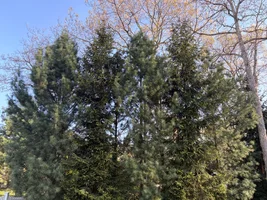
This is may be a separate thread, and I'm prepared to be lambasted here but looking for some guidance on how to help this client. They have a row of white pine and (I think) balsam fir (someone correct me please) -- planted too close together, but currently achieving a nice privacy screen. Client obviously wants to top these trees to keep them at a height he can manage. I've explained how topping will increase growth rate only with weaker structure and that if he wants to do that he'll need to stay on top (har har) of the growth yearly or every other year before it gets out of hand. I've seen previously topped pines on properties where ownership changed hands... nightmarish.
The other option I presented was to reduce the pines temporarily allowing the fir to fill out the space with a plan to eventually remove the pines entirely and let the firs take over... even so they are not at mature size yet and he doesn't want something towering over his backyard-- might be an issue of wrong tree wrong place. The trees in this photo are probably 30ish feet tall.
anyways... that's my ramble -- would appreciate any insight/opinions/corrections.
The other option I presented was to reduce the pines temporarily allowing the fir to fill out the space with a plan to eventually remove the pines entirely and let the firs take over... even so they are not at mature size yet and he doesn't want something towering over his backyard-- might be an issue of wrong tree wrong place. The trees in this photo are probably 30ish feet tall.
anyways... that's my ramble -- would appreciate any insight/opinions/corrections.
Attachments

Matias
Been here much more than a while
- Location
- Silicon Valley
Yea, I have had to explain that to countless people around here. If you don't want a towering giant next to your house, don't plant conifers that get over 100 freaking feet tall with ease.
Did they plant them? How old is the client?
Have you gotten them to state their expectations out loud? Maybe try guiding them in conversation to the realization that they did indeed plant the wrong trees there to achieve their stated goal? See where that takes the discussion.
Did they plant them? How old is the client?
Have you gotten them to state their expectations out loud? Maybe try guiding them in conversation to the realization that they did indeed plant the wrong trees there to achieve their stated goal? See where that takes the discussion.
southsoundtree
Been here much more than a while
- Location
- Olympia, WA
Hedging is different than topping.
Tipping all the branches and vertical reduction is very different than topping.
I've tipped a row of conifers, doug-fir and grand fir to 8-10' for low-branch thickness/ screening and road clearance.
I'll probably hedge some of them to keep low privacy screening avoid shading my neighbors yard and pool.
I need to trench around my drain field.
Idk about those tree species or locsl conditions.
Tipping all the branches and vertical reduction is very different than topping.
I've tipped a row of conifers, doug-fir and grand fir to 8-10' for low-branch thickness/ screening and road clearance.
I'll probably hedge some of them to keep low privacy screening avoid shading my neighbors yard and pool.
I need to trench around my drain field.
Idk about those tree species or locsl conditions.
Mick Dempsey!
Branched out member
It’s a hedge, top em.

Reach
Been here much more than a while
- Location
- Atglen, PA
In my experience, White Pines do not hedge well. They grow into a big lollipop, with multiple large upward turning leaders coming from the topping cut on the central leader, and the lower branches thin out.Hedging is different than topping.
Tipping all the branches and vertical reduction is very different than topping.
I've tipped a row of conifers, doug-fir and grand fir to 8-10' for low-branch thickness/ screening and road clearance.
I'll probably hedge some of them to keep low privacy screening avoid shading my neighbors yard and pool.
I need to trench around my drain field.
Idk about those tree species or locsl conditions.
Personally, I would recommend removal of the White Pines and either hedging the firs (if that is feasible) or replacing the whole row with something better suited for the intended purpose.


