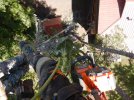
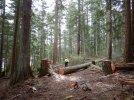
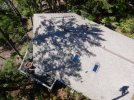
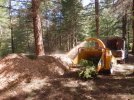
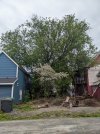
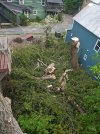
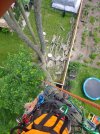
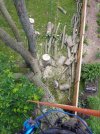
A beautiful day of tree work, and clients with elaborate gardens!
View attachment 81982View attachment 81983View attachment 81984View attachment 81985
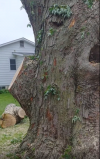
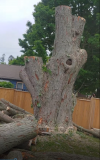
Impressive looking property, and certainly a photo-worthy face/hinge as well!
Follow along with the video below to see how to install our site as a web app on your home screen.
Note: This feature may not be available in some browsers.
A beautiful day of tree work, and clients with elaborate gardens!
View attachment 81982View attachment 81983View attachment 81984View attachment 81985

The place didn't look very "clean" before you started.Do customers really know what they're getting into when they say, "Just put it on the ground. I'll take care of cleanup."?
View attachment 82119
View attachment 82120
Sometimes they do, if it's not too hard often I'll drop all the smaller wood, let them clean it up and comeback to do the big stuff so the piles easier for them to deal with.Do customers really know what they're getting into when they say, "Just put it on the ground. I'll take care of cleanup."?
View attachment 82119
View attachment 82120
Sometimes they do, if it's not too hard often I'll drop all the smaller wood, let them clean it up and comeback to do the big stuff so the piles easier for them to deal with.

We don’t make return trips, but we will offer to leave the last log standing, to make things easier for a customer who can handle felling one overgrown stick.Very good way for them to deal with it, if you’re accommodating enough to make more than one visit.
Big piles of brush, no problem.
Big piles of brush with big wood dumped right on top of it, no thanks.
Yea I don't mind it still a high pay rate for the job without us having to do the really hard labor part of it, I'd rather do that than have to take all the tiny crap out of a lawn.Very good way for them to deal with it, if you’re accommodating enough to make more than one visit.
Big piles of brush, no problem.
Big piles of brush with big wood dumped right on top of it, no thanks.
Hand-fed?

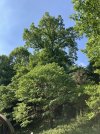
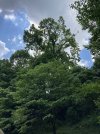
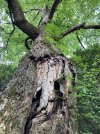
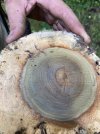
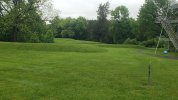
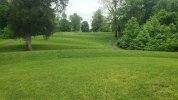
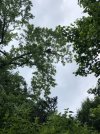 Humbling day in an ancient tuliptree. Growth rings on deadwood are insanely tight. A large decay at the base has the HOA worried and I convinced them to let me just do a retrenchment, remove some of the leveraging weight at the top. We think the cavity has been there for a very long time and is probably what saved it from being logged.,The before and after photo of the canopy shows the treatment (not extreme). No previous pruning cuts on the tree. I would say at least 200 years old. An amazing specimen, and a hell of a fun climb.
@Stumpsprouts, I marvel at the ability of you professionals to get "way out on a limb" like you did in that first picture. I do a good bit of climbing, and I'm a decent climber, but I am not a pro and would be very hard pressed to get out that limb as far as you did. Your climbing line is essentially horizontal which makes for a deadly swingback, but, of course, I know you are tied in with at least one other unseen rope to prevent that. But with nothing above you or to the left or right, I wonder how you guys manage to get out there safely and in a controlled manner with no anchors higher than foot level. I would welcome any instructional tips, secrets, or principles for that.View attachment 82168Humbling day in an ancient tuliptree. Growth rings on deadwood are insanely tight. A large decay at the base has the HOA worried and I convinced them to let me just do a retrenchment, remove some of the leveraging weight at the top. We think the cavity has been there for a very long time and is probably what saved it from being logged.,The before and after photo of the canopy shows the treatment (not extreme). No previous pruning cuts on the tree. I would say at least 200 years old. An amazing specimen, and a hell of a fun climb.
Oh thanks. Needed to hear something positive on the day my chipper is down, and had to bail on a climb that will need to be a crane removal… chainsaws down… new job box lid broken… tractor not running… not a great day@Stumpsprouts, I marvel at the ability of you professionals to get "way out on a limb" like you did in that first picture. I do a good bit of climbing, and I'm a decent climber, but I am not a pro and would be very hard pressed to get out that limb as far as you did. Your climbing line is essentially horizontal which makes for a deadly swingback, but, of course, I know you are tied in with at least one other unseen rope to prevent that. But with nothing above you or to the left or right, I wonder how you guys manage to get out there safely and in a controlled manner with no anchors higher than foot level. I would welcome any instructional tips, secrets, or principles for that.


Trust the process.@Stumpsprouts, I marvel at the ability of you professionals to get "way out on a limb" like you did in that first picture. I do a good bit of climbing, and I'm a decent climber, but I am not a pro and would be very hard pressed to get out that limb as far as you did. Your climbing line is essentially horizontal which makes for a deadly swingback, but, of course, I know you are tied in with at least one other unseen rope to prevent that. But with nothing above you or to the left or right, I wonder how you guys manage to get out there safely and in a controlled manner with no anchors higher than foot level. I would welcome any instructional tips, secrets, or principles for that.

I had a dead oak branch snap while transferring to another tree a few years back and took a solid swing into the stem, knocked the wind out of me pretty good. Lessons can hurt, especially at the end of the day rushing. Slow is smooth…If concerned about a long swing, a person has an option for a belay rope with a ground person.
Never done it.