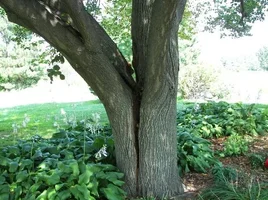
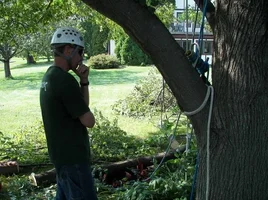
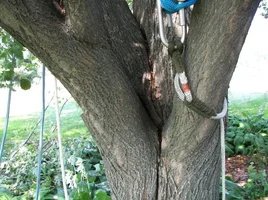
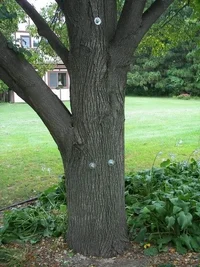
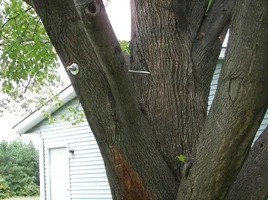
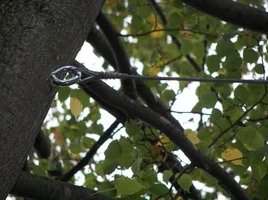
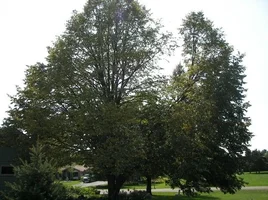
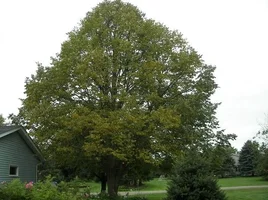
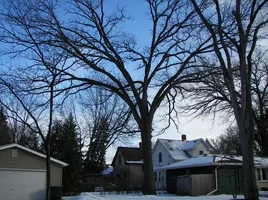
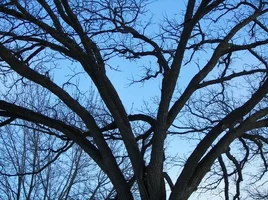
Tilia cordata Brace and Cable

Temporarily guyed it. Pruned to reduce weight and subordinate other co-doms. Dave thinking about things.
 

Attachments

  • 72576-general038LargeWebview.webp
    72576-general038LargeWebview.webp
    99.5 KB · Views: 171
Looks good. Lucky break that there was no target on the side of the split.

I always worry about the liability with cabeling/ bracing. You are admitting that there is a serious structural problem with a potential for failure when you put all that hardware in a tree.

Anyone ever see cabels/ braces fail?
 
Ive seen one instance of EHS cabling fail, but it was not catastrophic nor did the tree fail in anyway,

Ive seen 5 or 6 instances that I can remember of Cobra failing, again the tree didnt fail just the cable.

My guess, both instances installer related failures, but i could be wrong.
 
We make it clear to our clients that cabling will reduce the potential for failure, not completely eliminate the hazard. I have only seen cables fail when improperly installed. I once removed a co-dom that had pulled away from the brace. No washer or nut, nor was a cable installed in conjunction with the brace.
 
[ QUOTE ]
I always worry about the liability with cabeling/ bracing. You are admitting that there is a serious structural problem with a potential for failure when you put all that hardware in a tree.

Anyone ever see cabels/ braces fail?

[/ QUOTE ]

Among mine (about 700 installed), eight documented failures. All 8 were steel cables, most during extreme weather events. 4 of these were common grade cables in very short spans (due to metal fatigue, I believe). Among these four, only one resulted in tree failure. 1 (very early) where the tops broke off at lags, due to lags being too big and placed too low. Three were instances in which snow loading on the supported limb caused both it and the limb to which it was cabled to fail. One whole tree uprooted, due, I believe, to having its entire crown act as one, rather than separate leaders acting independently. (And some of the credit goes to wet soil and the 120 mph wind that day).

On the other side of the ledger are hundreds of trees, some cabled decades ago, that either: A)would have been removed or B)might have been cabled by the guy who uses screw eyes and cable clamps, or the one who uses clothes line, or...

My opinion: use proper materials, tailor the design to the job, follow ANSI specs, work very deliberately and carefully (if you have incorrect tension, e.g., climb back up and fix it), and you have done what a professional is expected to do, and probably won't ever be found liable for future storm damage events.
knokwood.gif
 
Yuck, sorry guys. Before you read further keep in mind it's me and my own opinion.
I am in this profession since 1984. The first company I worked with (for about 7 years) was very into bracing and cabling and cutting away the fungus until the clean fresh wood came shining into the bright light. At the time I worked there the company was about 20 years active in the Netherlands. The last years there I got to 'clean up' more and more 'great surgery' that supposedly had to stretch the lifespan of the tree. It was the best of the best learning school in terms of how a tree reacts to the sometimes brutal (but always with the best interest in mind for the tree) surgery.

I've stated this before and I will do it again. I AM NOT A TREE TOPPER. That's IMO one of the two things you CAN'T do to a tree. The other NO GO is drilling holes through a tree. Know what, I think it's better to top a tree that's been broke apart than to drill through the poor bugger. This way the tree gets a 'fresh' start and can keep up it's own structural integrity. Keep in mind, there is so much space (in terms of how much) you can do to a tree before you end up topping a tree and leaving it look like s hit.
I am with you all the way in bracing if it would be the last resource and the only way to save the tree...


So, was it the last resource and only way?
 
wow, what a difference in the before and after pics, you guys did a great job at shapping and pruning. Tough case it seems, almost border line removal, maybe I'm wrong?

But great work, looks good!

jp
grin.gif
 
There's a post somewhere that shows a dissection of a drilled Celtis. No decay from what I recall. I use dynamic systems whenever possible. I would rather not drill through a tree. In the case of a split or failed union what would you suggest? Here's a pic I took today in Minneapolis. This Quercus macrocarpa had been splitting for years. Someone recently installed a dynamic system and this autumn the union failed. Now what? The scenario illustrated here called for...

a) remove the split co-dom.

b) remove the tree?!

c) brace and cable with static system per ANSI.

I enjoy this discussion and I am not saying that I'm absolutely right. I have been witness to long-lasting, healthy results -static or dynamic- when support is done properly. I am truly interested in your recommendation Treespotter, regarding both the Tilia and Quercus.
 

Attachments

  • 72874-general005LargeWebview.webp
    72874-general005LargeWebview.webp
    119 KB · Views: 120
Thank you treesandsurf. Our client is very pleased. Unfortunately, this is the first year we've been with her. Most of her trees are in the same condition (co-doms and incl. bark) due to lack of early maintenance.
 

New threads New posts

Back
Top Bottom